Insight
Public bike parking and charging help more than cyclists
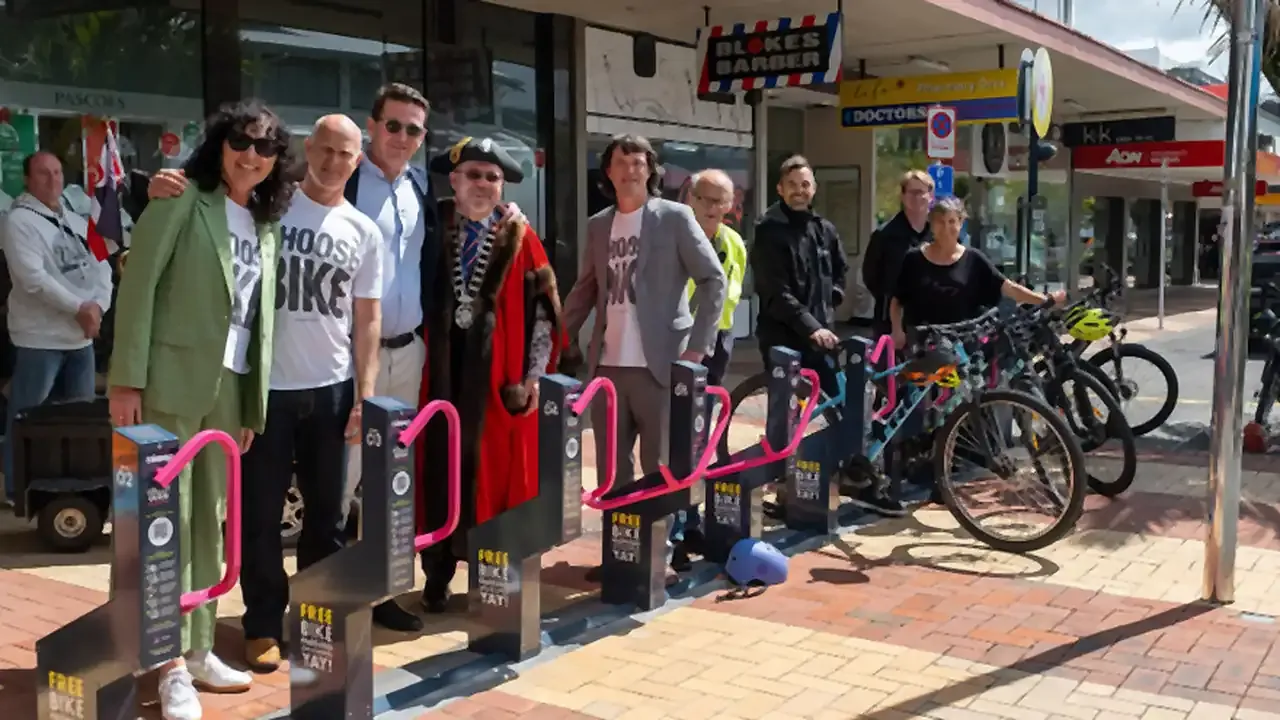
A mobility scooter user in Whangārei showed Locky Dock what public charging means for a town. The benefits councils can point to go well beyond cycling.
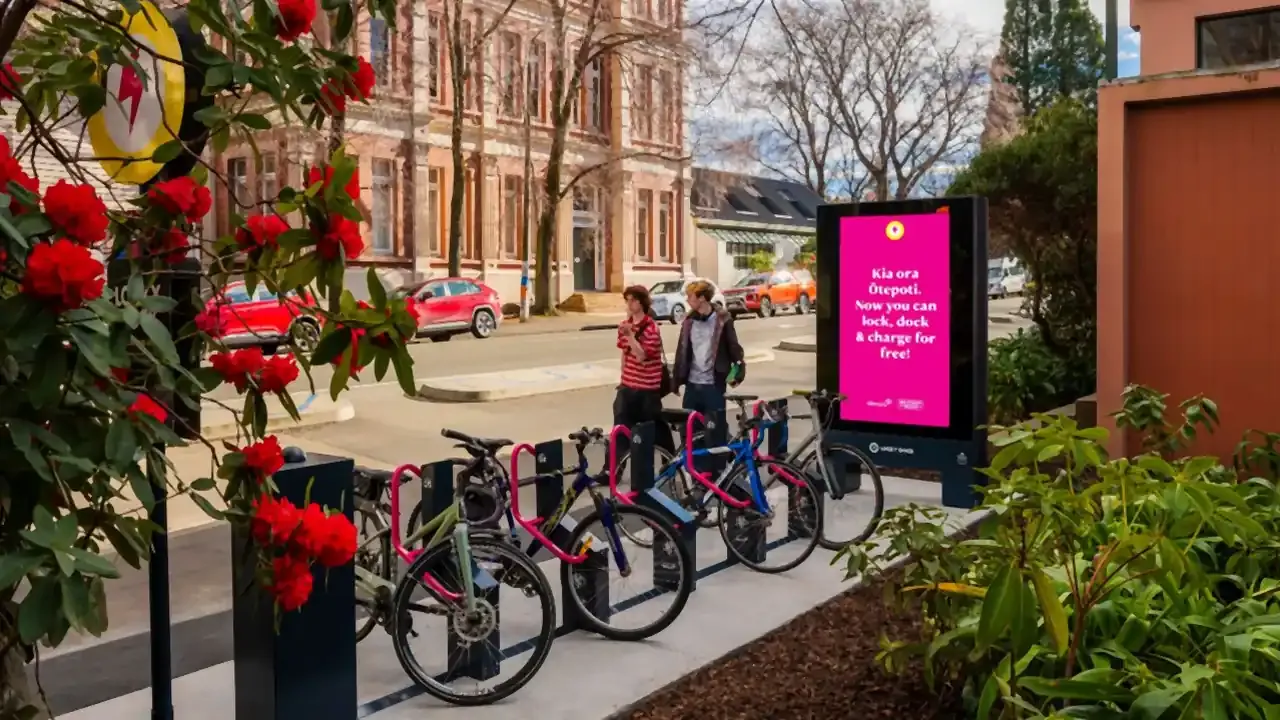
Most councils want more secure bike parking and public e-bike charging. Few have the capital budget to build a network.
In New Zealand, Locky Dock has found a way to deliver it without spending taxpayers' money.
Locky Dock stations carry advertising screens, and the screens pay for the station. Kirsten Corson, CEO of Locky Dock, describes what that means for riders and councils.
"We make them free to use. So free to lock and free to charge your bike. It's delivering that public amenity, a green public community for a city council, that's not costing the taxpayer anything. That's been really appealing for councils." Kirsten Corson, CEO, Locky Dock
Under the stations sits Bikeep hardware and the Bikeep platform. Our article on how advertising funds free bike parking explains the model in full.
In Taupō, the council describes its station as installed "at no expense to ratepayers." The council describes it as funded by Locky Dock with its partners Mercury and oOh!media.
Councils with funding can go further. The six stations in Hawke's Bay were co-funded by central government through the Ministry of Business, Innovation and Employment. Whakatāne's five sites were funded by Trust Horizon.
Free does not mean hands-off. A council's role usually covers four things.
Councils are asked to fund many good things. An amenity that supports their cycling and mode-shift targets, with no capital cost and no maintenance line, stands out.
Our article on how to pitch secure bike parking to a city council shows how to frame it. The Bikeep page for cities covers the wider council case, and our piece on the community benefits of public bike parking and charging adds the accessibility angle.
In the Locky Dock model, advertising pays for the station. Taupō's council describes its station as installed at no expense to ratepayers.
Advertisers, through the screens on each station. Some councils also draw on outside funding, as in Hawke's Bay and Whakatāne.
Yes. Riders lock and charge for free.
Operators building a network in their own market can read about becoming a Bikeep partner.
A mobility scooter user in Whangārei showed Locky Dock what public charging means for a town. The benefits councils can point to go well beyond cycling.
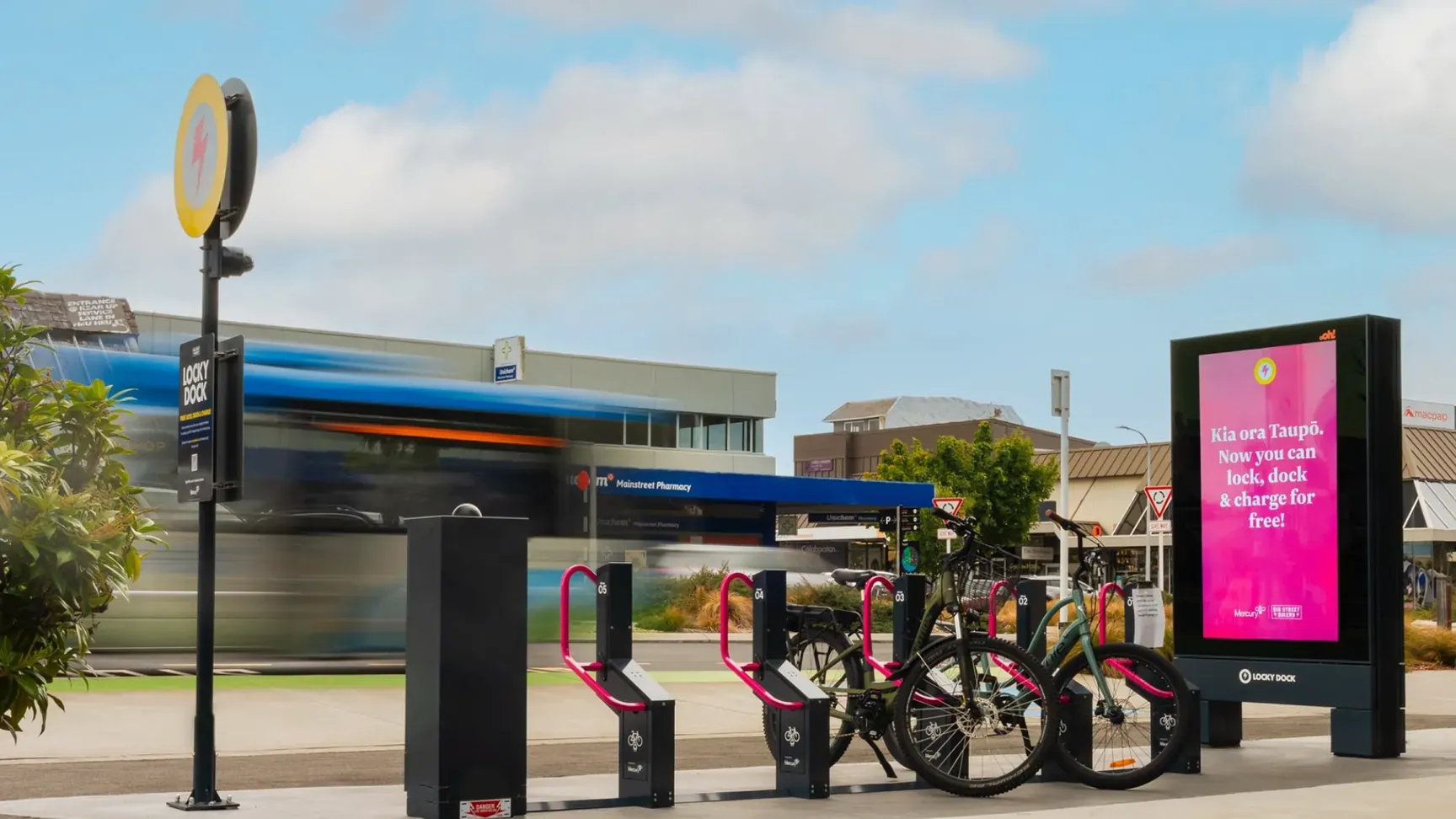
Digital advertising screens let Locky Dock offer free bike parking and e-bike charging to councils and riders. This is how the triple win model works.
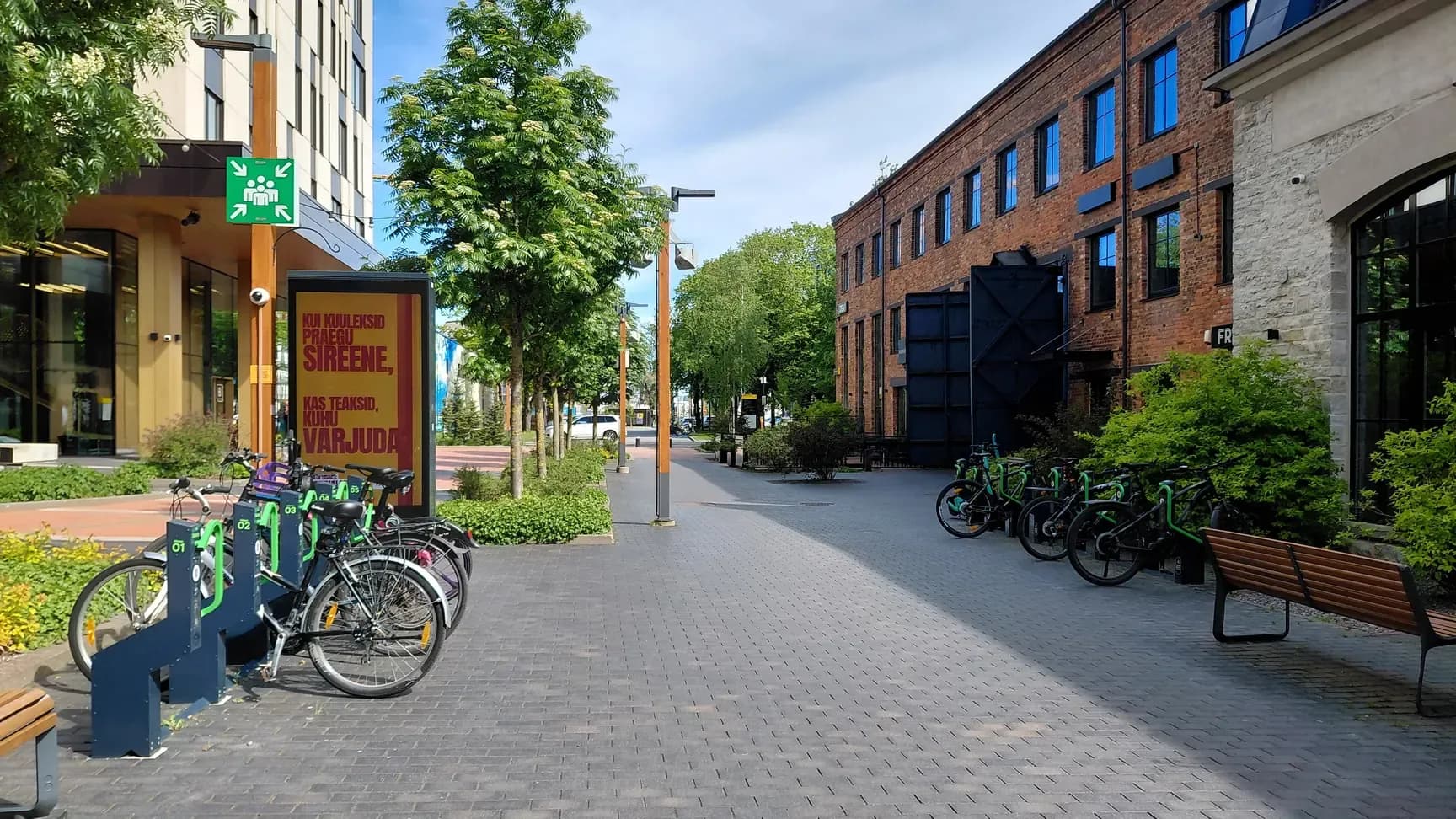
Ülemiste City in Tallinn built a campus-wide smart bike parking network. Riders rate it 4.89 out of 5, and no bike has been reported stolen from a station.