Newsletter
August 2026 Newsletter
A year of free bike parking and charging at Citycon centers in Finland, ten times the use from clearer signage, 10 stations in Larvik and a move to Ülemiste City.
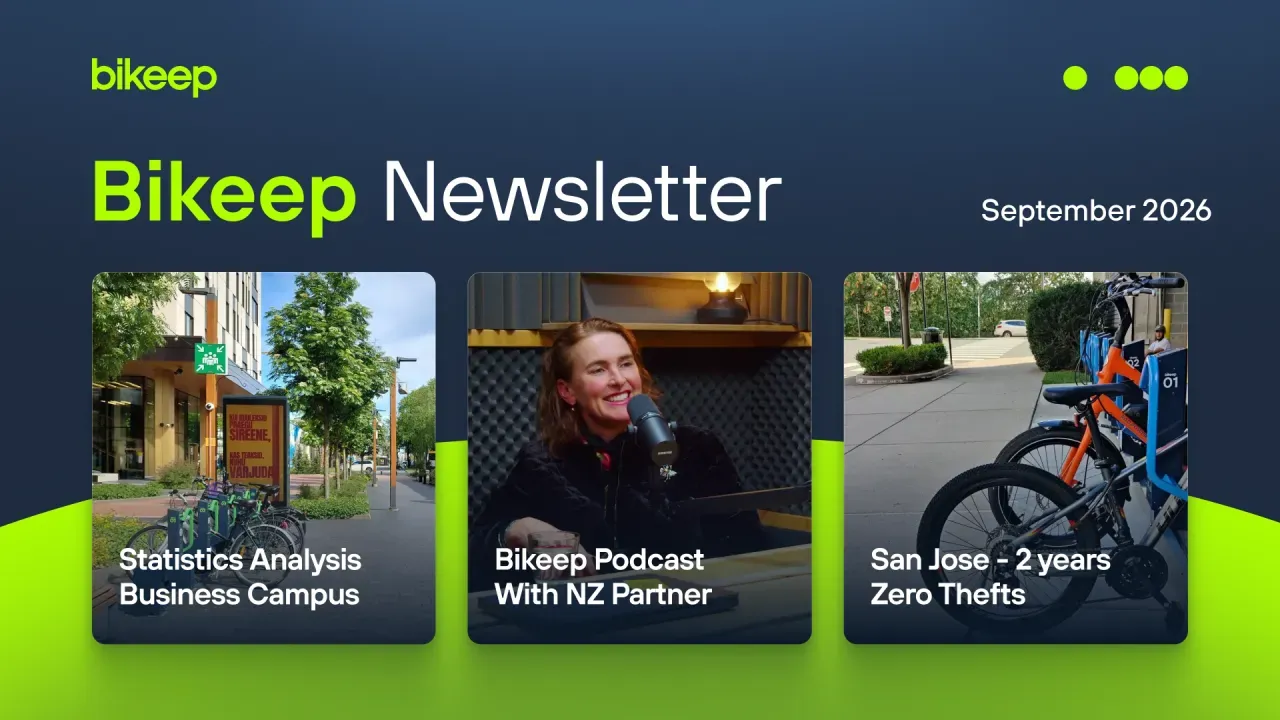
Every bike parking project runs into the same two questions. Who pays for it? And will my bike still be there when I come back?
This month we sat down with someone who has answered both, at scale, on the other side of the world. Kirsten Corson is CEO of Locky Dock, a New Zealand network of free, secure e-bike parking and charging. Every Locky Dock runs on Bikeep hardware and the Bikeep IoT platform. And every one is paid for by the advertising screen standing next to it.
Her answer to the first question is a business model. Her answer to the second is the hardware. The rest of this month's news, from a business campus in Tallinn to an office park in San Jose, reads like proof of both.
Locky Dock is one of the clearest examples we know of bike parking that pays for itself. We asked Kirsten how it works and what she would do differently. We also asked what she would tell anyone building the same thing in their own country.
Watch the full conversation with Kirsten Corson
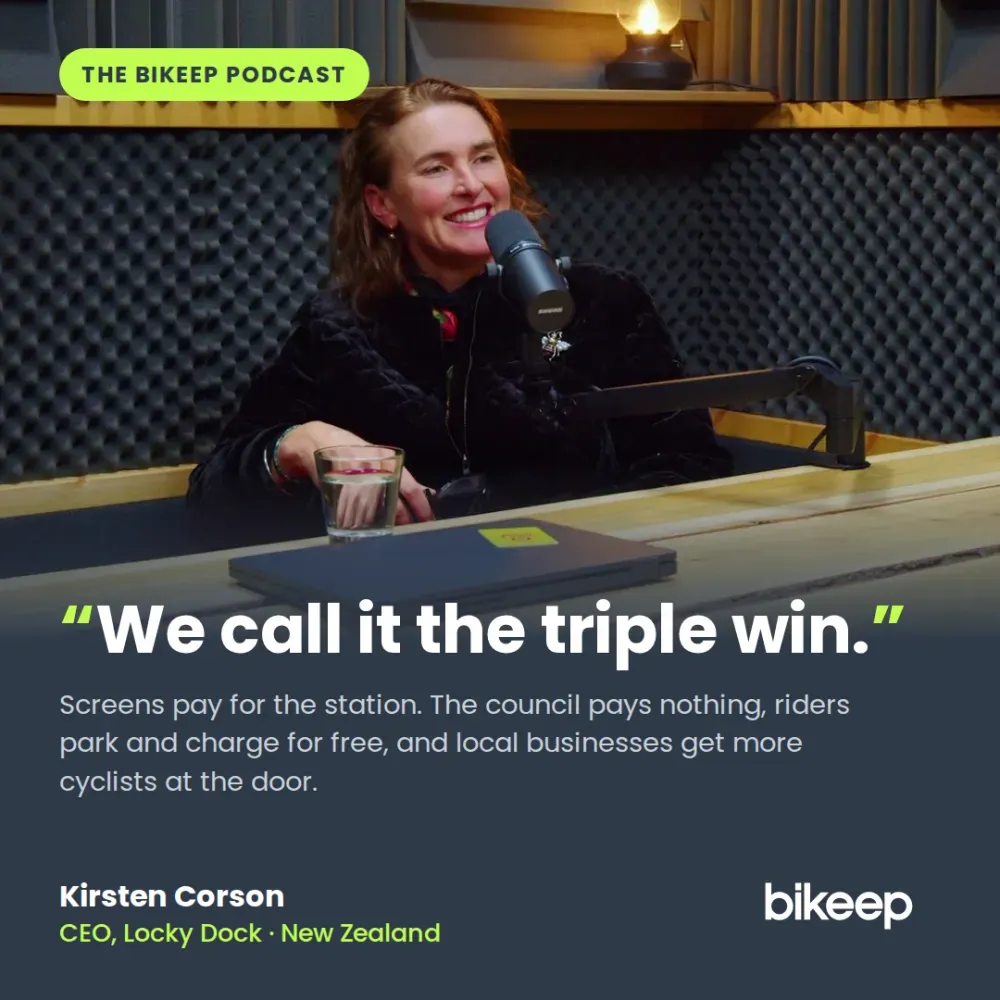
"We make money from annual recurring revenue from our screens, and that allows it to be free for the council to install, and no ongoing maintenance."
Kirsten calls it the triple win. The council gets public parking and charging without spending taxpayer money. Riders lock and charge for free. Nearby businesses get more people arriving by bike. The advertiser funds all of it.
It is the same idea behind our partnership with Bauer Media Outdoor in Finland. There, advertising helps fund free parking and charging at Citycon's shopping centers. More on how advertising funds free bike parking.
"The majority of cyclists are worried about bike theft. … That is a massive barrier to the uptake of cycling."
You can't talk someone onto a bike they are afraid of losing. Kirsten chose Bikeep because, in her words, it is a well-engineered product that "stops the Kiwi thieves," backed by an IoT platform she calls outstanding.
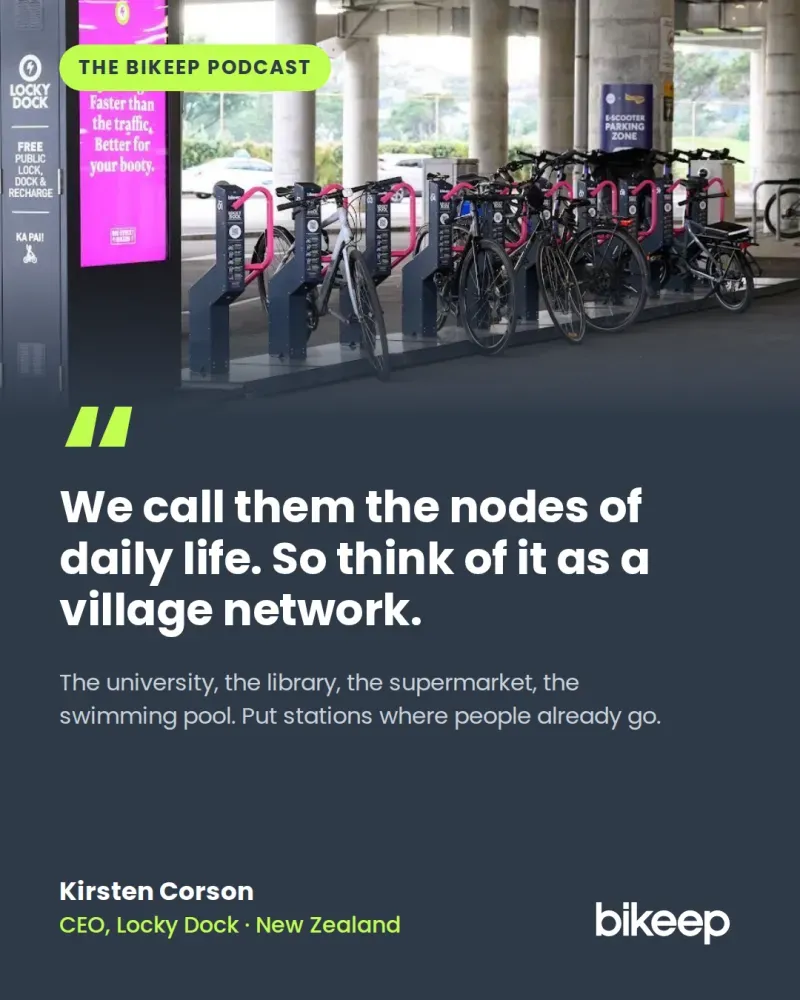
"If you can put them at the university, if you can put them at the library, put them at supermarkets, put them at the swimming pool, you know, we call them the nodes of daily life."
The flip side is the mistake she warns against, which is putting docks in poor media locations. Every site has to work for riders and for the advertiser, or it doesn't work.
Kirsten's advice to new partners is to team up with a media company. A new partner is suddenly buying infrastructure, installing it and rolling out a media network, all at once.
To grow fast, sign at head-office level. One agreement with a supermarket chain or a national railway can put 5, 10, 20 or 30 docks in the ground. And demand isn't the limit. Her media partner hasn't set a ceiling.
For one Auckland station, the team made a deal with the ice cream shop across the road. Say "Locky Dock" at the counter and get a second scoop free. They posted it on social media on a Saturday, and the dock filled up.
Last month we wrote about Finland, where promoters and clear signage multiplied usage on the same hardware. A free second scoop is the same lesson. Adoption is a communication problem first.
One rider told Kirsten the station had changed his life. He could never get across town to see his sister. Now he stops to charge his mobility scooter at a Bikeep station on the way.
Kirsten also put the running costs side by side. These are her figures for traveling 100 km in New Zealand, in New Zealand dollars.
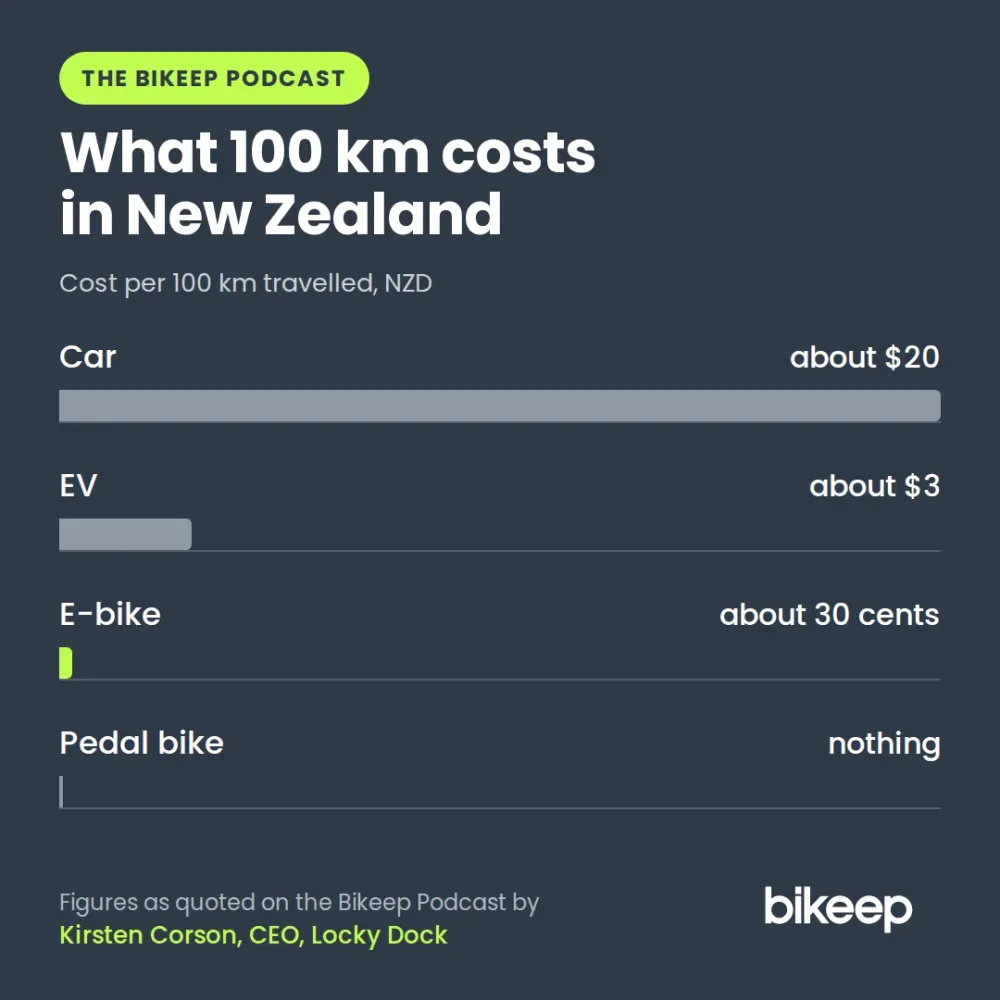
The full comparison is in our piece on e-bike vs car running costs.
We are releasing short clips from the episode on LinkedIn. Follow Bikeep and Kristjan Lind so you don't miss them. Thinking about building a network like Locky Dock in your country? Become a Bikeep partner.
Last month we moved our HQ to Ülemiste City and asked how many Bikeep stations you could find there. The answer is 26 stations with 239 docks.
Ülemiste City is home to more than 400 companies and about 18,000 people who work, study and live there. The network delivers results the campus can measure.
The detail we like best is that 17 of the 26 stations are first-generation hardware. They run beside the newest stations, on the same app and the same console. Bikeep has been installing stations since 2012, and the first ones are still working.
Read why business campuses like Ülemiste City choose smart bike parking.
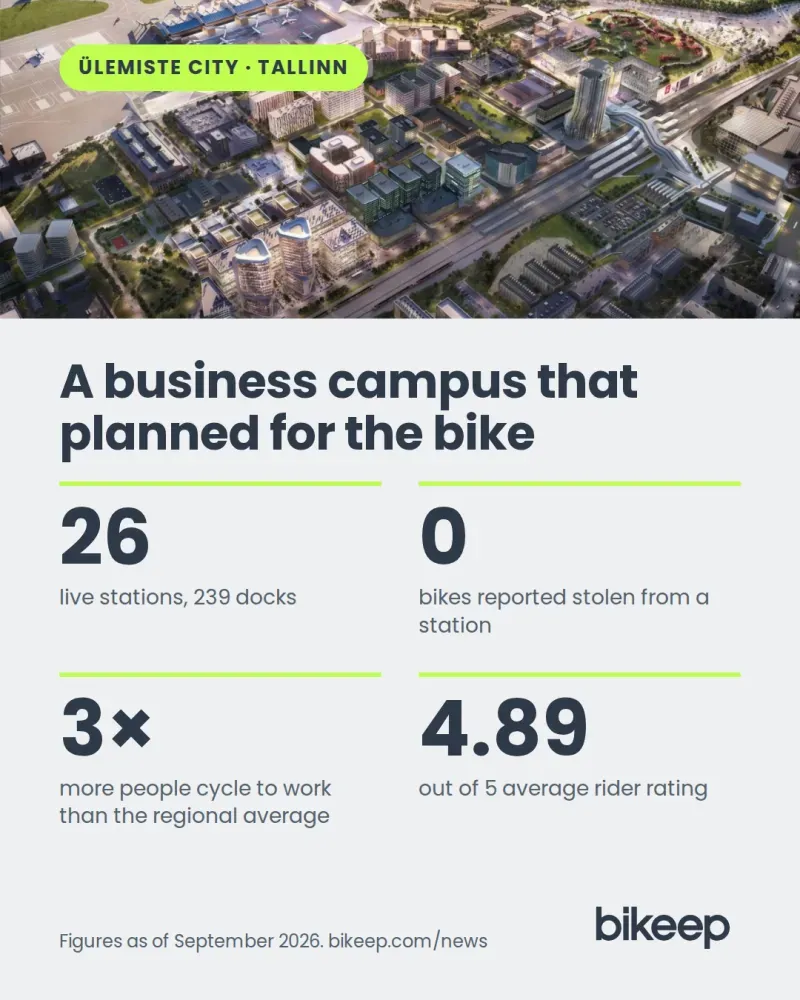 Ülemiste City, Tallinn, with 26 Bikeep stations and counting
A grocery car park is full at 5 pm on a Saturday. There is no more land to pave. Selver now has twelve months of data on the cheapest way out of that problem.
Bike parking at a grocery store is arrivals per square meter, and it is the one part of the car park you can measure per store, per hour and per month. More on bike parking for retail.
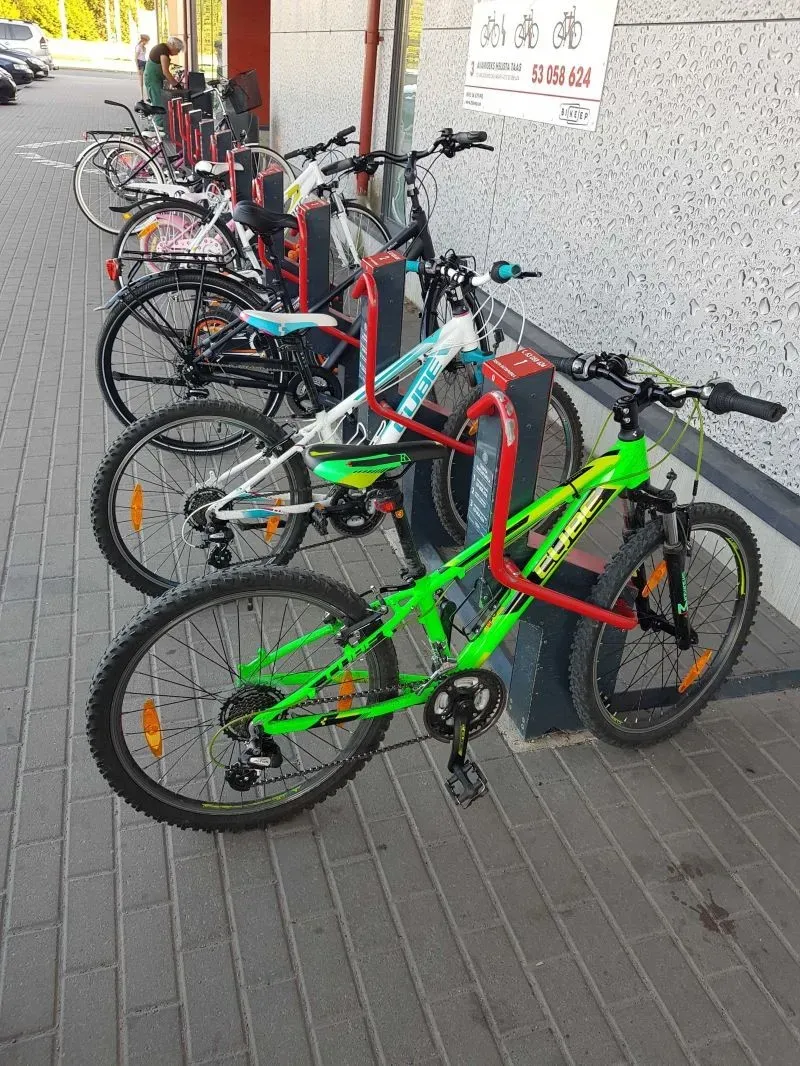
Bike theft was common around Cityview Plaza, a 7.8-acre mixed-use office park in downtown San Jose. Tenants were reluctant to ride to work because of it.
In spring 2018 the property installed one 10-dock Bikeep station. In its first two years of use it recorded zero bike thefts. As the then General Manager, Julie Garcia, put it, "we have never had a reported theft with Bikeep."
One station at the main entrance changes what riders see first. Read how a San Jose office park went two years without a bike theft.
Kirsten's conversation answers the three questions that stall most bike parking projects. It takes them in the order buyers ask them.
Who pays? In New Zealand, the screen. In Finland, advertising through Bauer Media Outdoor. At Ülemiste, the campus itself, because the numbers justify it with half as many car parking spaces.
Will my bike still be there? No reported thefts across 26 stations at Ülemiste, and none in two years in downtown San Jose.
Where should it go? The nodes of daily life. A supermarket, where the median stay is 12.3 minutes. A campus, where it is a working day. A university, a railway station, a gym.
The hardware is the part people photograph. The model around it is what gets the next 30 stations in the ground.
More updates and earlier editions are in Bikeep news.
A year of free bike parking and charging at Citycon centers in Finland, ten times the use from clearer signage, 10 stations in Larvik and a move to Ülemiste City.
Five installations in four countries, from ad-funded bike parking in Napier and Manchester Victoria station to Zagreb County, Four Bentall Centre and Kingston.
Smart Commute stations across the USA with Dero, internal bike sharing in Serbia, growth in Iceland, password access control and seven ways to deploy a station.