News
How Park 011 built a free bike parking network across Belgrade
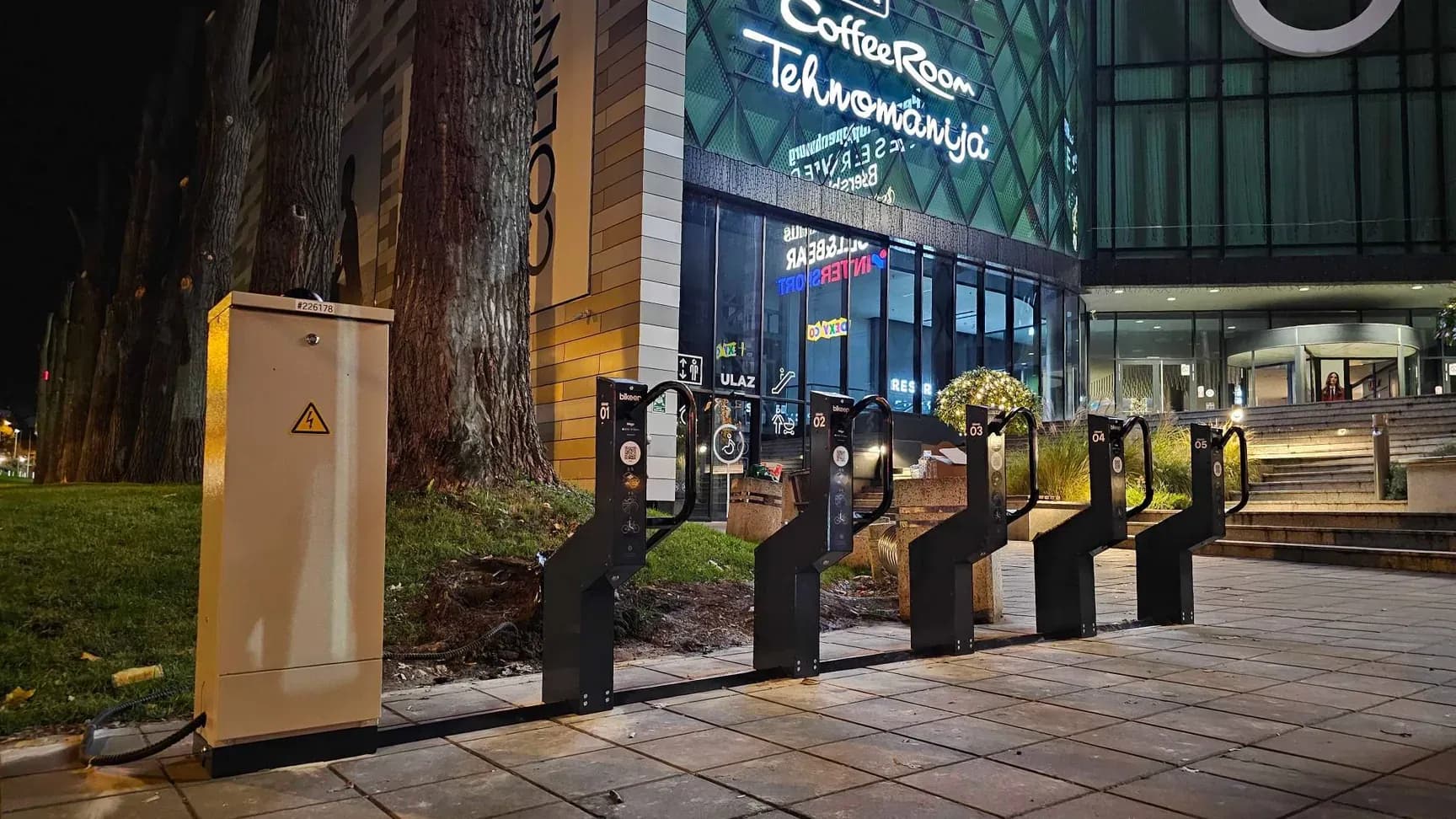
Since 2021 Park 011 has grown from one station at Kalemegdan to about 16 Bikeep sites in Belgrade and Kotor, with about 20,900 parkings by 3,200 riders.
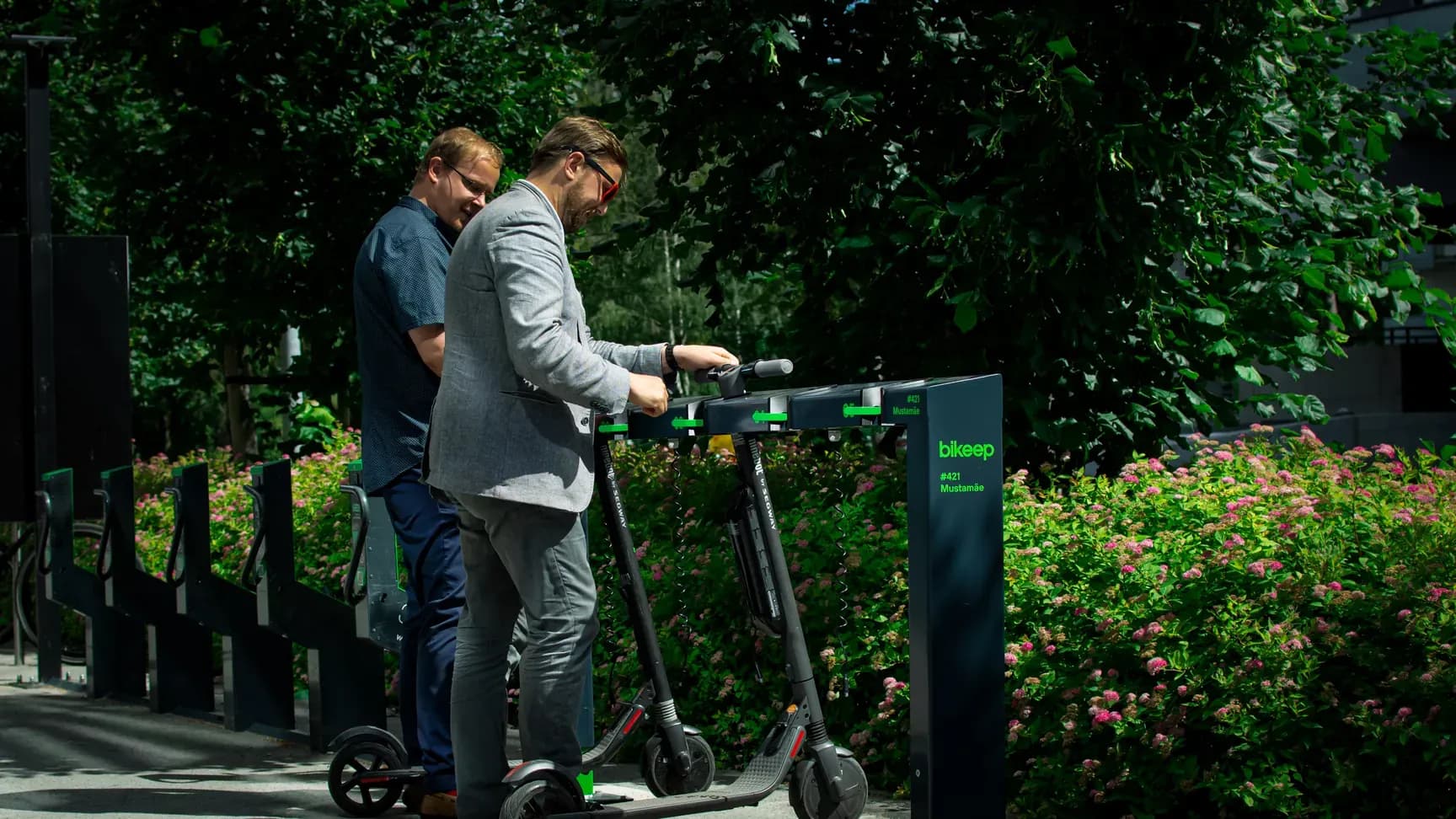
E-scooter parking for cities works when owners can lock and charge a personal scooter outdoors, close to where they live, work and shop. More landlords and transit operators now ban e-scooters indoors over battery fire risk. Without a secure dock, owners lock to railings, carry scooters into buildings or stop riding.
More people own an e-scooter, and fewer buildings let them bring it inside. In Germany, four in five insured e-scooters were privately owned at the end of 2025, about 1.36 million of 1.66 million, according to the German insurers' association GDV.
At the same time, the places owners used to keep them are closing.
The owner still has the scooter and still needs to leave it somewhere. A ban indoors moves the problem onto the street unless the city offers a better place outside. Scooters chained to lampposts narrow sidewalks. Scooters wheeled into shops and offices block aisles and fire exits.
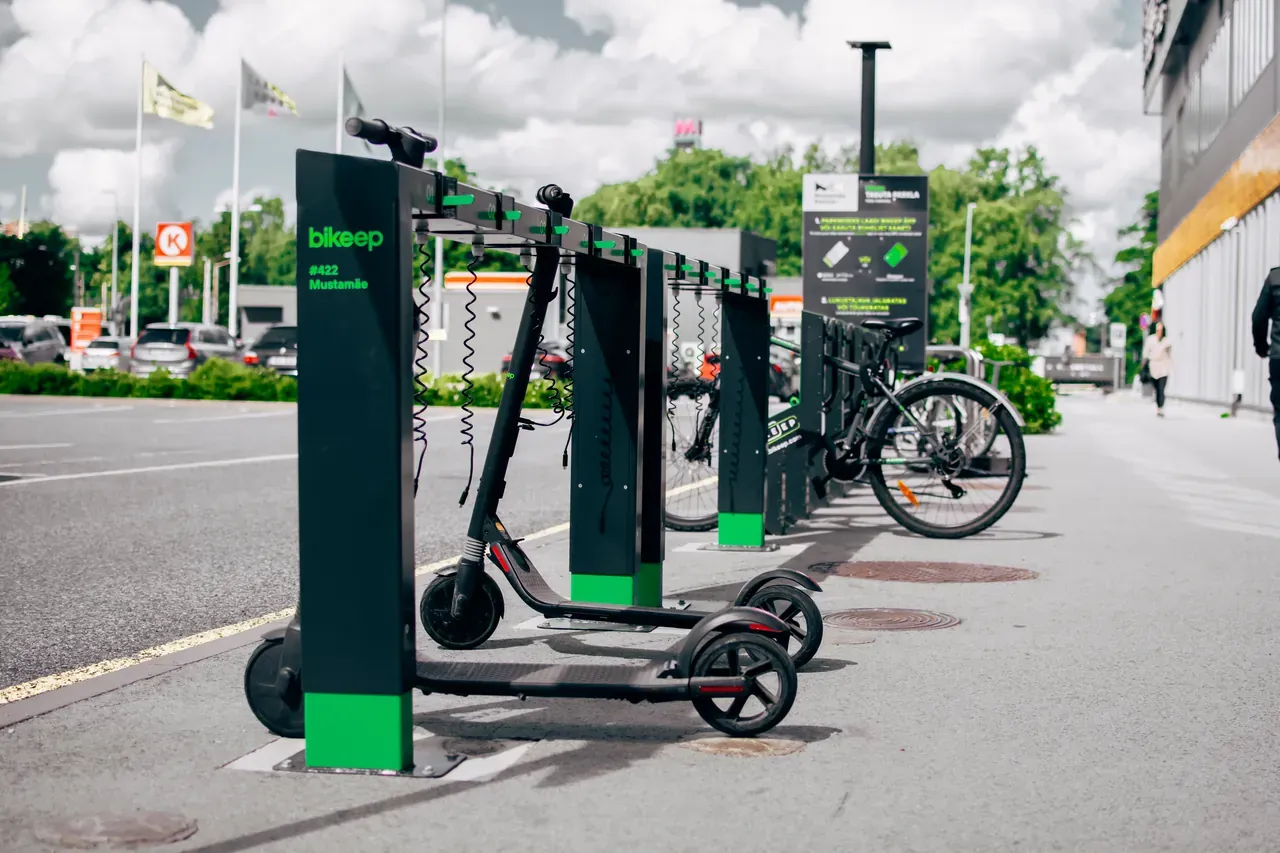
Good public scooter parking locks the scooter itself, charges it safely and shows the city how it is used. A painted bay or a bike rack does none of the three.
| Option | Locks the scooter | Charging | Usage data |
|---|---|---|---|
| Painted parking bay | No | No | No |
| Bike rack or hoop | Only with the rider's own lock, which rarely fits a scooter | No | No |
| Smart scooter parking dock | Yes, a locking arm holds the stem | No | Yes |
| E-scooter parking and charging dock | Yes, the scooter and its charger are both locked | Yes, with an optional 4-hour cut-off | Yes |
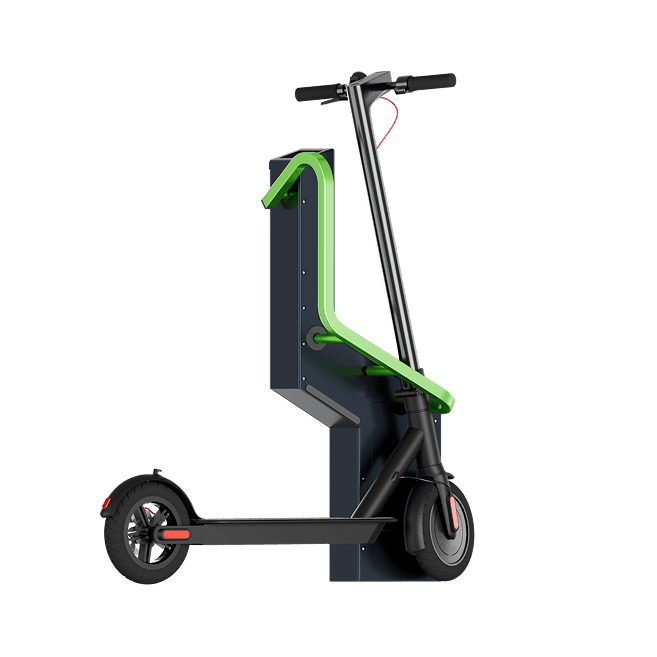
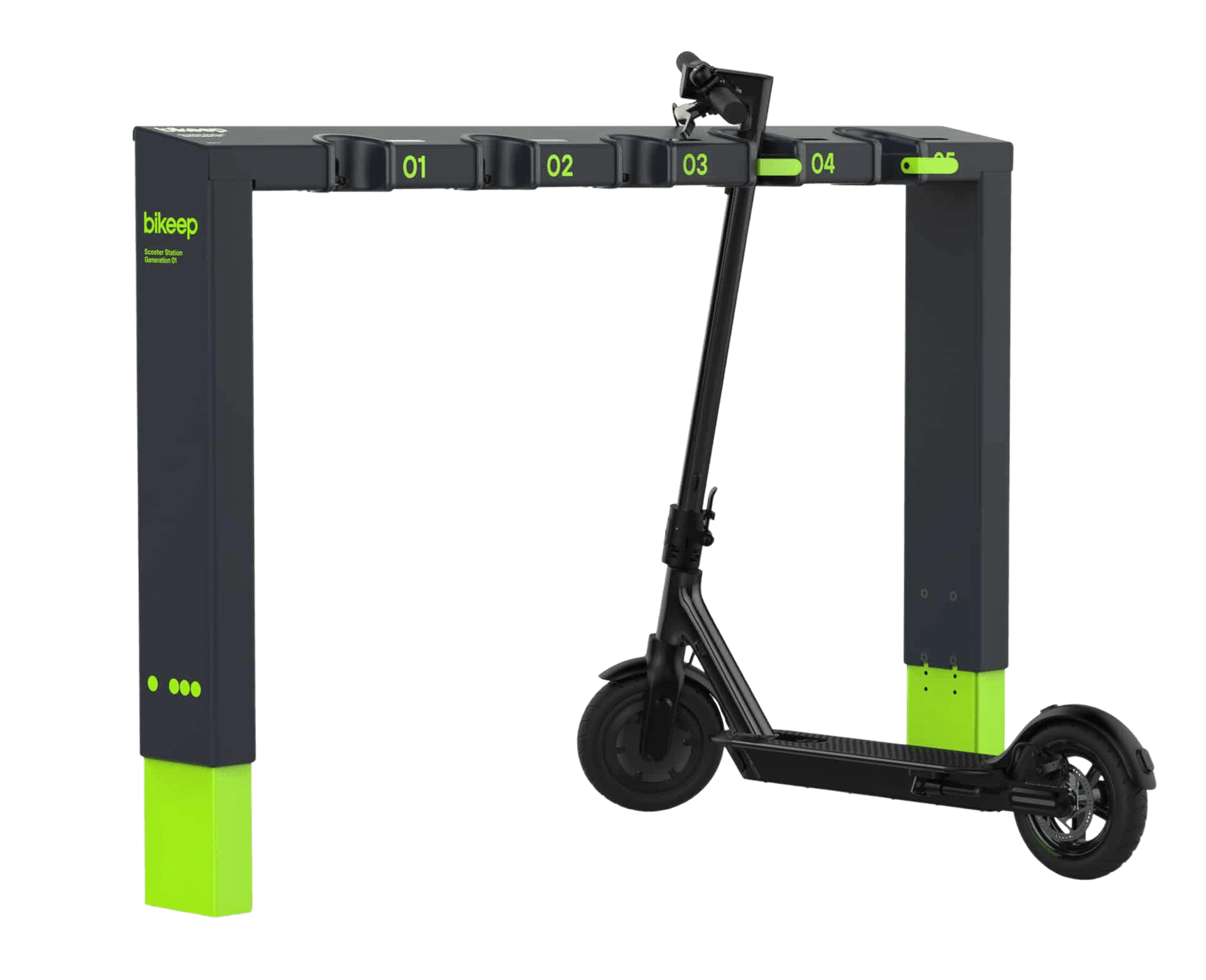
A scooter is hard to lock to a rack. Its stem is the strongest part, and a dock built for it grips the stem directly. Riders carry no chain, and nothing hangs loose on the street.
The charging version lets the rider plug in their own charger and lock it in with the scooter. It supports all e-scooter brands and charger types. An optional relay cuts power after four hours, which matters at unattended public sites.
Put docks where riders end a daily trip and stay for hours. In Bikeep's network, the busiest scooter docks sit at workplaces, supermarkets, schools and transport links.
Four stations show the pattern, with parkings counted over the 12 months to October 2026.
The busiest of these docks are used more than once a day on average. Riders come back because the dock is where they need to be anyway.
For a city, the first sites are transit stops, shopping streets, council buildings, libraries and schools. Stations matter most where operators ban scooters on board. When Barcelona's transit ban began, the metropolitan area opened its Bicibox secure parking to e-scooters for free, 3Cat reported.
Charging outdoors in a dock keeps the battery out of homes, stairwells and offices. That is where a battery fire does the most harm.
Fire safety bodies on both sides of the Atlantic say the same.
US cities are already acting on it. New York has required e-scooters sold in the city to be UL 2272 certified since 2023, under Local Law 39. In 2024 its Department of Transportation tested public outdoor charging for delivery workers' e-bikes. Home charging among participants fell 35%, with no safety issues at any site, the city reported.
Reagan National Airport acted on this. The airport authority installed the docks so people would stop bringing e-scooters indoors to charge them. It also wanted the scooters securely locked while they charge, and the docks do both.
A dock also replaces ad hoc charging with a controlled circuit. An electrician installs the power supply, and the 4-hour cut-off stops a scooter charging all night.
Yes. Parking and charging are free for riders by default, and the site owner can set a price instead. Riders then pay in the Bikeep app, per use or by subscription.
That turns secure, fire-safe charging into a service a building can sell, not a cost it has to carry. A condominium association can offer residents an outdoor charging dock and recover the electricity and upkeep. A parking garage, shopping center or office landlord can do the same for visitors and tenants. The platform handles the payments, so the owner sends no invoices, and the Bikeep Console produces usage and revenue reports.
For apartment buildings and condominiums, it also settles the fairness question. Residents who charge pay for it, and residents who don't, don't.
A city can mix both models. Public stations at transit stops can stay free, while private hosts on their own land set their own price.
Riders unlock a dock with the free Bikeep app or an RFID card. A city can link the docks to a card residents already carry.
Tallinn did exactly that. The city paid for six public e-scooter stations in the center for the 2025 season, to give a growing number of scooter owners a secure place to park. They are free to use. Riders open them with the app or with Ühiskaart, the same card they use on Tallinn's buses and trams. The Tallinn rollout also added four bike stations at the same transit points.
Every parking is logged, so the city sees which stations fill up and where to add docks next. No one has to count scooters on the street.
Yes. The dock locks the scooter by its stem and supports all e-scooter brands. The charging version works with the rider's own charger, whatever its type.
No. Bikeep docks are built for privately owned e-scooters. Rental scooters are managed by their operators.
The charging version does. It needs a grid connection installed by an electrician, while the parking-only dock needs no charging hardware.
The site owner decides. Tallinn's public scooter stations are free, while a condo or garage can set a price per use or a subscription paid in the Bikeep app.
Yes. Reagan National Airport near Washington, DC, and Live! Casino & Hotel in Philadelphia both run Bikeep e-scooter docks with charging.
Since 2021 Park 011 has grown from one station at Kalemegdan to about 16 Bikeep sites in Belgrade and Kotor, with about 20,900 parkings by 3,200 riders.
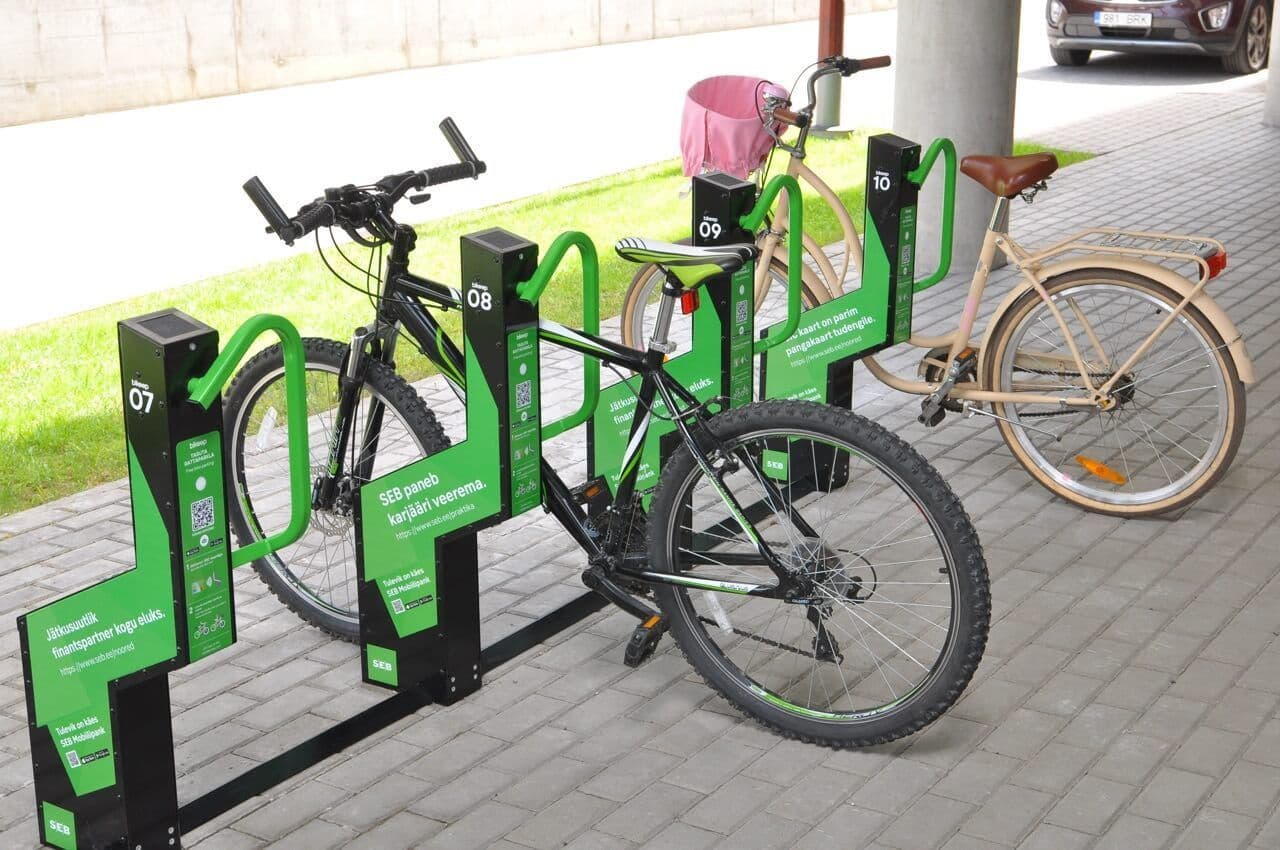
One free scoop of ice cream filled a Locky Dock station in Auckland on a Saturday. Here is how operators can use local retailers to get riders to try a station.
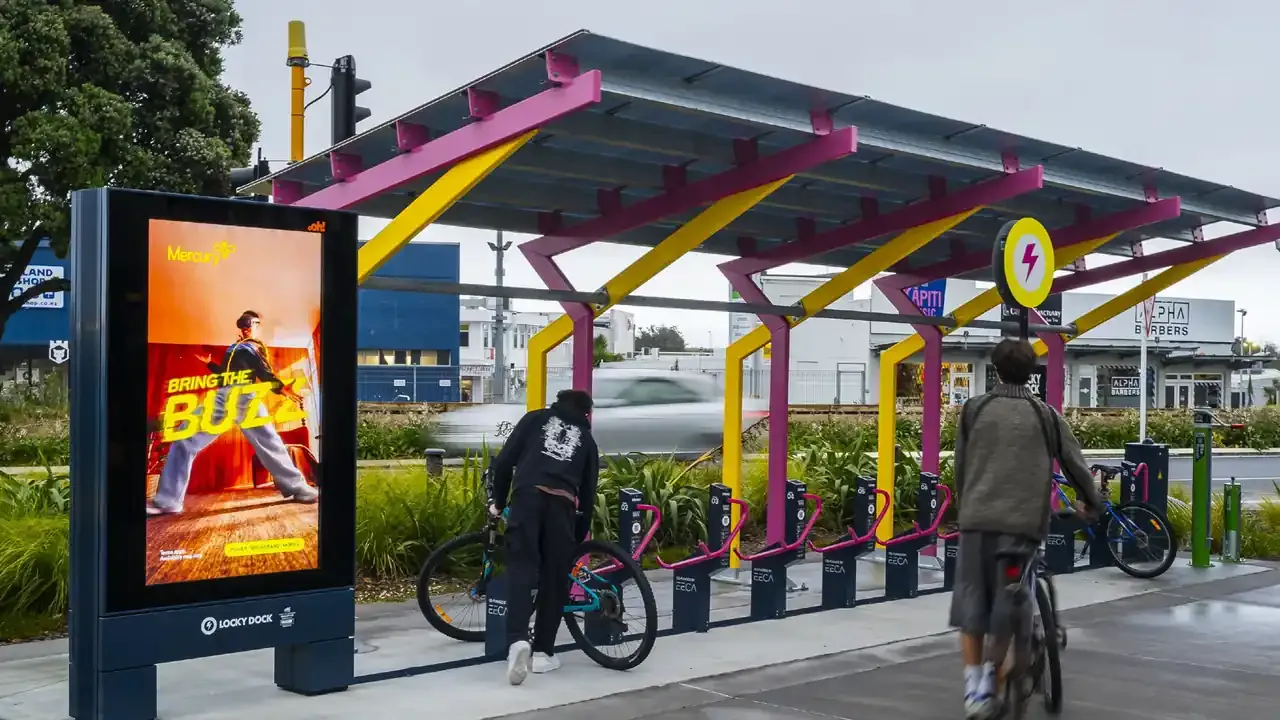
Locky Dock plans bike parking as a network at the nodes of daily life, such as libraries, supermarkets and pools. This is how to pick and rank the sites.