Insight
Councils can get public bike parking and e-bike charging for free
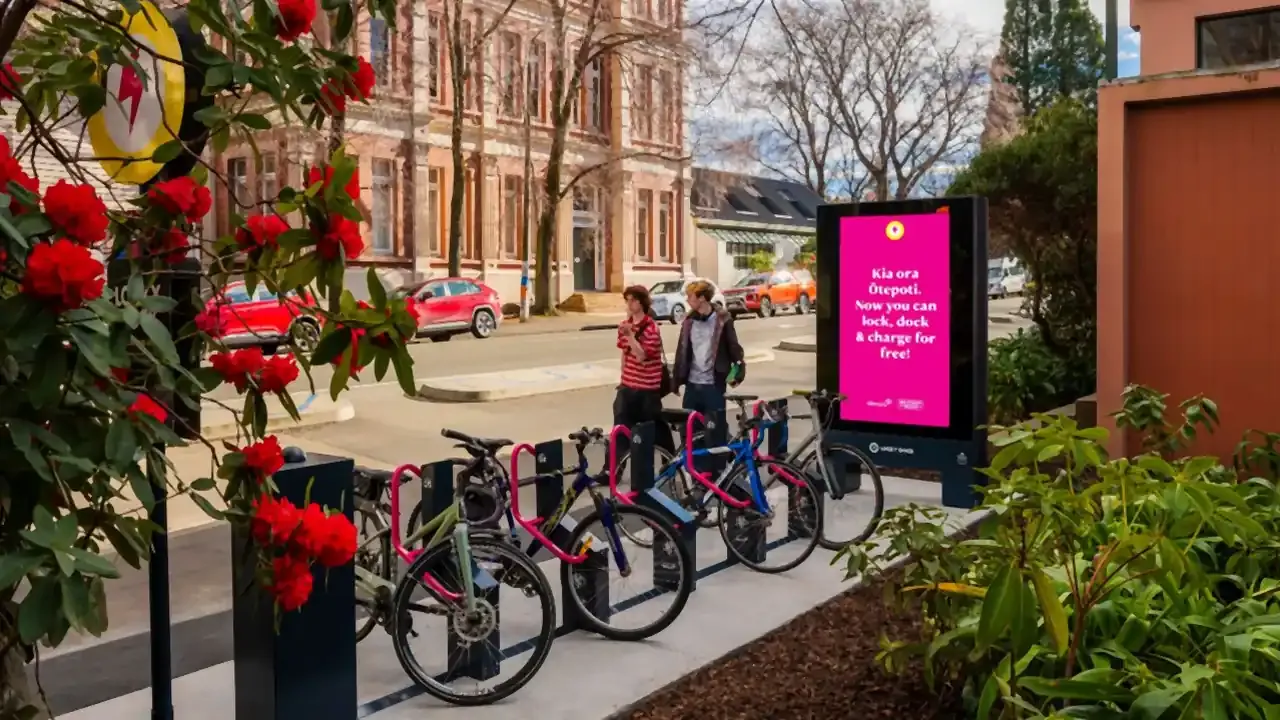
Advertising screens pay for Locky Dock stations, so councils get secure bike parking and e-bike charging without spending taxpayers' money.
University e-bike charging is safest outside the building. When a campus gives riders a secure outdoor e-bike charging station, and the same for e-scooters, batteries stop coming into residence halls, offices and stairwells. The university doesn't have to ban the vehicles. At UNSW Sydney, ten such docks have carried more than 8,000 parkings since May 2022.
Because when there is nowhere to charge outside, the batteries charge inside.
Students and staff ride e-bikes and e-scooters because they make a campus commute easy. Then the battery needs charging. If the campus offers nowhere to do that, it happens in a residence hall room, a corridor or under a desk.
US product-safety data shows why that worries campus fire marshals. The Consumer Product Safety Commission investigated e-bike and e-scooter fires from 2017 through 2024. In 62 of the 106 e-bike fires, the bike was charging. For e-scooters, 51 of 88 fires started while charging or just after. The CPSC notes these are investigated cases, not a national count.
Because a battery fire in a residence hall is the scenario every campus fire-safety team plans against.
The Hechinger Report tracked the rules as they spread.
A ban only works when riders have somewhere better to go. Riders bring an e-bike inside because they don't trust an open rack to keep it, and because a rack has no power. Take away the indoor option without adding a secure outdoor one, and two things happen. Some riders stop riding. Others keep charging indoors, now out of sight.
New York City shows what moving batteries outside can do. The FDNY recorded about the same number of lithium-ion battery fires in 2024 as in 2023, but deaths fell from 18 to 6. Outdoor battery fires rose from 90 to 133, which the department said suggests more people are storing and charging these devices outside.
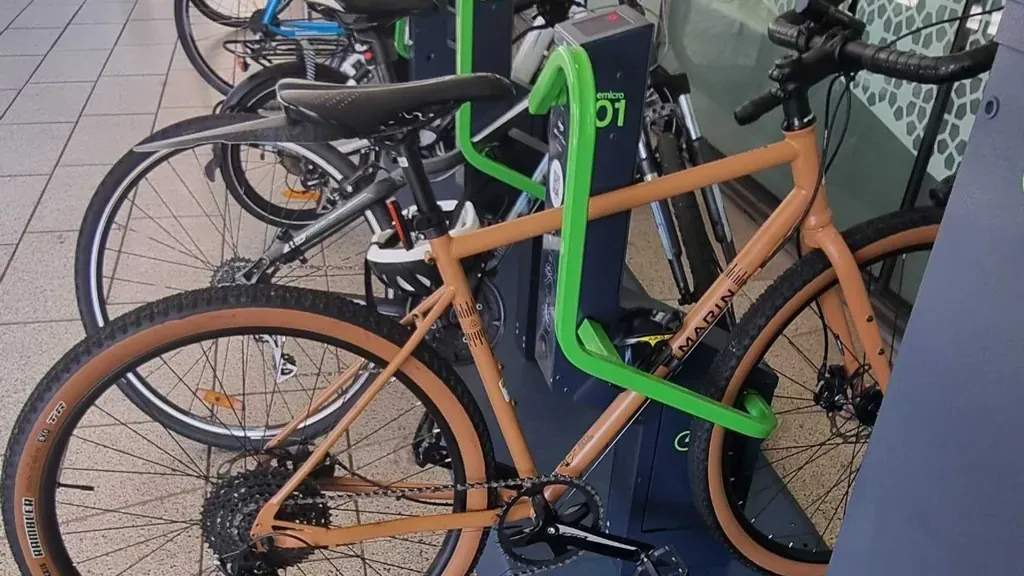
It looks like bike parking with a power outlet at every dock. A Bikeep e-bike charging station works like this.
The battery stays outside. If something goes wrong while it charges, it happens in the open air, not in a stairwell.
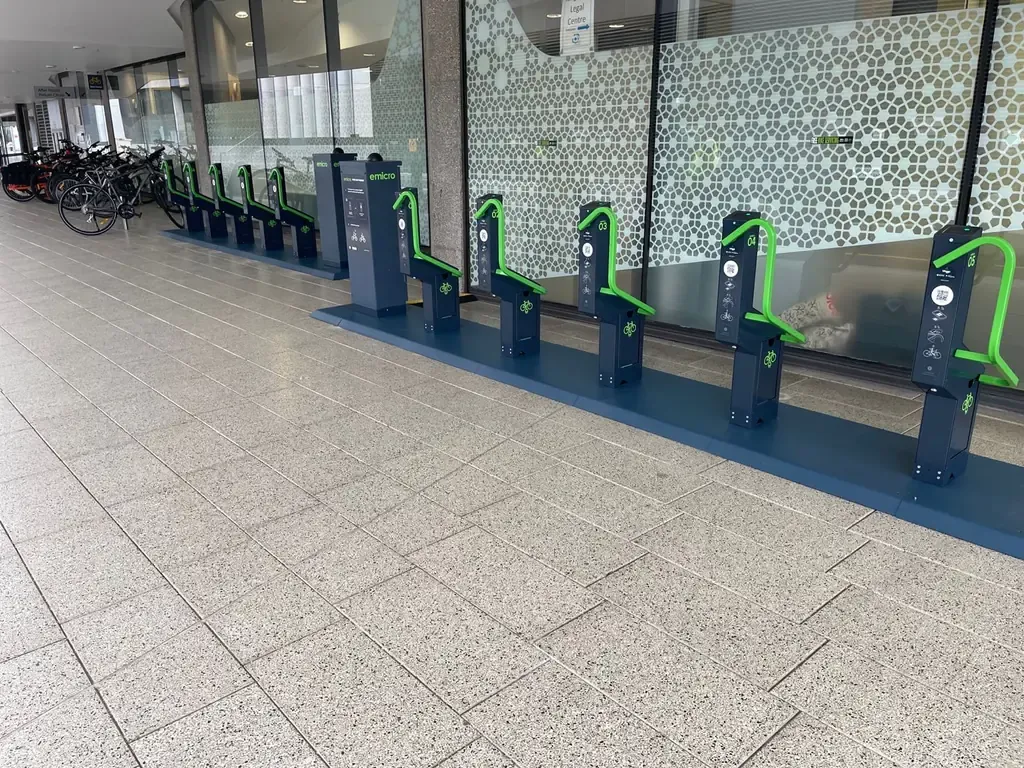
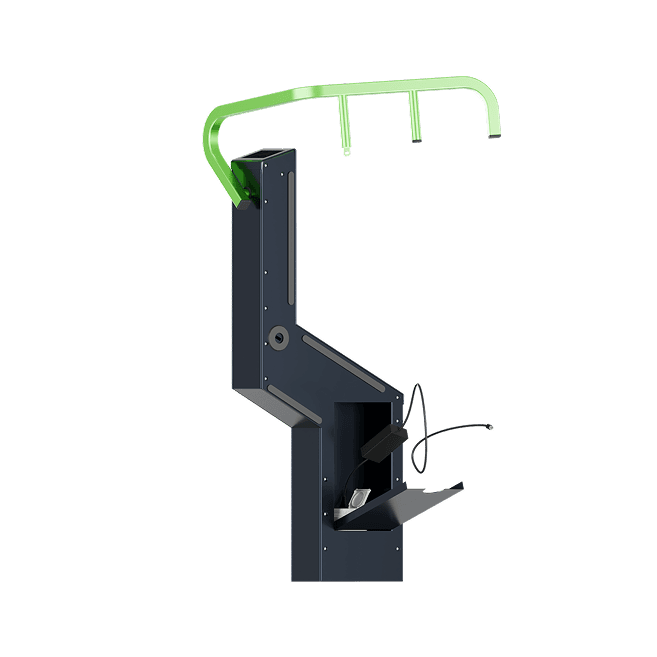
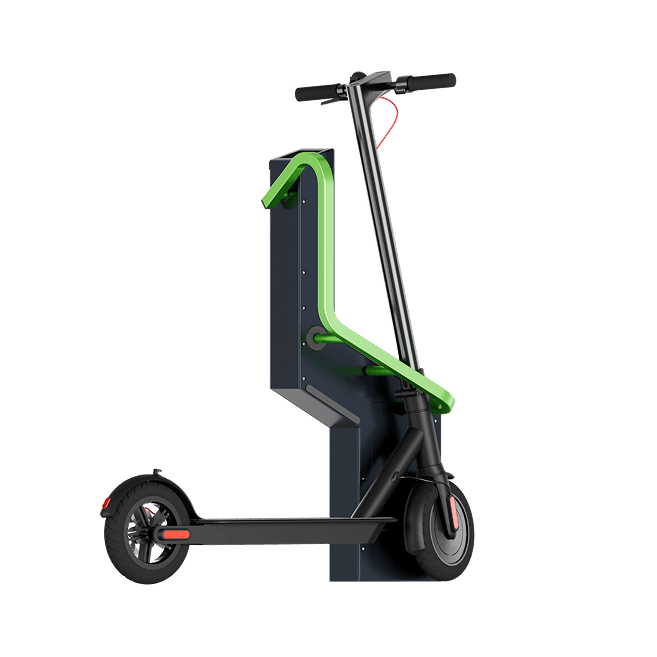
Yes. A scooter parking and charging station does the same job for e-scooters.
The lock grips the scooter's stem, the strongest point on the vehicle. The rider's charger sits in its own locked compartment, and a tamper alarm guards each dock. Stations come with 5 or 10 docks. Bike and scooter stations run on the same app and the same management console, so one campus account covers both.
The table sets the common options against what matters to a facilities or fire-safety team.
No provision
Indoor ban, no alternative
Open racks outdoors
Outdoor e-bike and e-scooter charging stations
| Option | Where the battery charges | Who controls the power | What riders tend to do |
|---|---|---|---|
| No provision | Rooms, corridors, offices | Nobody | Charge wherever there is an outlet |
| Indoor ban, no alternative | Out of sight, often still indoors | Nobody | Hide it, or stop riding |
| Open racks outdoors | Nowhere, no power | Nobody | Take the battery or the bike inside |
| Outdoor e-bike and e-scooter charging stations | Outside, in a locked dock | The university, from one console | Park and charge where the campus wants |
UNSW Sydney, in Australia, runs ten e-bike charging docks on Union Road, outside the Law & Justice Library on its Kensington campus. Two rows of five sit under a covered walkway, between the street and the building.
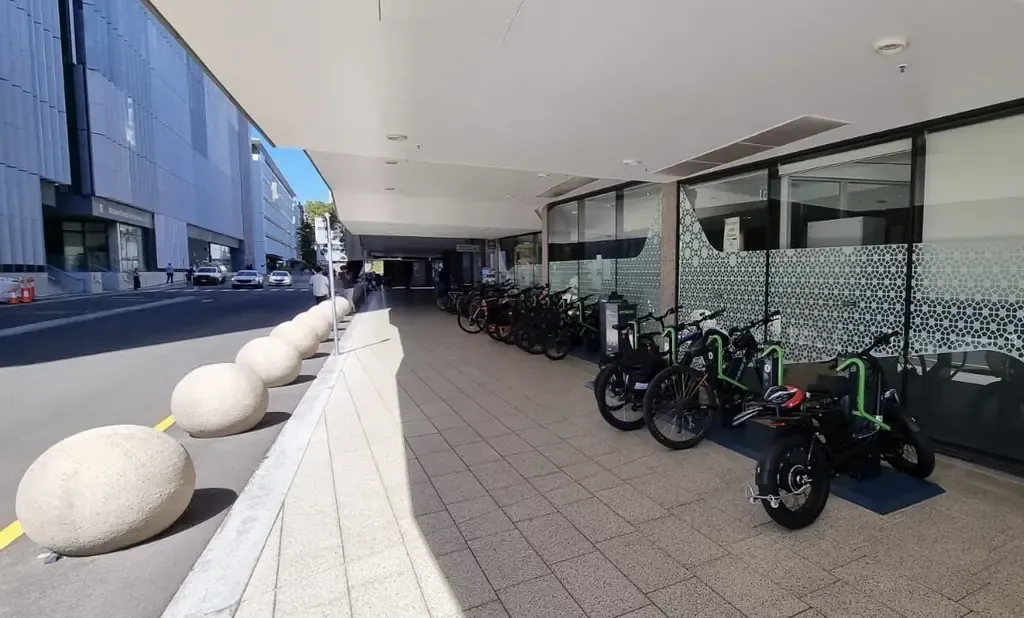
The platform data for that one location, from May 2022 to October 2026, shows a station people rely on every working day.
One rider's comment sums up why people come back. They wrote simply "Feeling secure."
Those riders are the same weekday commuters a US campus serves. The UNSW docks went in before the four-hour relay was available, so they charge without the cut-off. A university installing today can add it from the start. The UNSW Sydney case study covers the wider project and its sustainability goals.
Six questions decide whether university e-bike charging gets used.
Our guide to rolling out bike parking on a campus covers phasing and expansion. The page on bike parking for universities covers access, branding and reporting.
Outside the building, at a secure e-bike charging station. It keeps batteries out of residence halls, offices and stairwells.
No. Riders plug in the charger that came with their e-bike, and it locks inside the dock while it charges.
Yes. Scooter docks lock the stem and hold the charger in a locked compartment, on the same app and console as the bike docks.
A 5-dock station draws 1.5 kW and a 10-dock station 3 kW. At 110 V that is about 14 A and 28 A.
Yes, with the optional relay, which cuts power to a dock after four hours. It is recommended wherever charging runs unattended.
Advertising screens pay for Locky Dock stations, so councils get secure bike parking and e-bike charging without spending taxpayers' money.
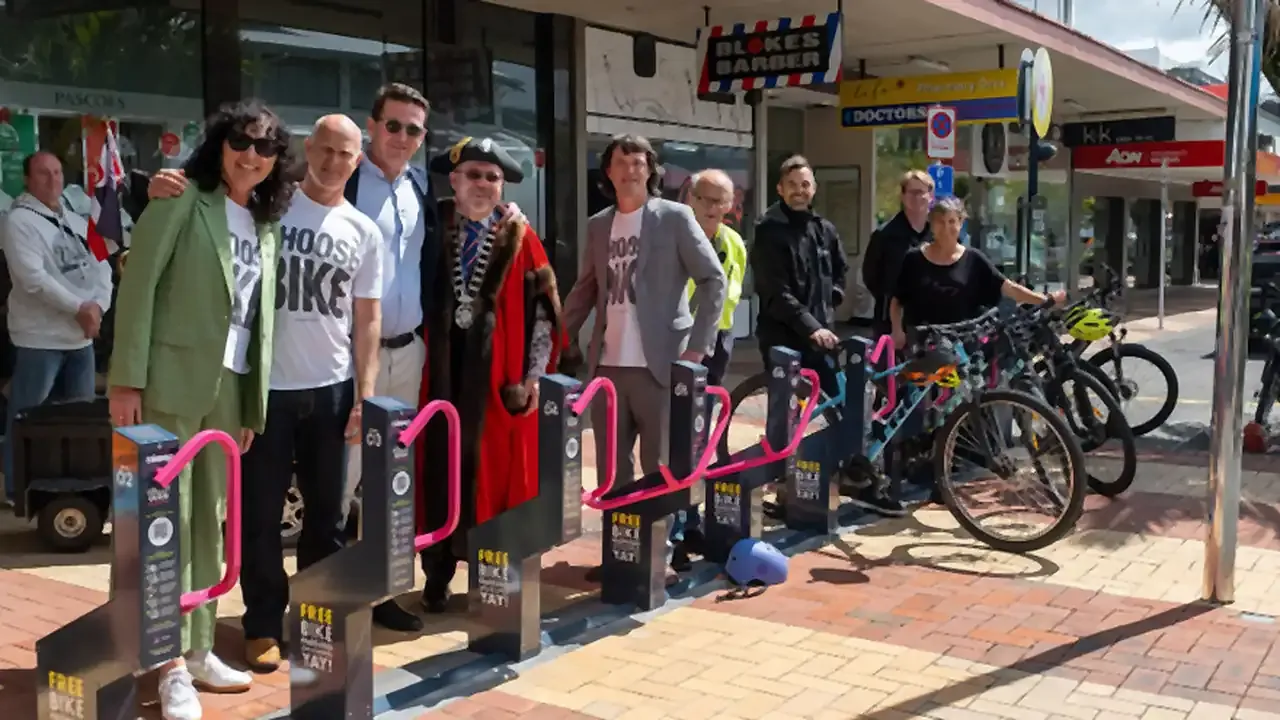
A mobility scooter user in Whangārei showed Locky Dock what public charging means for a town. The benefits councils can point to go well beyond cycling.

Campuses accumulate bike parking in pieces. A phased rollout of site assessment, a small first phase and expansion on usage data turns it into one system.