Insight
A local retailer offer can fill a bike station
One free scoop of ice cream filled a Locky Dock station in Auckland on a Saturday. Here is how operators can use local retailers to get riders to try a station.

Bike parking on a university campus is rarely designed. It accumulates. Open racks outside the library from a decade ago, a keyed cage behind the engineering building, a card-locked room in a hall of residence that one warden administers from a spreadsheet. Each was a reasonable answer to a local request at the time. Together they leave the estates team with no single view of how much capacity exists, how much of it is actually in use, or where the next fifty spaces belong.
Two pressures are making that patchwork harder to live with.
The first is theft. Bike theft is among the most frequently reported property crimes on campus, and recovery almost never returns the bike to its owner. Students know this, which is why the ones with the most valuable bikes are often the ones who stop cycling. A standard rack was designed for a locked frame, not for a vehicle worth thousands.
The second is charging. Students arrive with e-bikes and e-scooters, and the batteries have to be charged somewhere. Where nothing is provided, charging happens in rooms, hallways and stairwells. Universities are increasingly prohibiting that — but a prohibition without a sanctioned alternative moves the activity out of sight rather than out of the building.
The instinct at this point is to design a campus-wide scheme and take it to capital committee as one number. That is usually what kills it. A whole-estate business case needs demand evidence the estate cannot produce, because nobody is measuring the parking that exists today.
The first step is not procurement. It is finding out where theft and charging demand concentrate on your specific campus, which is almost never evenly spread and almost never where the existing racks are.
A site assessment looks at the buildings people actually cycle to, the arrival patterns around lecture halls and libraries versus the overnight pattern around halls of residence, where incidents get reported to campus security, and where the informal charging is happening. The output is a short list of proposed locations ranked by demand, not a map of the whole estate.
This is also where the awkward questions get answered early: which surfaces can be dug into and which cannot, where power already runs, and whether the existing bike rooms and cages should be replaced or simply brought onto the same access system.
The second step is a deliberately small first phase — one or two locations from that list.
Configuration matters more than scale here. Smart docking stations come in a range of dock counts, and charging and parking-only docks can be mixed on the same station, so a location near a lecture hall can run mostly parking-only for short stays while a location near halls carries more e-bike charging docks for overnight use.
The point of a small phase one is not caution for its own sake. It is that phase one generates the evidence phase two needs, in a form a finance committee accepts: occupancy per dock, per hour, at a real campus location, rather than a consultant's estimate.
The third step is the one estates teams expect to be worst and usually isn't.
Installation is carried out by a local general contractor and needs two things: a flat surface and a power connection. Drawings and the installation manual are supplied in advance, and Bikeep consults the contractor throughout. Where groundwork on a finished surface is unwelcome — a paved forecourt, a listed setting, a space that may be reconfigured later — optional ground plates avoid it entirely and keep the stations relocatable.
The part that surprises people more is that there is no IT project attached. Stations arrive online over cellular with a pre-installed SIM. There is no campus network segment to configure, no wi-fi to join, no ticket in the queue behind the student record system.
Access follows the same logic. Every dock has a built-in contactless reader as well as app and QR access, so a smartphone is not required, and access lists are managed against a university-held list of enrolled students and authorised staff. Compatibility with existing campus credentials is assessed during design rather than assumed.
The fourth step is where the phased approach earns its keep.
Utilisation data from phase one shows which of the proposed locations were right, which were wrong, and where the next stations belong. Several networks have grown exactly this way. BART in the San Francisco Bay Area started with an initial ten docks and now runs over a hundred across ten years of operations — each expansion argued from the usage of the ones already installed.
On campus that data does more than justify the next station. Live occupancy per dock and long-stay flags at three and fifteen days surface abandoned bikes automatically, which is otherwise a manual sweep nobody has time for. Every session is tied to a user, so incidents have an audit trail. And because facilities and security work from the same console, an operator can see device health and open any dock remotely without anyone walking across the estate.
Existing bike rooms and cages do not have to be replaced to join this. They can be brought onto the platform so that the same credential and the same reporting cover them too — which is usually the difference between a coherent estate-wide picture and a spreadsheet with gaps in it.
Universities that run this sequence tend to end up in the same place: one vendor, one console and one access method across every kind of parking on the estate, arrived at over time rather than in a single capital event.
The supporting benefits follow from that rather than being bought separately. Secure parking supports LEED credits under Location and Transportation, sustainability rating submissions, Bicycle Friendly University applications, and ESG and net-zero reporting. University deployments include the University of Hertfordshire, where it contributes to the university's net-zero commitment, and UNSW Sydney, as part of its active travel plan.
It is worth being precise about the causal order, because it is easy to get backwards. Secure parking is not a reward for mode shift; it is the precondition for it. Students who trust the parking are the ones who actually cycle, and every one of them is a student not competing for a car parking space. That case is far easier to make with two terms of occupancy data from your own campus than with a projection.
Mentioned in this article
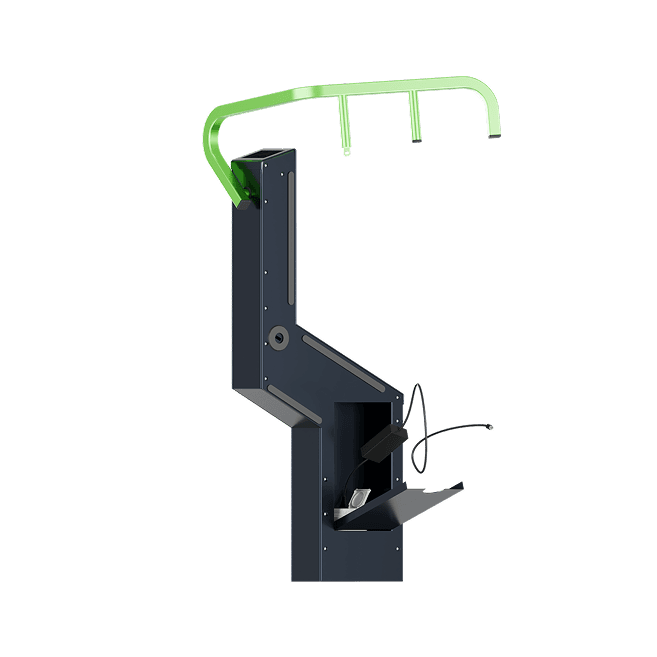
Bike Parking & Charging Station
Secure parking with integrated e-bike charging. Bring-your-own-charger model — bike and charger both locked and secured.
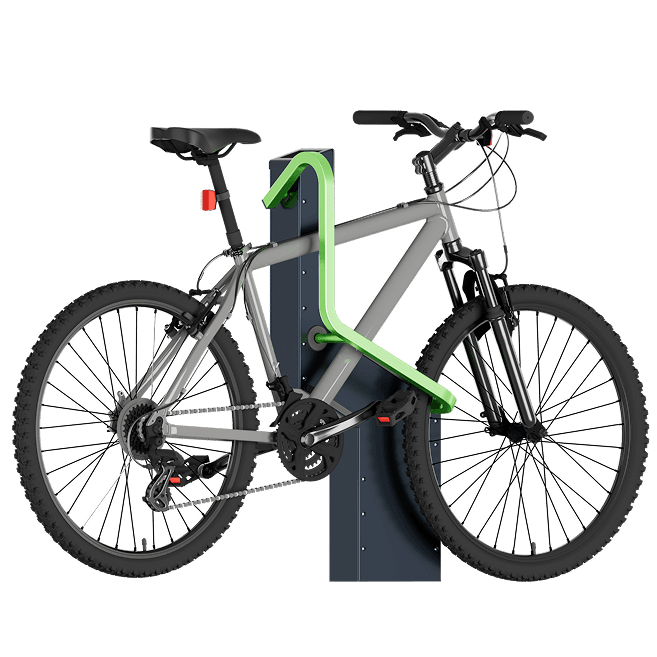
Bike Parking Station
Secure short-term parking.
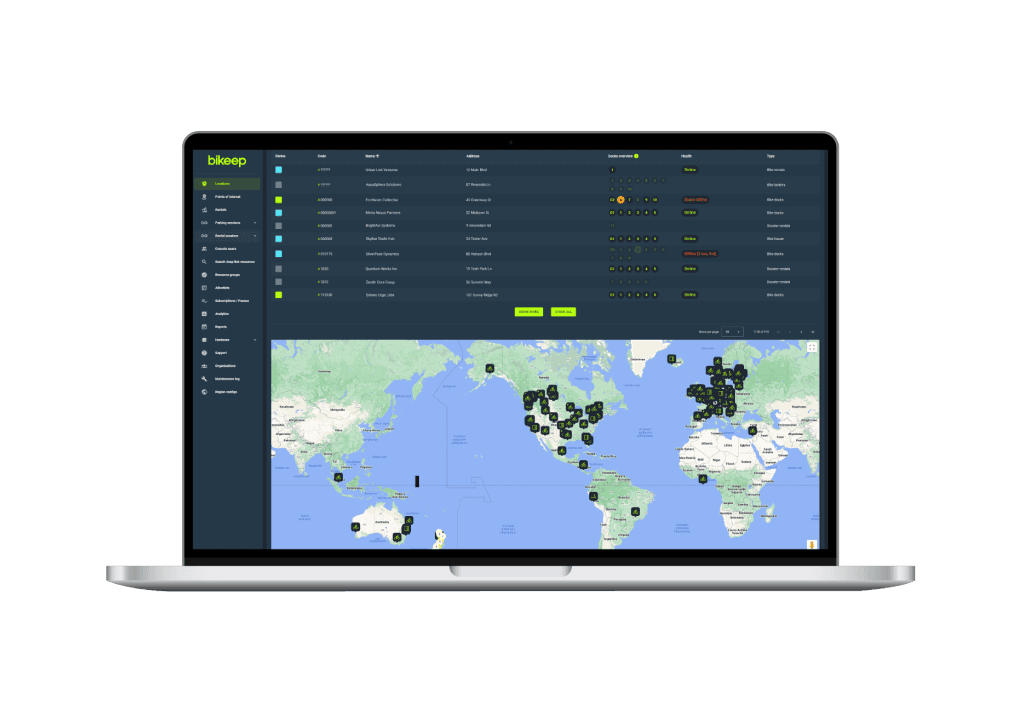
Bikeep Console
Access lists, cards, expiry dates, reports and maintenance for every site in one dashboard.
One free scoop of ice cream filled a Locky Dock station in Auckland on a Saturday. Here is how operators can use local retailers to get riders to try a station.
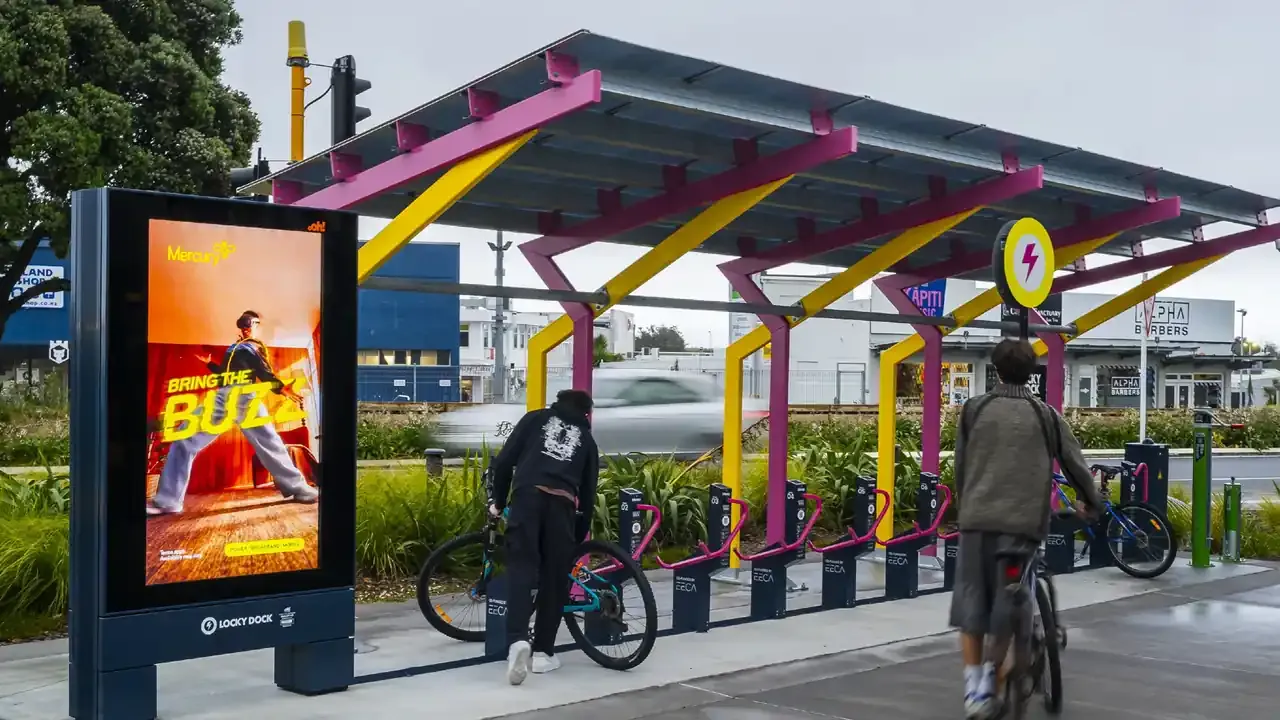
Locky Dock plans bike parking as a network at the nodes of daily life, such as libraries, supermarkets and pools. This is how to pick and rank the sites.
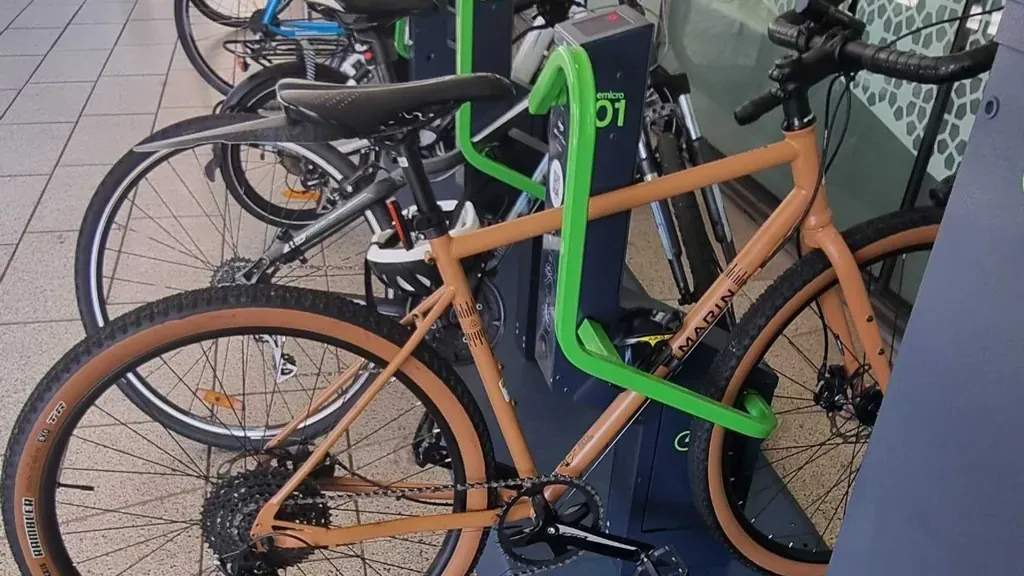
UNSW Sydney charges e-bikes outside its buildings. Ten docks have carried more than 8,000 parkings, a model for US universities moving charging outdoors.