Insight
A local retailer offer can fill a bike station
One free scoop of ice cream filled a Locky Dock station in Auckland on a Saturday. Here is how operators can use local retailers to get riders to try a station.

A single summer pilot on Princess Street answered the only question that matters for a city weighing new infrastructure: will people actually use it? Downtown Kingston got its answer — and then made it permanent.
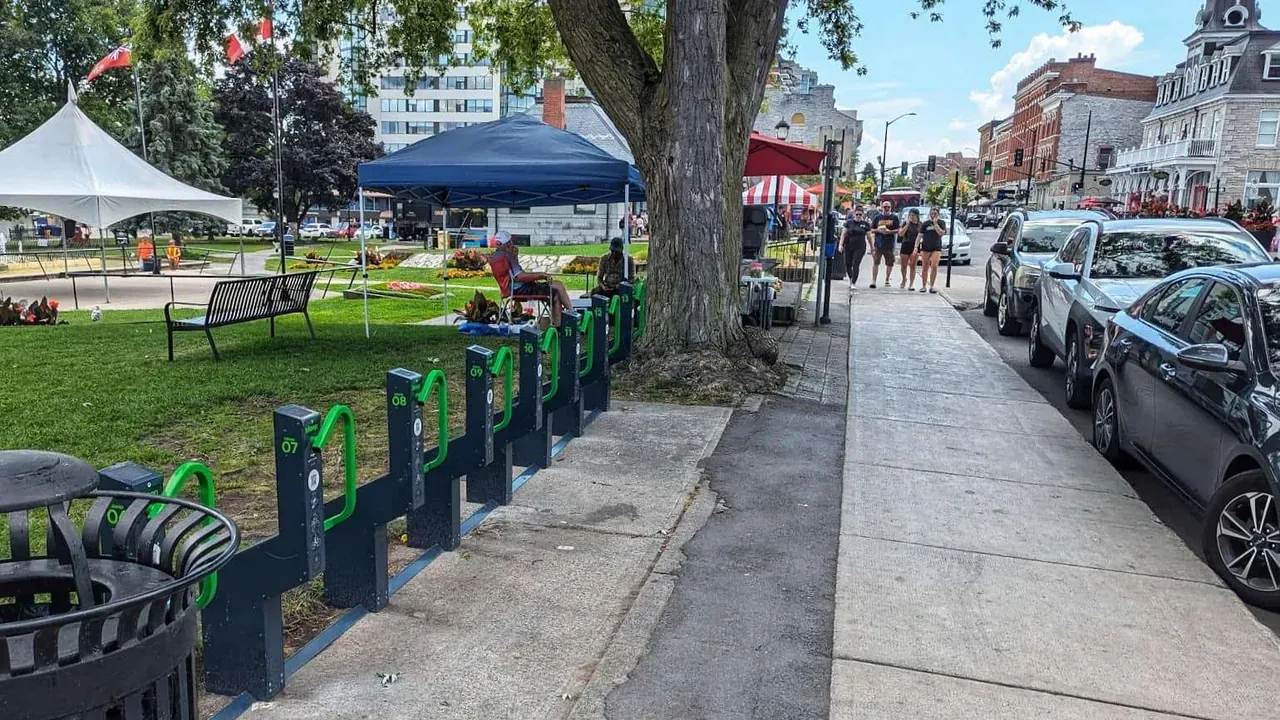
Eighteen secure docks now operate across three locations in downtown Kingston, Ontario — positioned at the bottom, middle, and top of the main commercial corridor, and opened for World Car-Free Day on 22 September 2025. Delivered by Canadian partner Urban Racks and built on the Bikeep platform, the stations give residents, employees, and visitors a free, secure place to leave a bike while they work, shop, or explore the core.
This is what it looks like when a municipality treats secure bike parking not as street furniture, but as transportation infrastructure.
The fastest way to waste public money is to commit to a city-wide rollout before anyone has proven the concept on the ground. Downtown Kingston did the opposite.
The stations first appeared as a temporary summer pilot on Princess Street. Cyclists tried them, the data came in, and the case made itself. Now permanently installed across three fixed locations, the network gives the downtown core consistent, dependable parking that people can build a habit around.
That pilot-to-permanent path is the same one that took BART in the San Francisco Bay Area from a 10-dock trial to a network spanning seven stations. Start small, prove demand, expand with confidence — it is the lowest-risk way for any city to grow cycling infrastructure, and Kingston followed it exactly.
See the rider experience in thirty seconds: using Bikeep is easy, safe, secure — and free.
The network sits along the downtown core's main commercial spine:
Three locations, eighteen docks, covering the length of the downtown the way a transit line covers a route.
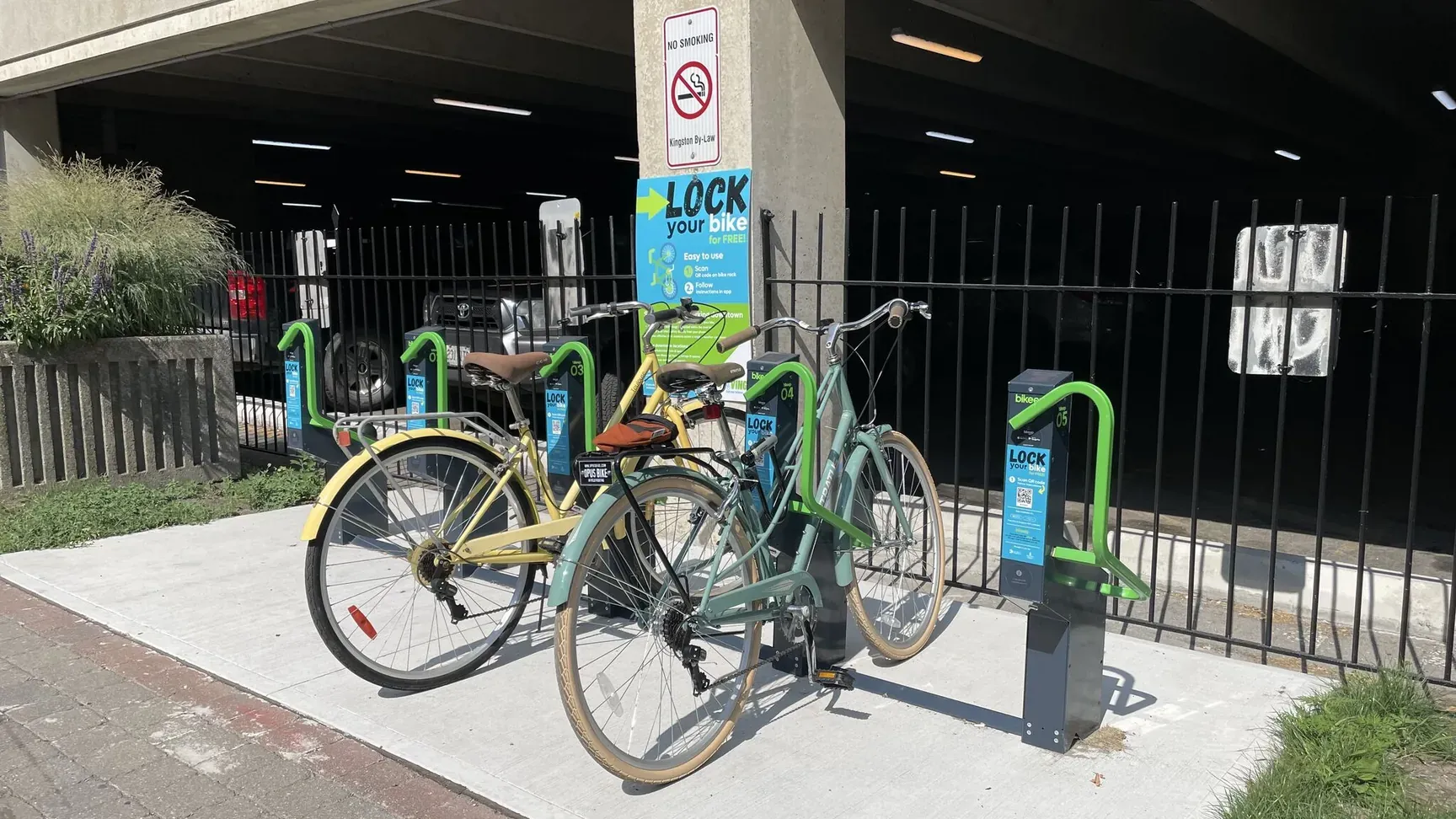
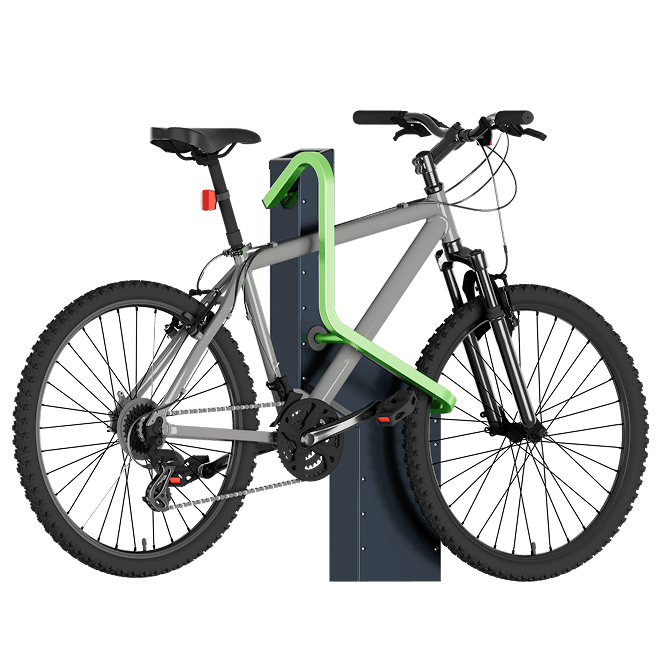
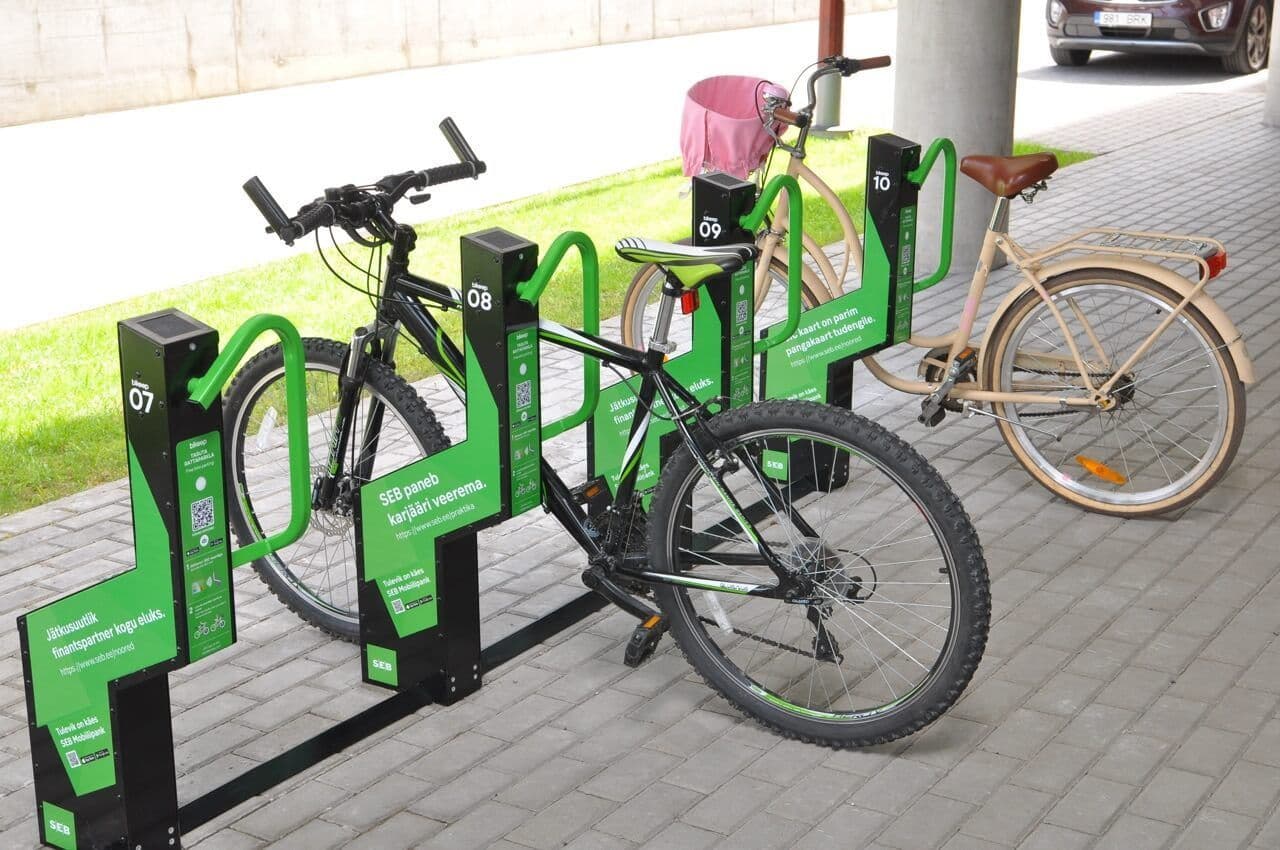
Most "smart" parking is designed for a private garage or a campus plaza. The street is harder: permitting hurdles, no appetite for excavation, weather, and the risk of vandalism. The Bikeep smart bike parking station was built for exactly those conditions.
No ground works, no permanent fixtures. The stations install on weighted ground plates — no digging, no bolting into the road, no complex permitting for fixed street assets. The plates are heavy and tied together, so a station cannot be shoved or dragged off. And because nothing is permanently attached, the city can relocate or remove a station without leaving a mark. That single design choice is what makes a low-risk summer pilot possible in the first place.
Three layers of security. Each dock locks the bike with a large steel bar across the frame and front wheel. Inside that bar runs a cut-safety wire, so an attempt to saw through it triggers the system. And a tamper sensor notifies the rider on their phone the moment something is wrong — backed by encrypted communication, password-protected accounts, and 24/7 server monitoring.
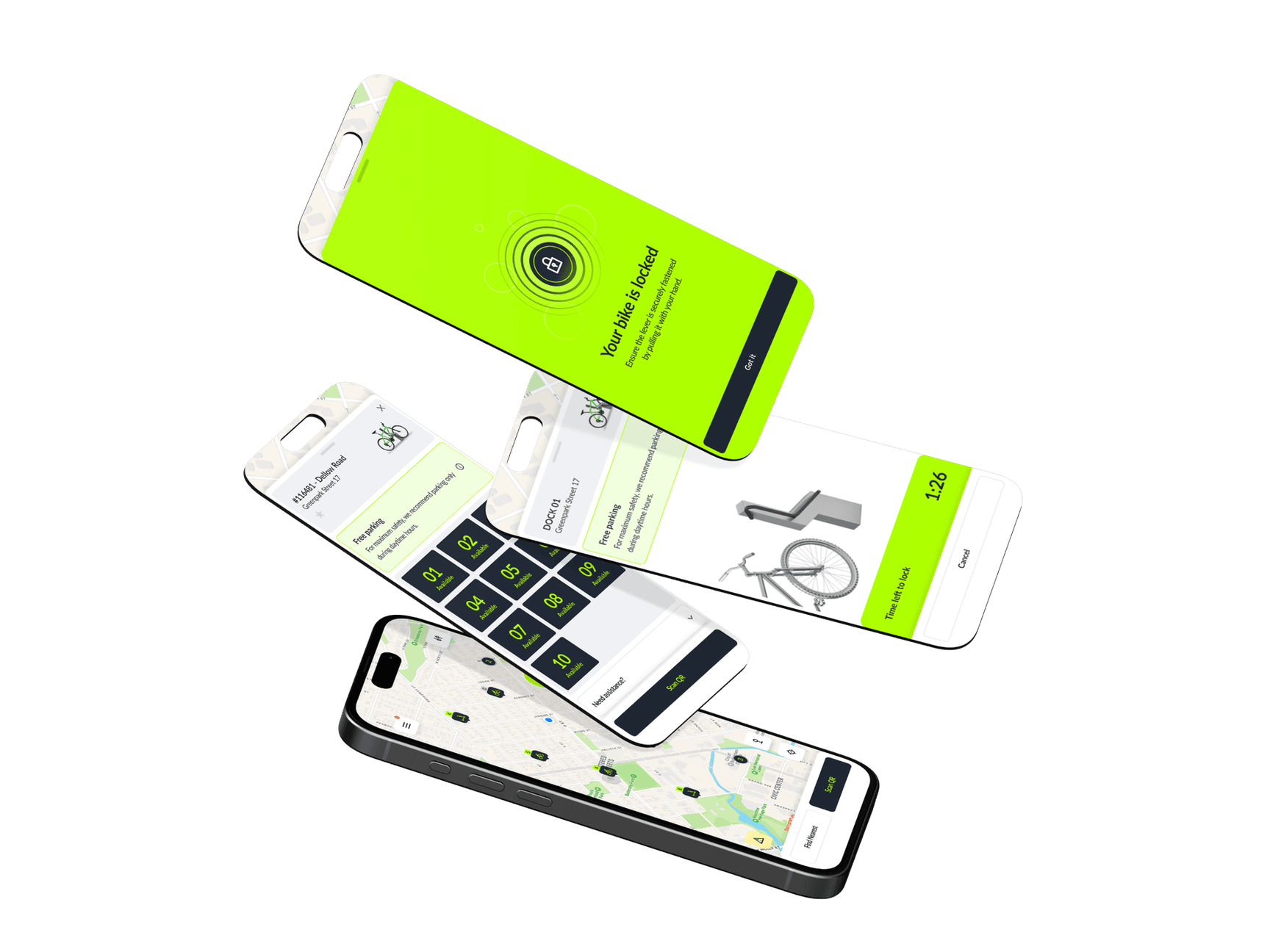
The app is the key. Riders lock and unlock with the free Bikeep app on iOS and Android, which means only registered users ever open a dock — and every user can be reached directly. For the rare emergency or technical hiccup, staff at the Downtown Kingston BIA can unlock manually. No standalone lock to forget, cut, or lose.
Proven, and weatherproof. The stations are built from durable, corrosion-resistant materials that stand up to a Canadian winter, and the platform runs in 30+ countries worldwide.
"The gold standard of bike racks." — Bay Area Rapid Transit
For a city, secure bike parking is rarely about the bikes alone. It is about congestion, climate targets, downtown vitality, and public money spent where it returns the most. Kingston's case shows all four.
It moves the climate needle on the city's own terms. Kingston was the first city in Ontario to declare a climate emergency, and its Climate Leadership Plan commits the community to carbon neutrality by 2040. Its "Walk 'n' Roll" active-transportation plan targets 20% of all trips by active modes. Secure parking is a direct, visible lever on those goals: encouraging cycling, walking, and transit reduces congestion, automobile dependency, and carbon emissions — exactly as the city's strategy intends.
It pays the downtown back. Cyclists are not lost customers — they are better ones. People who walk, cycle, or take transit spend up to 40% more per month in neighbourhood shops than drivers. A secure place to park is what turns a passing cyclist into someone who stops on Princess Street and spends.
It uses space and budget efficiently. Eighteen secure docks occupy a fraction of the footprint — and the cost — of the equivalent car parking. For a downtown where every metre of curb is contested, bike parking hosts far more people per dollar.
And the returns compound. In New Zealand, a 10-station network delivers roughly 64 tonnes of CO2 abated and over US$732,000 in air-pollution benefit per year — the kind of public return that turns a modest install into measurable civic value.
The throughline: a city that secures the bike at the destination removes one of the biggest reasons people leave it at home.
The project was delivered by Urban Racks, a partner known across Canada for consultative work — sitting down with a client to understand the corridor, the users, and the goals before a single dock goes in. Their value is the working system around the product: the right locations, a pilot that earned buy-in, and a permanent network that fits how downtown actually moves.
That partnership is why Kingston's network reads as planned infrastructure rather than scattered equipment — and why it was ready, in the right places, in time for World Car-Free Day.
A commuter rides in along Princess Street, locks into a dock by City Hall in seconds, and heads to work without a backward glance. A visitor parks securely near Hotel Dieu and spends the afternoon in the shops. And the city has a tangible, in-the-ground answer to its own climate and active-transportation commitments — one residents can use every day.
One free scoop of ice cream filled a Locky Dock station in Auckland on a Saturday. Here is how operators can use local retailers to get riders to try a station.
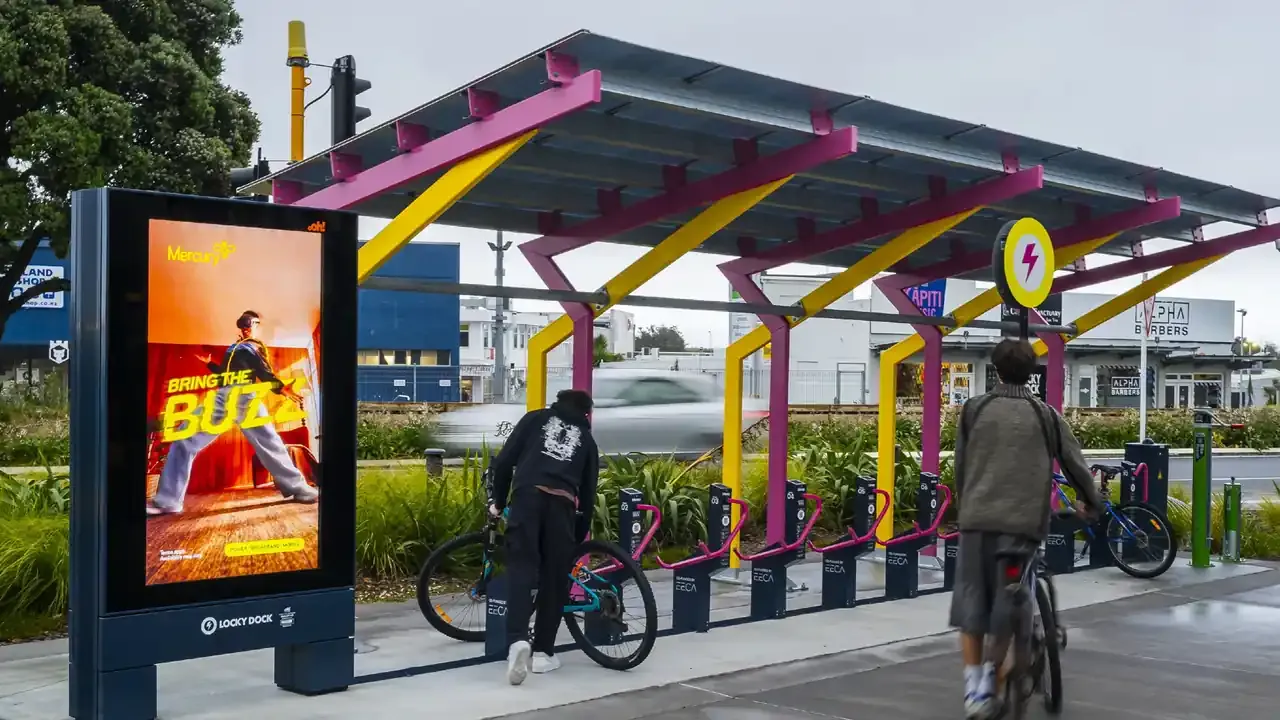
Locky Dock plans bike parking as a network at the nodes of daily life, such as libraries, supermarkets and pools. This is how to pick and rank the sites.
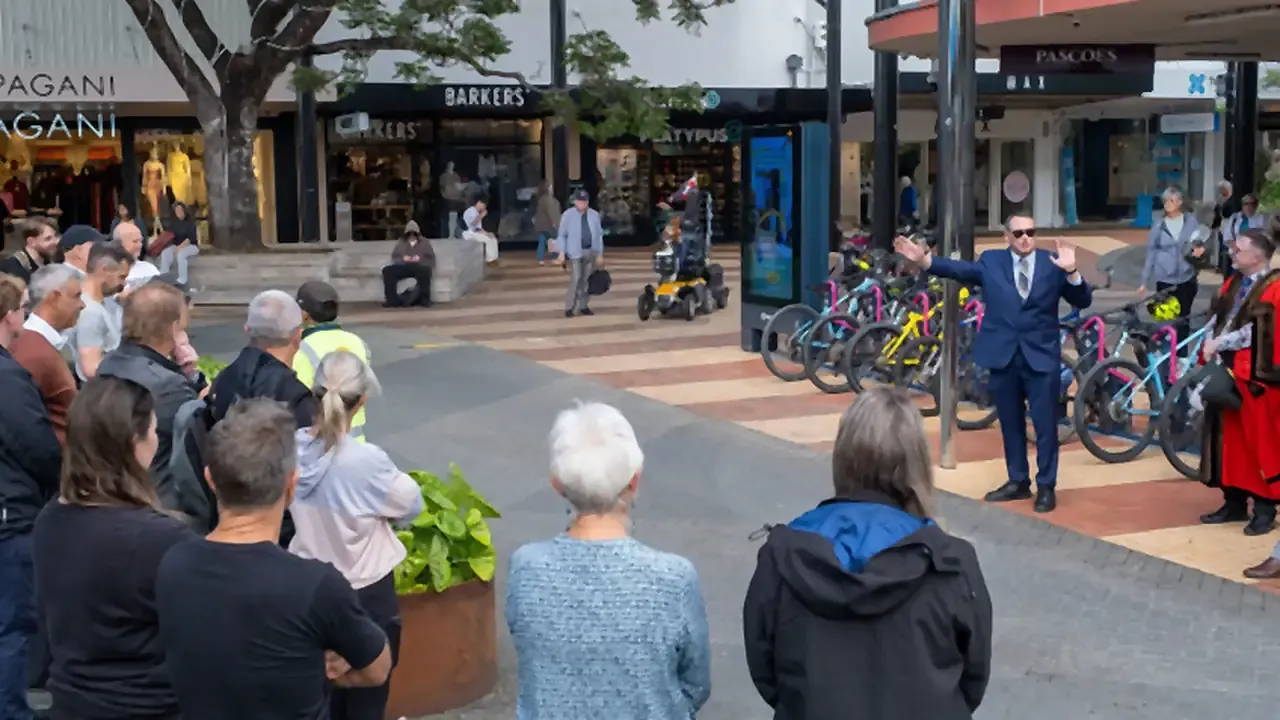
Kirsten Corson of Locky Dock on winning council backing for secure bike parking. Start with theft as the barrier to cycling, then the council's own goals.