Insight
Public bike parking and charging help more than cyclists
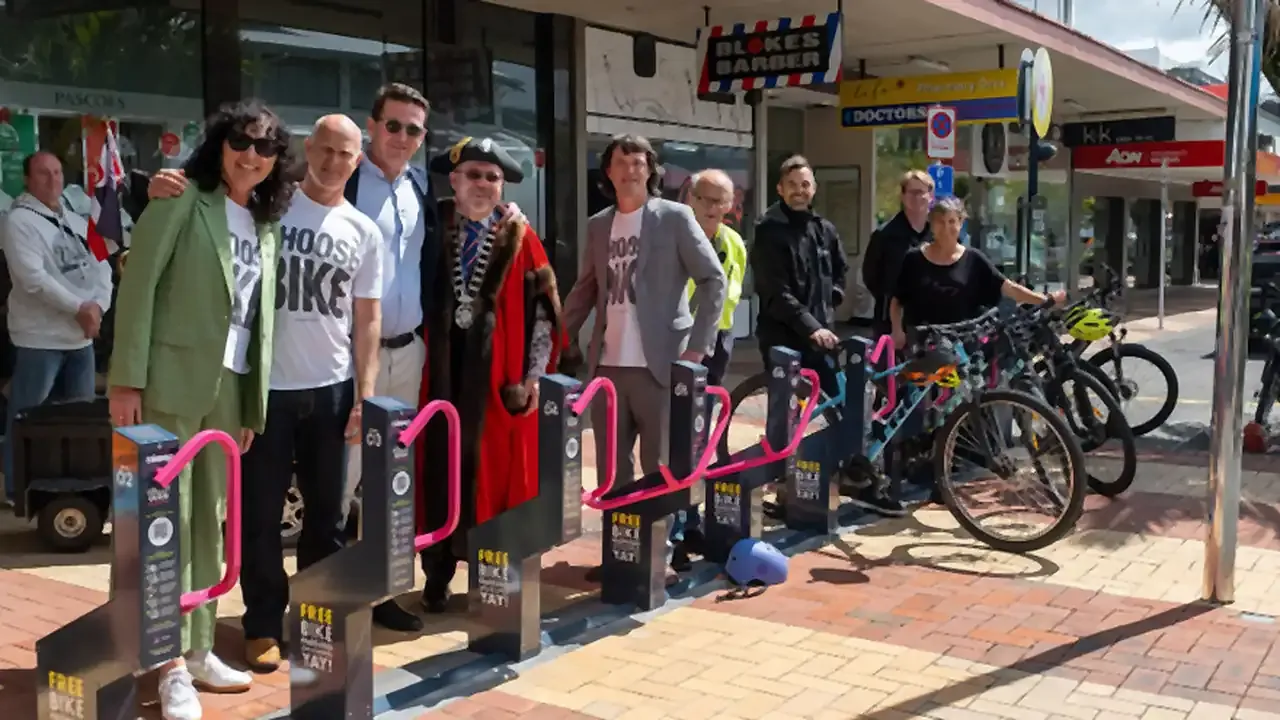
A mobility scooter user in Whangārei showed Locky Dock what public charging means for a town. The benefits councils can point to go well beyond cycling.
You signed off the bike parking. It went in on schedule, it works, and the photos looked good. Then you walk past it on a Tuesday morning and most of the spots are empty, and someone in the next budget meeting asks whether it was worth the money.
This is the most common disappointment in cycling infrastructure, and it is almost never a hardware problem. People walk past a secure bike station every day without ever using it, for reasons that have nothing to do with the station itself: they assume it costs money, and they assume it isn't meant for their bike.
Both assumptions are wrong. Neither one gets corrected by the station being there.
Infrastructure projects are planned around a go-live date, because that is what a contract can be written against. The station is delivered, commissioned, photographed and signed off, and the project is closed.
Riders don't work to that calendar. A commuter changes how they travel to work perhaps once or twice a year — when the weather turns, when they buy a new bike, when their route changes. If the station opens in the middle of that cycle, the people it was built for aren't in the market for a new routine yet, and by the time they are, the station has become part of the scenery.
The gap between "installed" and "used" is measured in seasons, not weeks. That is uncomfortable if the business case was written assuming otherwise, and it is worth knowing before the first quarterly review rather than after it.
Stand next to a station at eight in the morning and you can watch the decision happen. Someone slows down, looks at it, and keeps going. They have asked themselves two questions and answered both wrong.
"This probably costs money." Public infrastructure that looks engineered — a dock, a screen, an app — reads as paid infrastructure. A rider who is running late will not stop to investigate a payment flow that might not exist. Where parking is free, saying so is not a marketing detail; it is the single fact that decides the outcome.
"It's not for my bike." Anything that looks like a system gets mistaken for someone else's system: a rental fleet, a shared scheme, a staff-only facility. The rider concludes it is for a category of bicycle that isn't theirs, and a personal bike stays locked to the railing outside.
Neither objection survives ten seconds of conversation with a person who knows the answer. But nobody is having that conversation, so both objections survive indefinitely.
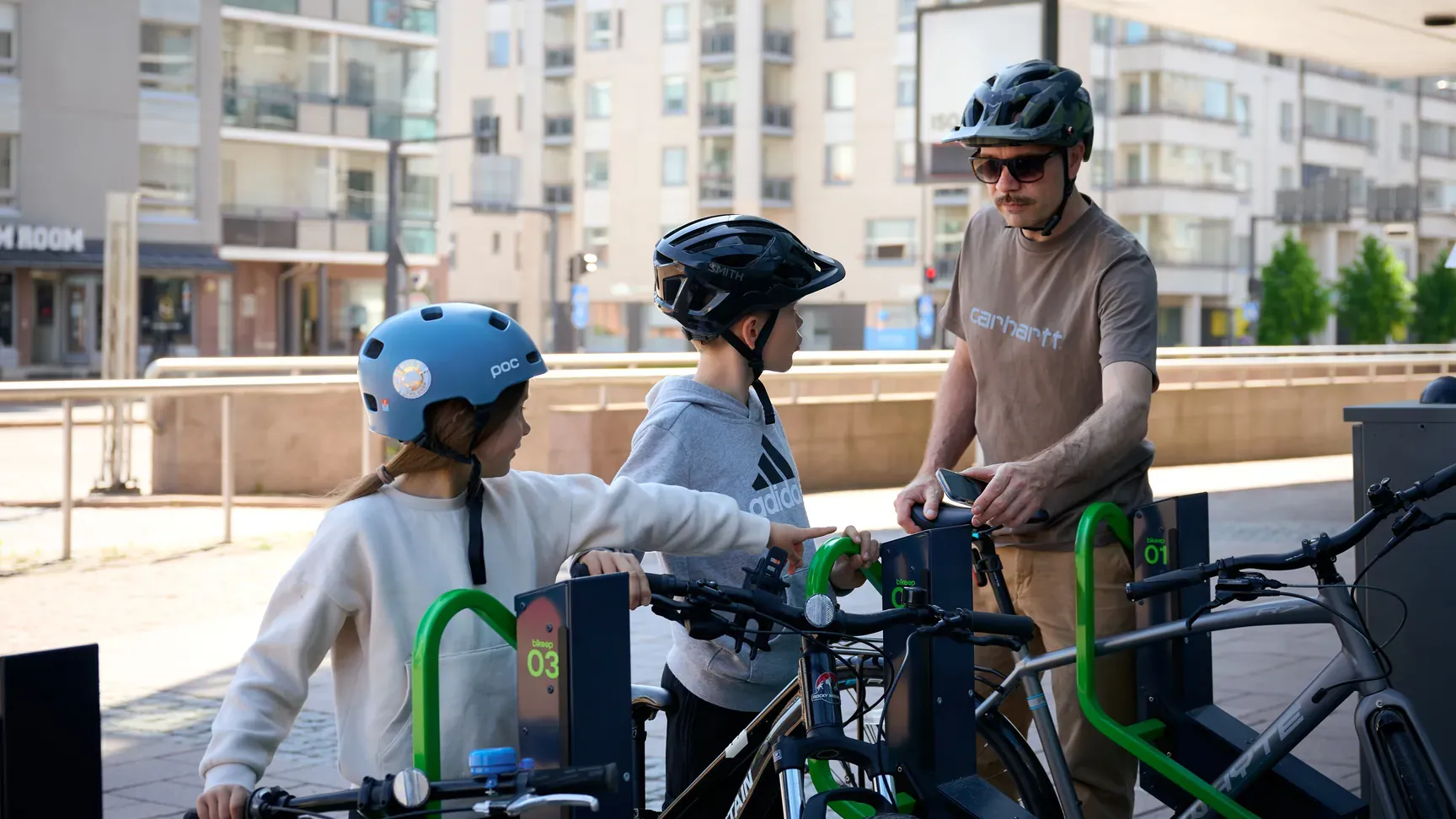
Bauer Media operates a seven-station Bikeep network across Finnish shopping centres — Iso Omena, which has two stations, plus Lippulaiva, Kaari, Myyrmäki, Trio and Koskikeskus — offering secure bike parking and e-bike charging free to anyone who turns up with a bicycle. Faced with stations that were working and underused, they ran a local activation campaign rather than a media campaign. Two components, neither expensive:
Promoters at the stations during peak hours. People stationed where riders actually arrive, at the times they actually arrive, explaining in one sentence what the station is, that it is free, and that it is for the bike the rider is currently pushing.
Signage that answers the objections directly. Not branding. The two facts a rider needs before they will stop: what this is, and that it costs nothing.
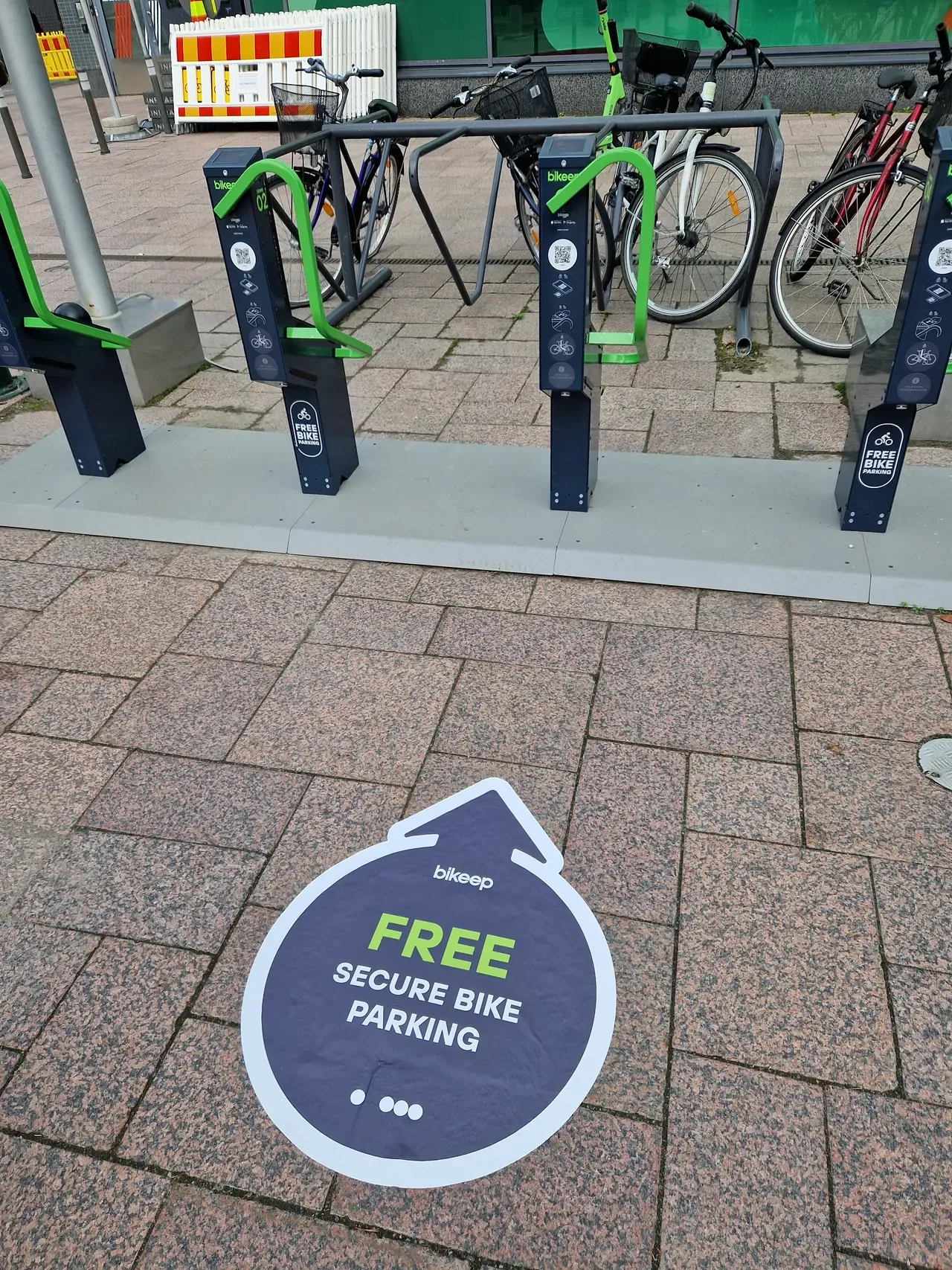
That is the whole intervention. No app-install push, no discount, no new hardware.
In July 2025 the network logged 145 parking sessions across the month. In July 2026 it logged 1,478.
The obvious objection is that the network grew. It did — two further stations came online during the year. So the fair comparison is the five stations that were open in both months, and they went from 145 sessions to 1,307. Roughly a nine-fold increase on identical hardware in identical locations.
Myyrmäki is the clearest case. In July 2025 the station there recorded 26 sessions. In July 2026 it recorded 879, from 33 individual riders — around 27 sessions per rider in one month, which is not occasional use. That is people parking twice a day, most working days. The station stopped being a facility and became part of a commute.
It is also worth being honest about the shape of the year. Between the two Julys, the network fell to fewer than 80 sessions in the whole of February. Winter does what winter does, and a network judged on its February numbers looks like a failure four months before it looks like a success. Anyone reviewing utilisation quarterly needs a full seasonal cycle in view, or they will cancel something that was about to work.
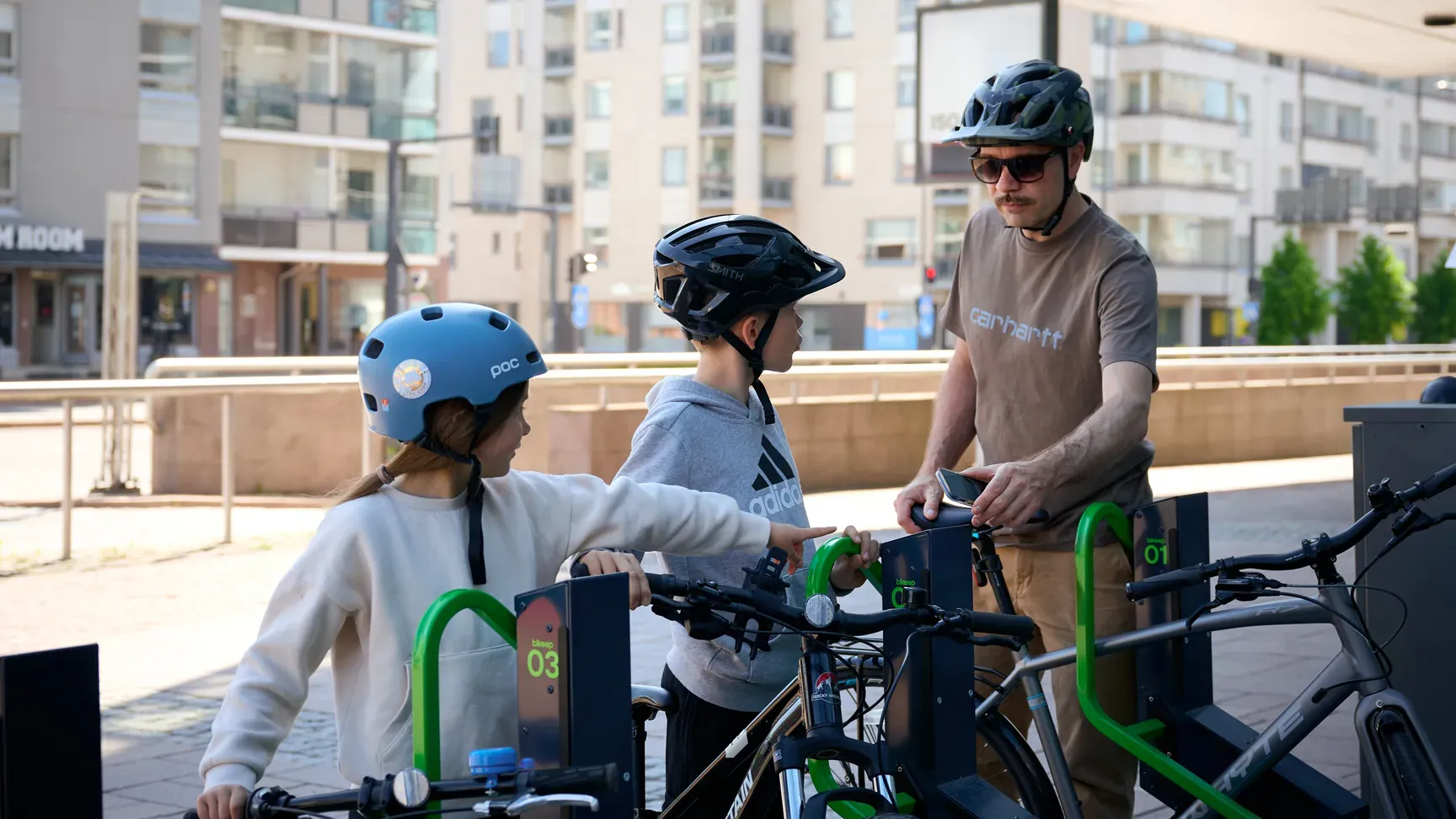
The campaign didn't convert a thousand people directly. Promoters spoke to a few hundred at most.
What it did was produce a visible population of users. A bike parked in a station is a demonstration, running all day, to everybody who walks past — it answers both objections at once, because the bike in the dock is obviously a personal bike and its owner obviously didn't pay to leave it there. The second season did most of the work, because by then the early adopters were doing the explaining simply by parking.
This is why the intervention is cheap relative to its effect, and why it has to happen early. The campaign's job is not to reach everybody. It is to get the first cohort visible, in the right place, at the right hour, and then let the demonstration compound.
"Never knew about this thingy. It's a very good public service. Respect to yall."
That is rider feedback submitted through the Bikeep app at Myyrmäki, and it is the whole argument in three sentences: a service that was valued the moment it was understood, by someone who until then hadn't known it was there.
The rest of the feedback from Myyrmäki is worth reading for what it doesn't contain.
"Good locking" "Very nice machine" "Working perfectly fine like a professional"
Nobody mentions the price. Not one comment thanks anyone for the parking being free, or asks what it costs, or complains that it isn't. Once the two objections are gone, riders stop evaluating whether to engage with the thing at all and start evaluating the thing itself — how well it holds the bike, whether it fits, whether it works.
That is what a solved awareness problem looks like in the raw text, and it is a more reliable signal than any satisfaction score, because nobody is answering a survey question. Across the station's whole history there are 78 ratings, 77 of them five stars.
The comments reach the site operator exactly as riders write them, the complaints included. That matters more than the average: a score tells you how people feel, and the text tells you what to fix.
Three things follow, and none of them require changing what you buy.
Budget the launch, not just the build. A day of promoter time per station at opening, and again at the start of the following season, is a rounding error against the capital cost — and it is the difference between the numbers above and a flat line.
Say the price on the sign, especially when there isn't one. "Free" is the most load-bearing word available to you. Assuming riders will work it out is the most expensive assumption in the project.
Judge it on a full year. Set the review date after a complete seasonal cycle, and ask for session data rather than impressions. Every session and every rider comment is visible to the site operator in the management console, which means the question "is this working?" has an answer that doesn't depend on anyone's opinion.
The stations in this network were not modified, relocated, or upgraded during the year their usage grew ninefold. Nothing about the infrastructure changed. What changed was how many people knew what it was for — and at retail and mixed-use sites, where the audience turns over constantly and nobody is obliged to learn anything, that knowledge has to be put there deliberately.
Infrastructure that nobody knows how to use is not underperforming. It is unfinished.
A mobility scooter user in Whangārei showed Locky Dock what public charging means for a town. The benefits councils can point to go well beyond cycling.
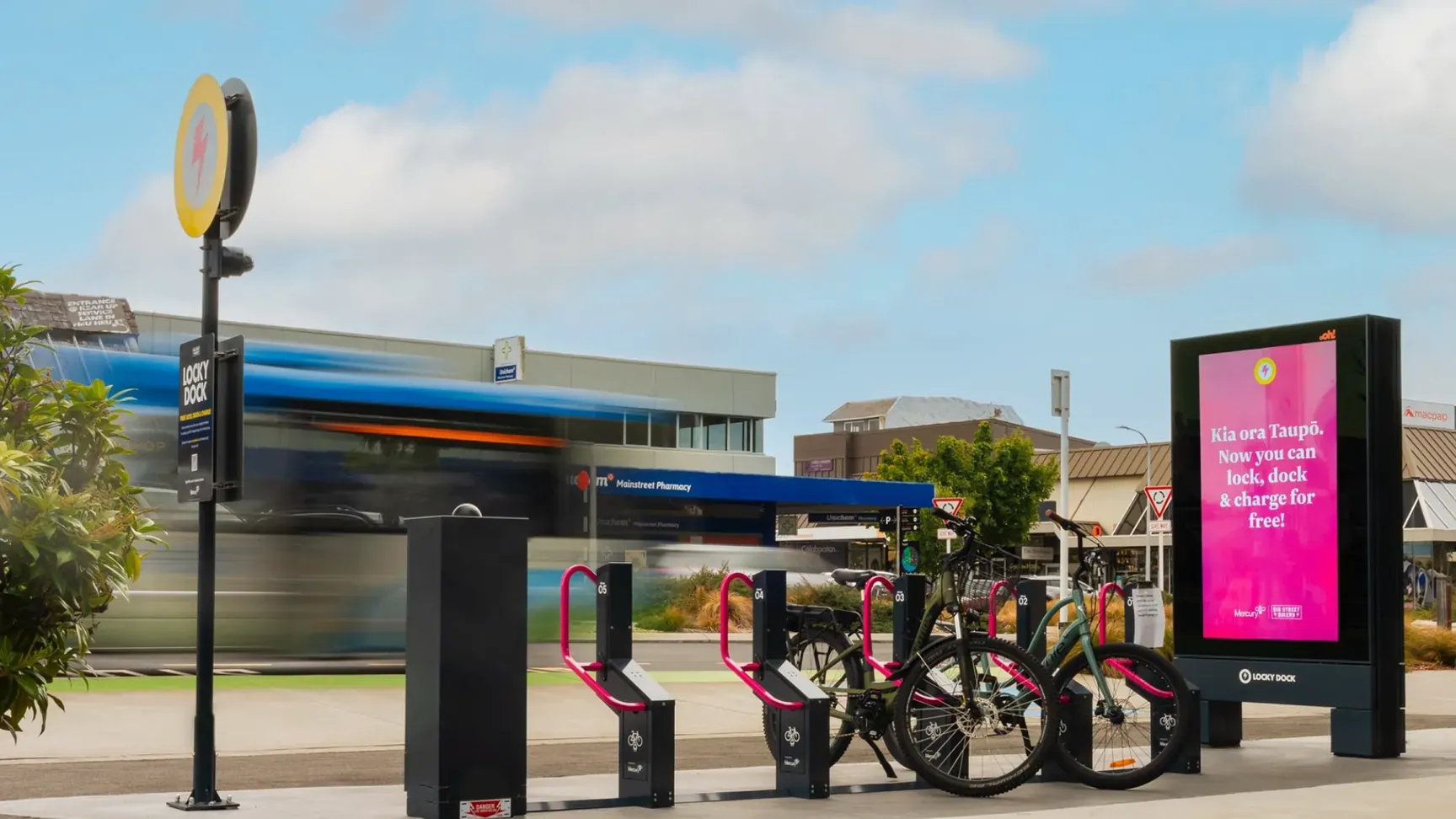
Digital advertising screens let Locky Dock offer free bike parking and e-bike charging to councils and riders. This is how the triple win model works.
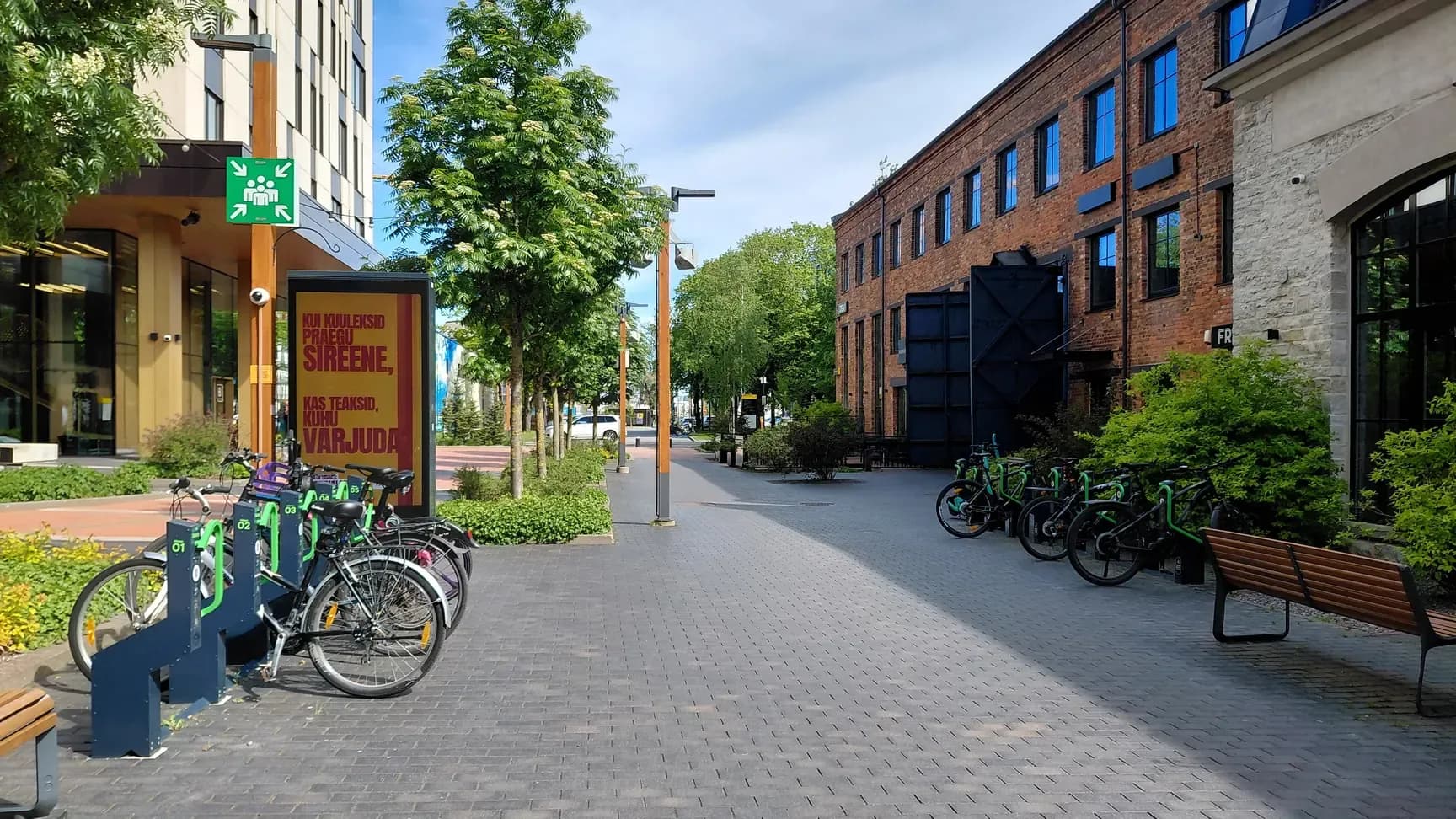
Ülemiste City in Tallinn built a campus-wide smart bike parking network. Riders rate it 4.89 out of 5, and no bike has been reported stolen from a station.