News
Why a scaling bike parking network needs IoT, not Bluetooth
Bluetooth locks scale to a dozen doors. Networks that reach hundreds need devices with their own connection — and a platform that outlives the hardware.
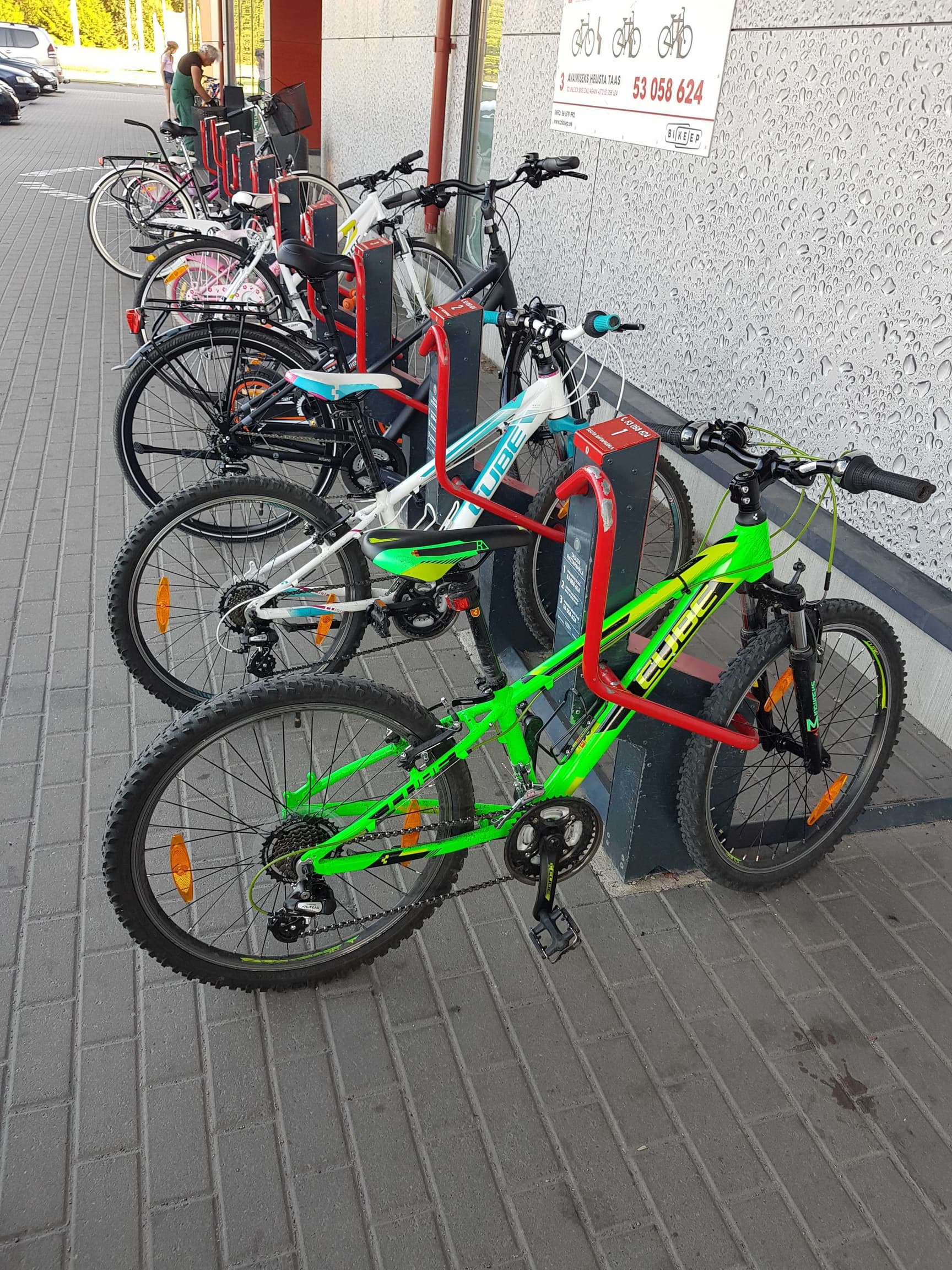
The car park is full at five o'clock on a Saturday, and there is no more land to pave. Every grocery retailer with a busy store knows the shape of that problem: the trading hours that matter most are exactly the hours when a customer circles the lot, gives up, and drives somewhere else.
Bike racks are the cheapest answer anyone will offer you. They are also the answer you cannot measure. A rack tells you nothing about how often it is used, whether the same people come back, how long they stay, or whether it is full at the moment the car park is full. "We put in racks and cycling never took off here" is a conclusion drawn from no data at all.
Selver, the Estonian grocery chain, has twelve months of that data.
Between 1 August 2025 and 31 July 2026, riders parked 25,237 times at Selver stores fitted with secure bike parking. That is 69 parkings a day across the chain on average, more than 120 a day in peak season, and 465 parkings per year for every rack in service.
| Twelve months at Selver | |
|---|---|
| Parkings | 25,237 |
| App users | 4,759 |
| RFID cards | 925 |
| Racks installed | 68 |
| Parkings per usable rack | 465 |
| Median parking duration | 12.3 min |
| Returning riders | 54.6% |
| Parkings needing intervention | 2 |
| Rider rating | 4.82 / 5 (823 ratings) |
The busiest single day was 2 August 2025, with 193 parkings. Across the whole relationship — the first stations went in in March 2022 — Selver's stations have handled 135,079 parkings by 13,778 app users and 7,004 riders using an RFID card.
The figure a retailer should look at first is not the total. It is the duration.
77.3% of parkings last between 5 and 60 minutes, and the median is 12.3 minutes. Under five minutes accounts for only 14.2%. That is the length of a basket, not a pass-through: people are locking up, walking in, and shopping.
The average is deliberately left out of that sentence. A handful of parkings that ran for days pull the mean to 94 minutes, which describes nobody. The median is the honest number.
49.3% of all sessions start between 16:00 and 20:00, and 30.7% fall on the weekend — Saturday is the busiest day of the week at 15.7%, ahead of Sunday and Friday. Monday is the quietest.
Those are precisely the hours when the car park is at its fullest. Every customer arriving by bike in that window is a car space left free at the moment the space is scarcest.
The season has widened too. Four months — May, June, July and August — each cleared 3,300 parkings, so the peak is a plateau rather than a single summer spike. March to October carried 93.1% of the year.
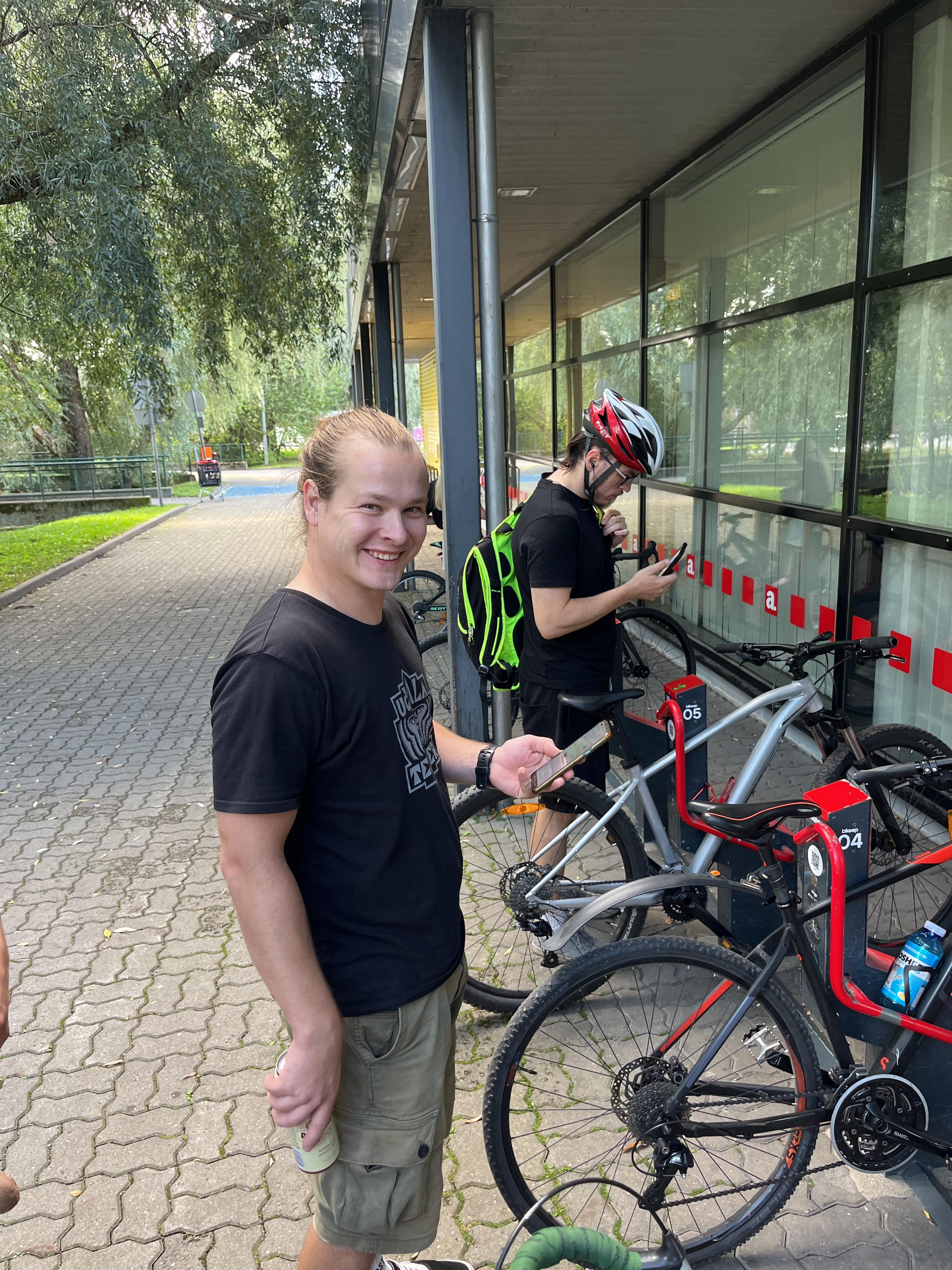
It has been the store's job for as long as the store has had a car park.
A grocery retailer does not build parking out of enthusiasm for vehicles. It builds parking because arrivals are the top of the funnel and a customer who cannot park does not shop. Everything downstream of that — the paving, the lighting, the drainage, the line painting, the snow clearing, the patrol — is already accepted as the cost of getting people through the door. The question was never whether the store is in the parking business. It is how many customers each square metre of that business brings in.
That is the frame the Selver numbers belong in. 25,237 arrivals in twelve months needed no car space, they clustered in the hours when car spaces run out, and they fit on paving that was already there.
The alternative is not "no bike parking". Bikes turn up regardless and attach themselves to whatever is closest to the entrance — railings, trolley bays, the handrail on the ramp. Left unmanaged that is still the store's problem, only in a worse form: clutter at the doors, obstructed access, and a theft in front of the shop that arrives at the service desk as a complaint about the shop. One Selver rider's written comment was simply thanks for the bike having been kept safe. That is the sentiment a retailer wants attached to its own entrance, and it is not available from a railing.
The stores are not interchangeable, and the data says so plainly.
| Station | Parkings | Median stay | Share |
|---|---|---|---|
| Selver Peetri | 7,568 | 14.9 min | 30.0% |
| Torupilli Selver | 4,871 | 11.0 min | 19.3% |
| Pirita Selver | 2,686 | 11.5 min | 10.6% |
| Kakumäe Selver | 2,625 | 10.0 min | 10.4% |
| Kolde Selver | 2,546 | 9.6 min | 10.1% |
| Selver Saku | 2,543 | 28.4 min | 10.1% |
| Selver Pirita | 2,398 | 11.4 min | 9.5% |
At Selver Saku the median stay is 28.4 minutes. At Kolde Selver it is 9.6 — a difference of three times over. In Saku, the rider behaves like a big-shop customer; in Kolde, like a top-up shopper. The profile of the customer who arrives by bike is set by the store format, not by some general property of cyclists. That matters when a chain is deciding which sites get stations first.
The objection to any of this is that novelty fades. It didn't.
54.6% of riders came back within the year, and 2,161 people used Bikeep at Selver for the first time. A facility that both keeps its users and recruits new ones every season is a habit, not a curiosity. The rating held steady across the whole peak — 4.85 in May, 4.92 in June, 4.80 in July — and 95.4% of the 823 ratings were the highest possible score.
Riders left 58 written comments of their own accord. Two of them, translated from Estonian:
"Very useful when you've left your bike lock at home."
"I'd like more Bikeep."
Four of the seven stations now run at the limit of their capacity in peak hours. Over the year there were 32 station-days on which a store had no free rack at all during opening hours — counted between 08:00 and 22:59, because a full station at three in the morning costs nobody a space.
The sharpest case is the newest one. A station opened at Pirita Selver in April 2026 and took 2,686 parkings in its first 93 days — nearly full on 35 of them, completely full on 8. That is 38% of its opening days at or near capacity, and the fastest ramp-up of any Selver station: demand was there before the station was familiar.
A full station is not a success story on its own. It is a customer arriving by bike and finding nowhere to put it — the same lost trip as a full car park. Fullness data is what racks can never give you, and it is what turns "should we add capacity?" into a decision with a number attached.
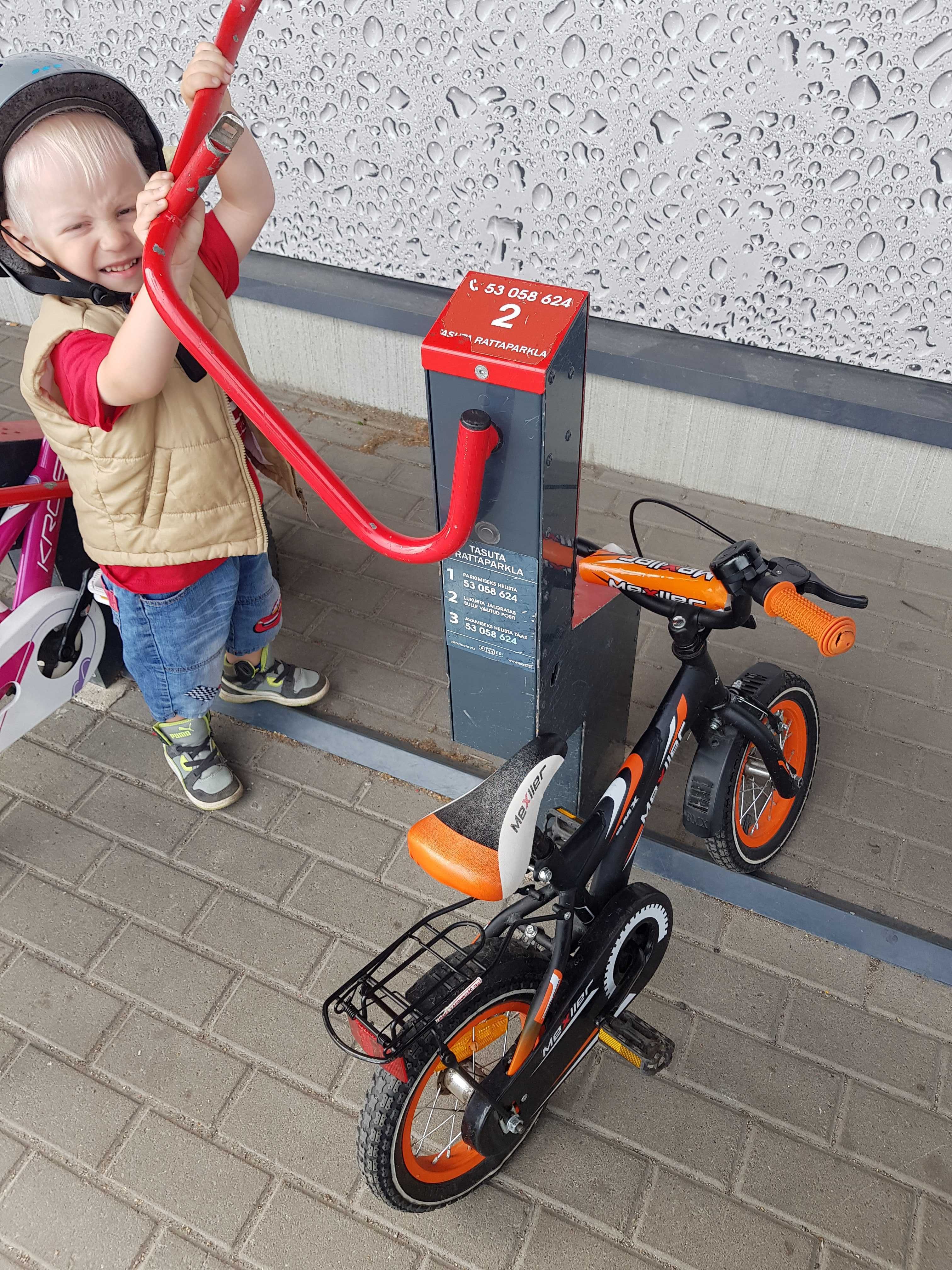
Of 25,237 parkings, two needed any intervention at all — 0.008%, or one parking in every 12,600. For a local manager, that is the whole operational story: the stations are furniture that works.
It is also why the numbers in this article exist at all. Every session is logged, so a chain can answer "is it actually used?" with a table rather than an impression — per store, per hour, per month. Occupancy, ratings and capacity warnings come out of the Bikeep console, not out of a survey.
There is a sustainability line as well: Bikeep's modelling puts the year at roughly 24 tonnes of CO₂ avoided, and close to 130 tonnes since 2022, assuming each parking replaces a short car trip. It is a modelled estimate rather than a measurement — but it is a number for a part of the estate that usually reports none.
Twelve months at one grocery chain will not settle every question about bike parking in retail, and one country's cycling culture is not another's. What it does settle is the shape of the argument.
Bike parking at a grocery store is not a gesture toward cyclists. It is capacity — 25,237 arrivals that did not need a car space, concentrated in the hours when car spaces run out, made by shoppers who stay a basket's worth of time and come back. Which is why it reads the same way from three different chairs: arrivals per square metre to whoever owns the site, two interventions a year to whoever runs the store, 24 tonnes to whoever writes the sustainability report.
It is also measurable per store, which means it can be justified per store. And when the measurement shows four sites of seven at their ceiling, the finding is not that the idea failed. It is that the cheapest growth available is another rack.
The same pattern shows up in other Estonian retail — the Viru Keskus deployment in central Tallinn is the closest published example — but the Selver year is the one with a full twelve months of store-by-store numbers behind it.
Bluetooth locks scale to a dozen doors. Networks that reach hundreds need devices with their own connection — and a platform that outlives the hardware.
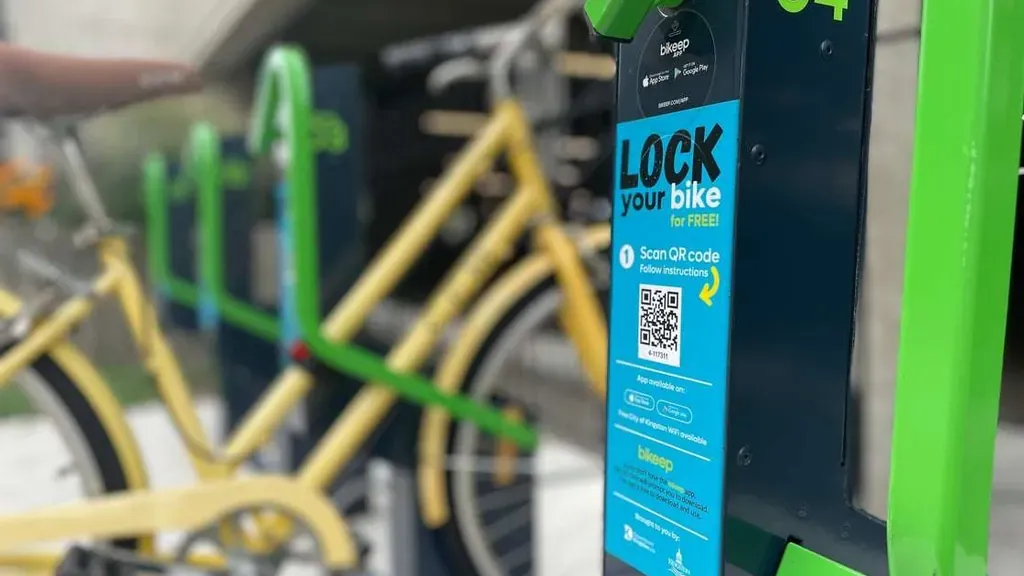
A summer pilot on Princess Street became permanent: 18 secure Bikeep docks across three downtown Kingston locations, free for residents and visitors.
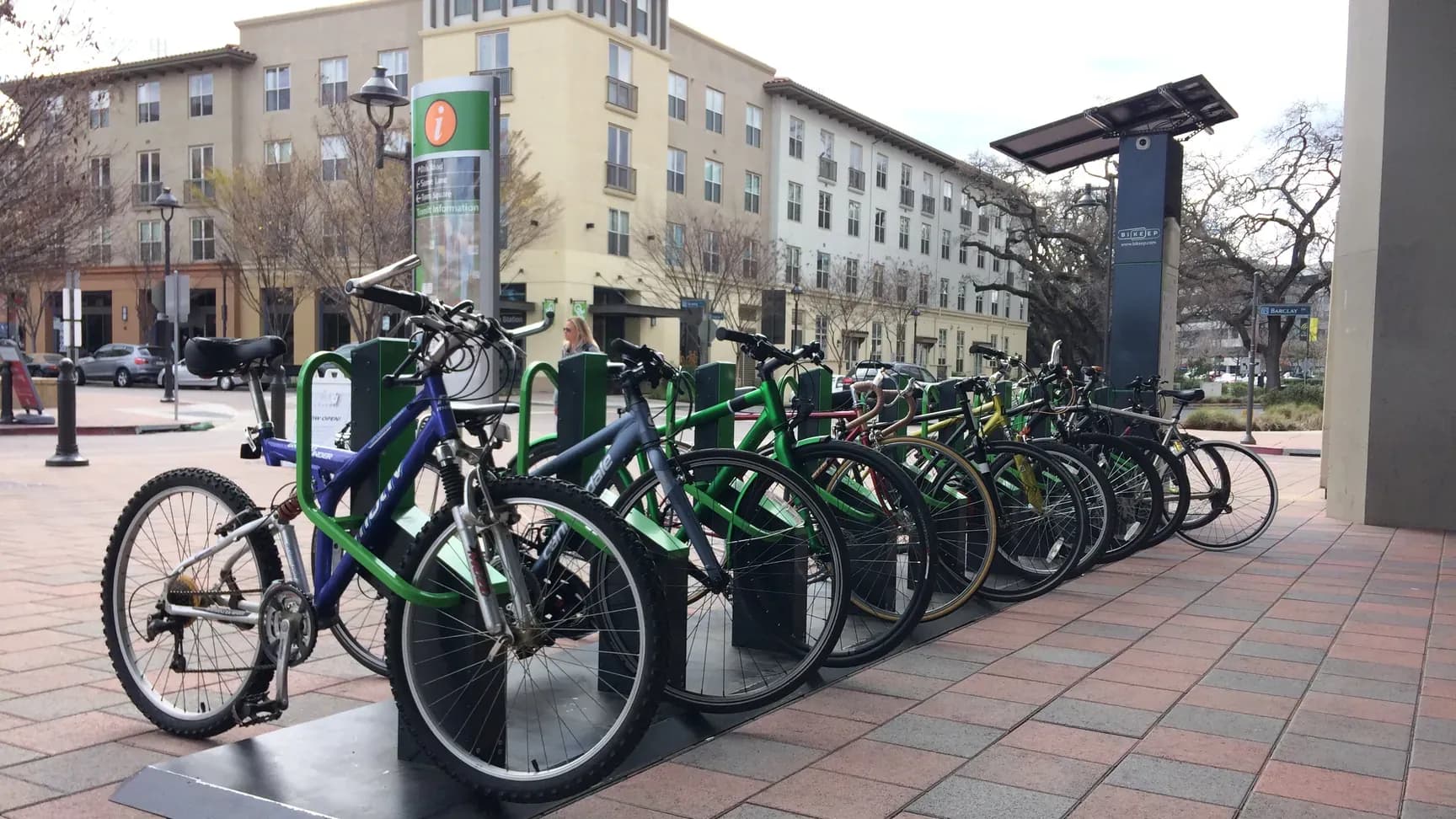
Since 2016, Bikeep smart bike parking stations at BART have cut bike theft and outlasted a decade of daily use across the Bay Area transit network.