Insight
Hardware and software both decide a smart bike parking system
Locky Dock runs on Bikeep because of two things, hardware that stops theft and an IoT platform that runs the network. What to check in each.
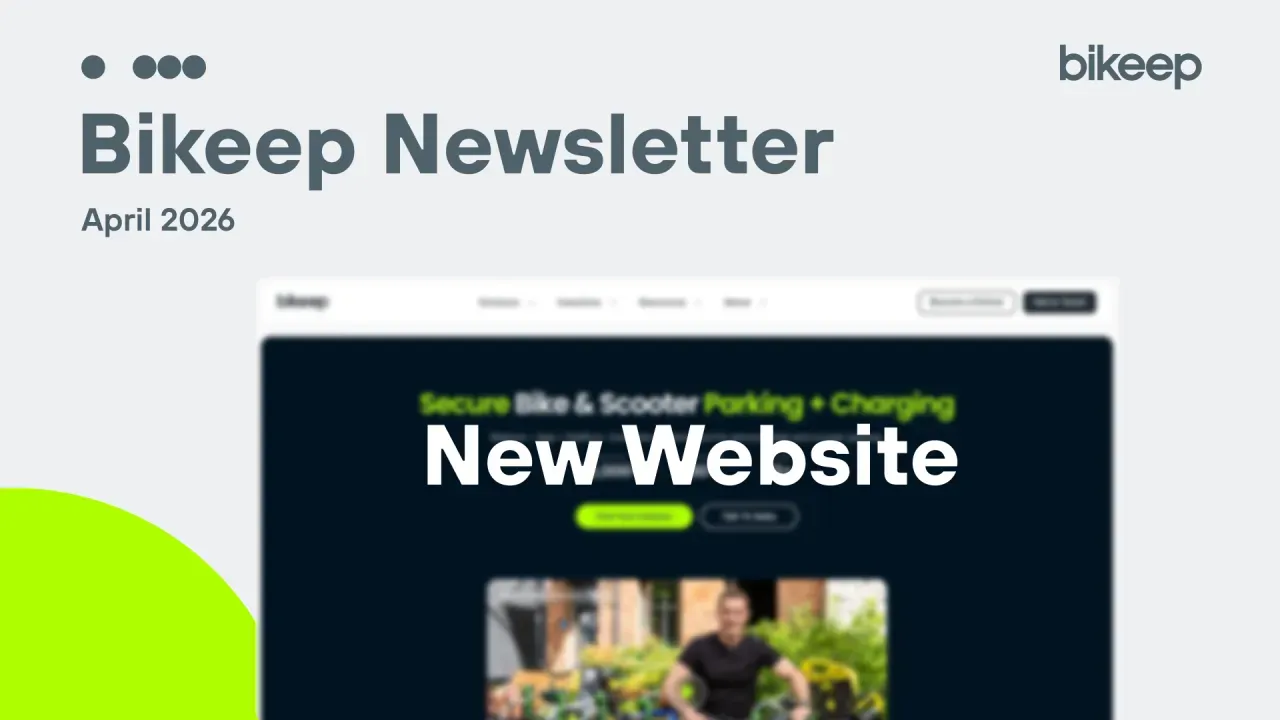
This month's spotlight is the rebuilt bikeep.com, organized around how cities, property owners and partners actually look for smart bike parking.
Visitors kept telling us the old site had a lot going on, and asked for help finding what was relevant to them. So we rebuilt the navigation around four sections. Solutions, Industries, Resources and About each lead to dedicated pages that walk through the full product range with the context a buyer needs.
The result is a site that respects the visitor's time and answers their questions fast.
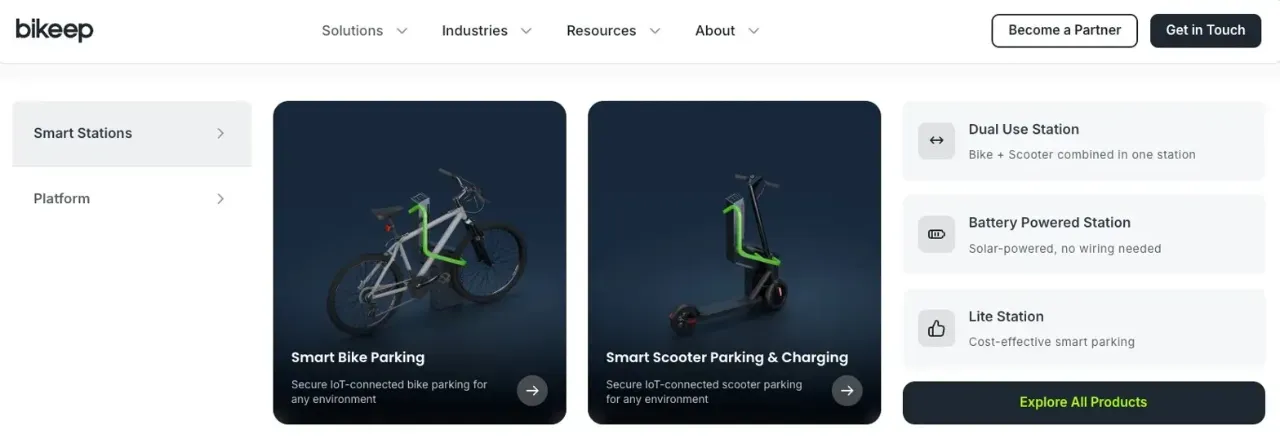 The rebuilt main menu
Bike parking at an airport looks very different from bike parking on a university campus or in an apartment building. The Industries section shows how Bikeep performs in each of those settings.
Every industry page brings three things together.
It is the closest thing to a guided tour of what Bikeep does in the real world.
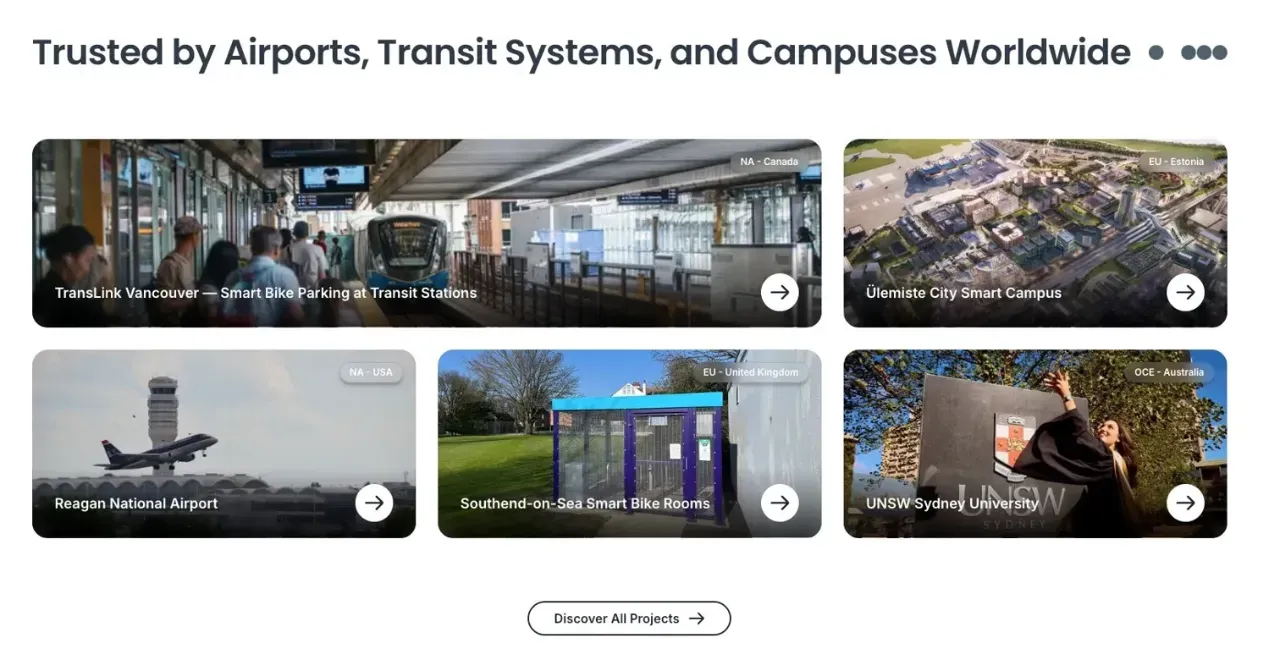 Industry pages highlight where Bikeep is used and why
Over the years we have published guides, case studies, videos and partner documentation. Until now, finding them meant knowing exactly where to look.
The Resources section brings all of it together.
Whether you are researching a project, building a business case or just exploring, every piece of Bikeep content is one click away.
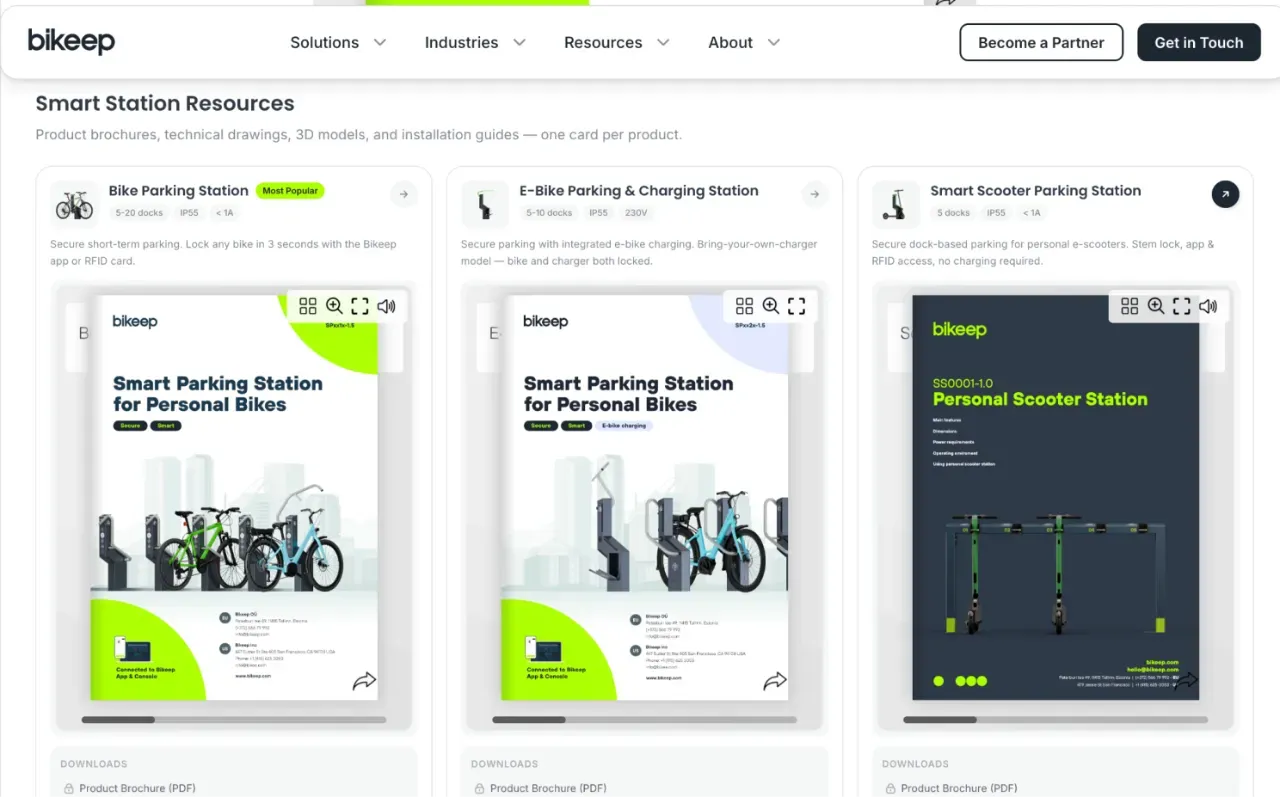 All Bikeep resources on one page
For visitors who want to know who they are partnering with, the About page tells Bikeep's story. It starts with a single idea to prevent bike theft and leads to a company with more than 10,000 devices deployed in over 30 countries.
It covers our mission, our team, the road we have traveled since 2012 and where we are headed next. Choosing infrastructure is about more than specs. It is about choosing a partner you can build with for the long run.
A website is often the first conversation a city, operator or partner has with Bikeep. We built this one to make that conversation clear, useful and honest. By the time a visitor reaches out, they should already feel they know us.
More content, case studies and tools will follow through the year, but the foundation is in place.
We would genuinely love your feedback. If something works well, tell us. If something is missing or unclear, tell us that too.
More updates and earlier editions are in Bikeep news.
Locky Dock runs on Bikeep because of two things, hardware that stops theft and an IoT platform that runs the network. What to check in each.
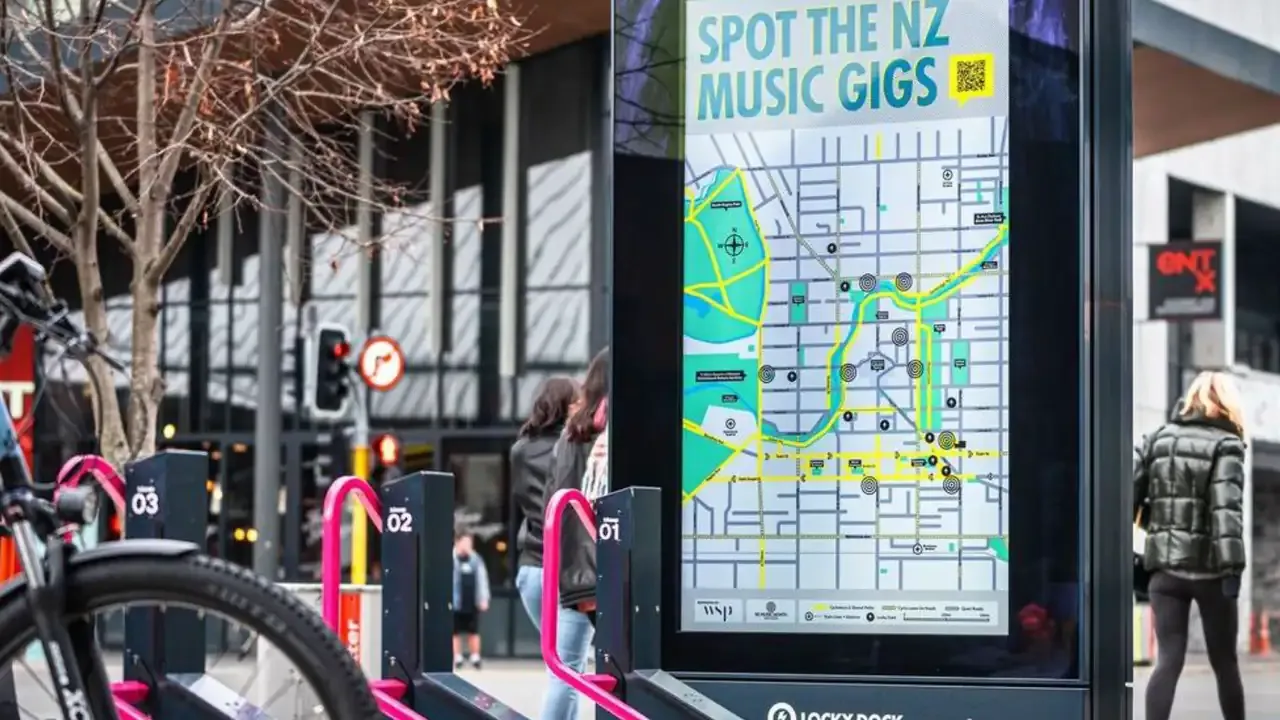
Locky Dock has sold its own ads and worked through a media company. Kirsten Corson explains why new operators should partner, and how to choose one.
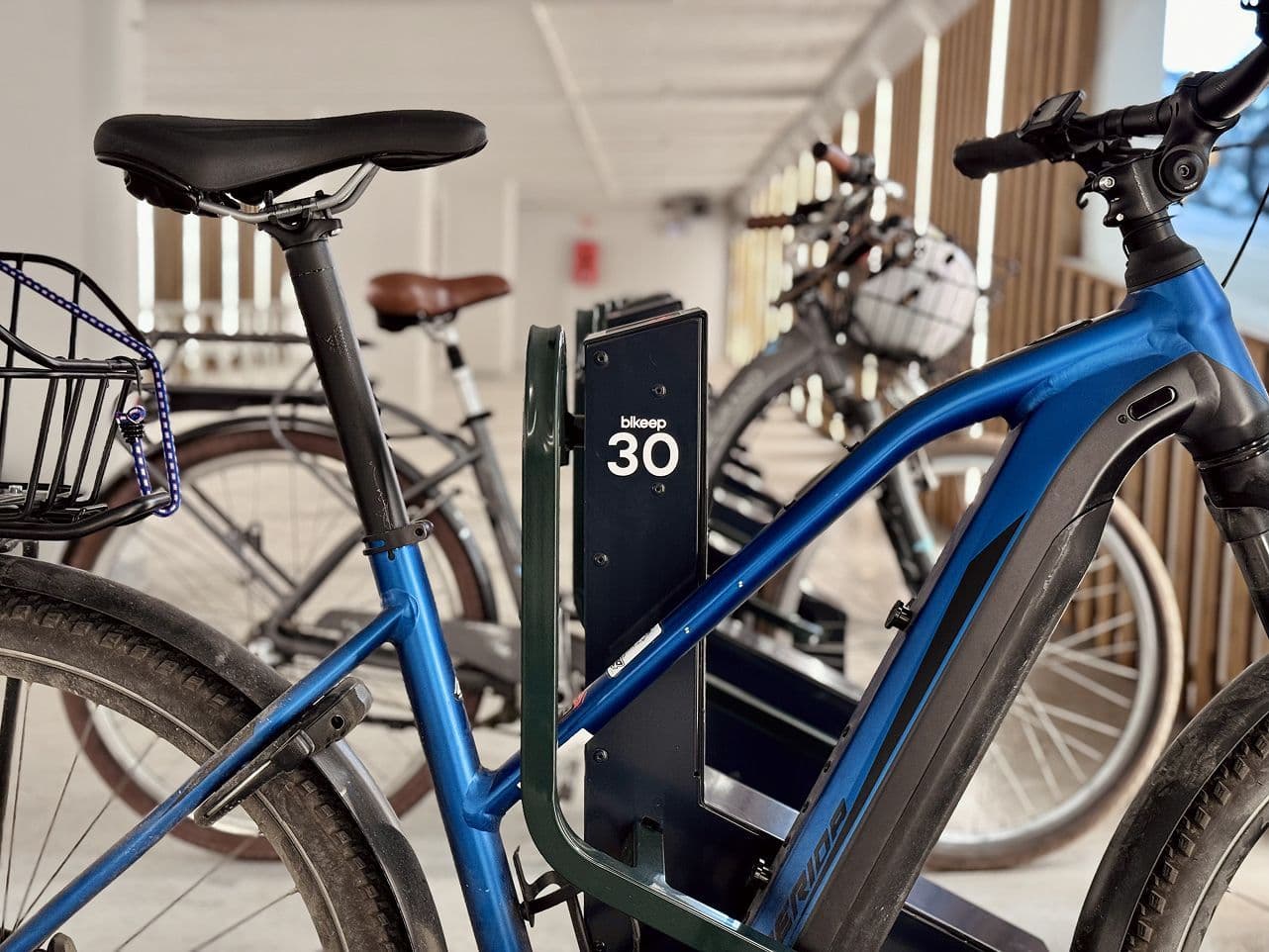
An e-bike costs about 30 cents per 100 km to run in New Zealand, against about $20 for a petrol car. Secure parking decides whether riders switch.