Insight
Public bike parking and charging help more than cyclists
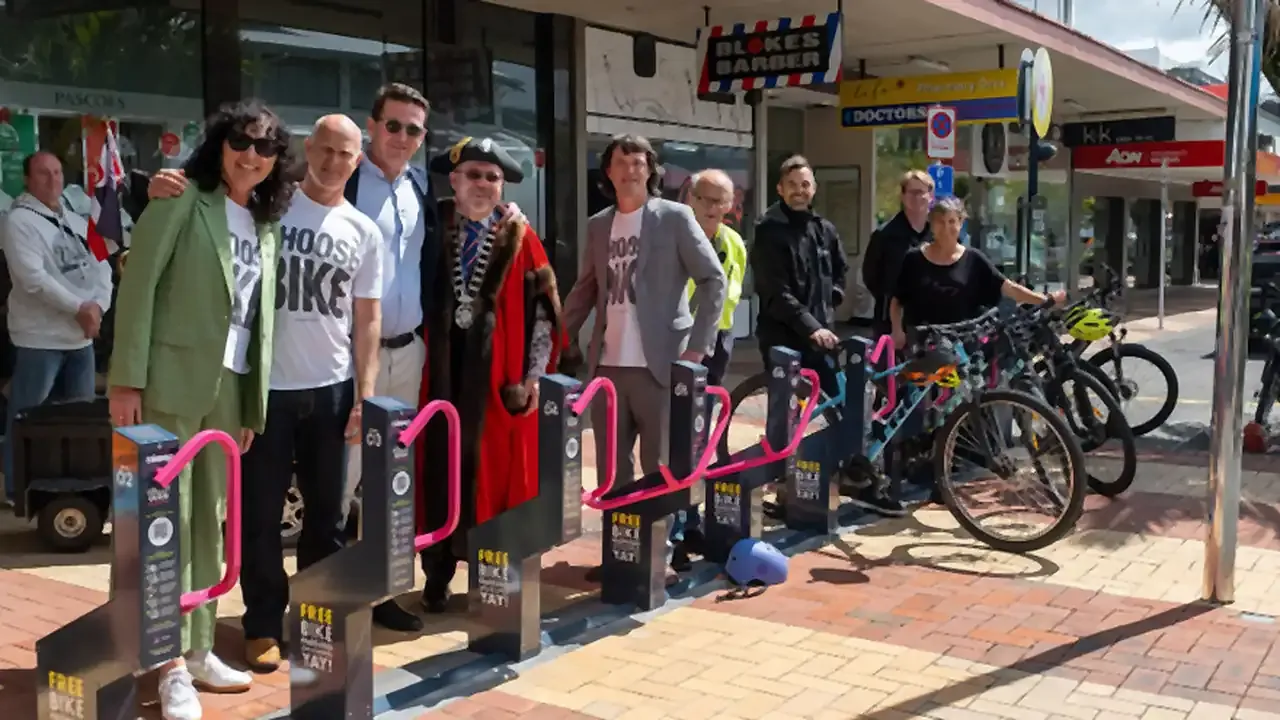
A mobility scooter user in Whangārei showed Locky Dock what public charging means for a town. The benefits councils can point to go well beyond cycling.
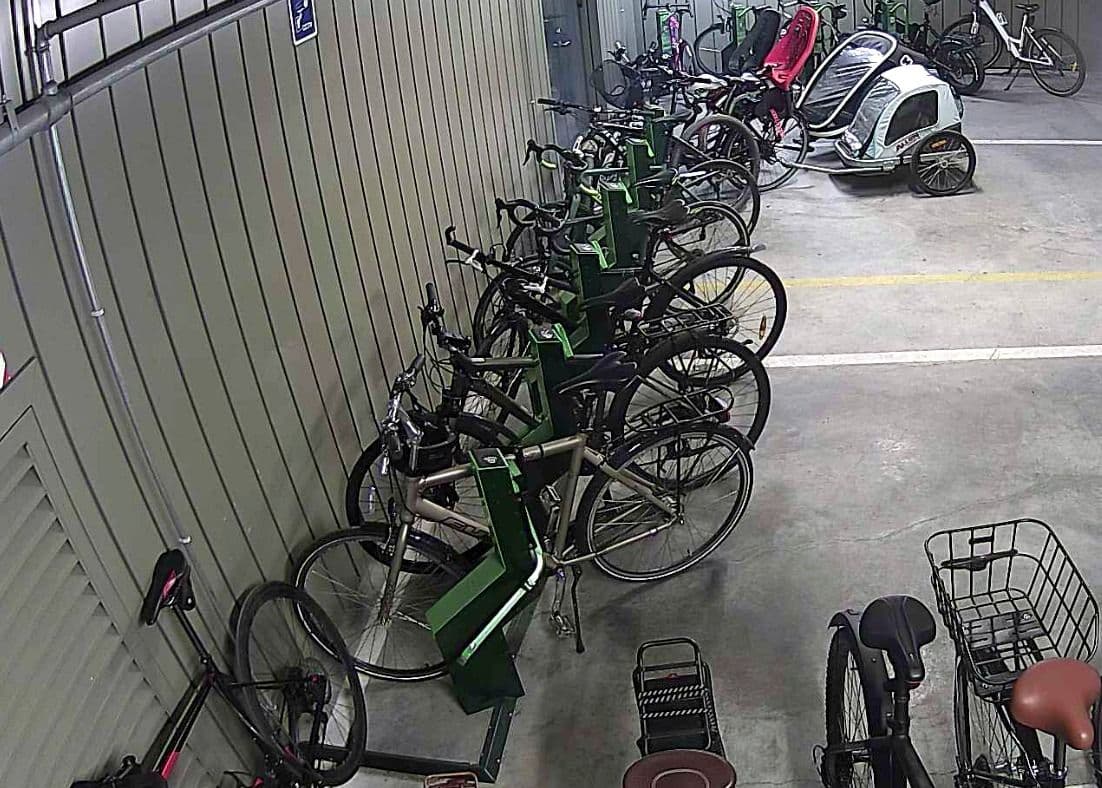
E-bike battery fire safety in a condominium comes down to one rule. Charge and store the batteries outside the living spaces. A condo board can make that practical without banning e-bikes. Give residents a secure outdoor charging station or a fire-safe battery locker, cap how long each charge runs, and control who can plug in.
Picture a resident rolling an e-bike into the elevator. On the seventh floor, they lift the battery off the frame and plug it into a power strip in a hall closet. It charges overnight while the building sleeps.
Now picture that in a dozen units. Most boards have no record of it, no rules for it and no control over it.
The numbers explain the worry. The U.S. Consumer Product Safety Commission counted 227 e-bike battery incidents from 2019 to 2023, with 39 deaths and 181 injuries. The commissioner called that a vast undercount.
New York City shows the scale in one dense place. Between 2019 and 2023, lithium-ion batteries started 733 fires there, killing 29 people and injuring 442, according to the city. The FDNY recorded 277 more in 2024.
One fire can reach well past one unit. In August 2024, a faulty e-bike battery started a four-alarm fire on Dean Street in Brooklyn. It spread to five buildings, injured nine people and displaced dozens of residents.
No. In New York, 59% of 2023's lithium-ion battery fires started when the battery was not charging. It was simply being stored.
For a board, that changes the question. A battery is a fire load the whole time it sits inside the building. Moving the charger is only half the job. The battery itself needs somewhere else to live.
Residential buildings like condos are full of the people most likely to own an e-bike. A YouGov survey found 86% of US e-bike owners are 18 to 44, and 62% live in a city.
Most consumer e-bikes also have a removable battery. That pack is what gets carried through the lobby and plugged in upstairs.
Then there is insurance. Some homeowner and renter policies treat e-bikes as motorized vehicles, and fire claims get harder when a battery or charger is uncertified. Two standards are becoming the reference point for insurers and regulators.
A board cannot check every resident's battery. It can decide where charging happens.
A ban is the instinctive answer, and it usually costs more than it saves.
It turns residents against the board. It works against the sustainability goals many buildings are chasing. It puts off the younger owners and buyers a building wants to attract.
And a ban often does not work. Telling residents to store e-bikes outside means little if there is nowhere secure to put them. Many keep charging indoors, out of sight, where the risk is worse because nobody knows about it.
The safer answer is to move charging and battery storage out of the living spaces. The board's job is to make that easy enough that residents actually do it.
Safe charging happens outdoors or in a contained compartment, with power the board controls. Bikeep offers three pieces that can be combined to fit a building.
A Bikeep e-bike charging station gives residents one designated place to park and charge outside. A locking bar secures the bike frame, and the resident's own charger is locked in a compartment in the dock.
Each dock has its own circuit protection. A 5-dock station draws 1.5 kW and a 10-dock station 3 kW, on single-phase 110 or 230 V power.
The battery never has to come inside. If something goes wrong, it happens outdoors, away from where residents sleep.
Some residents only want to charge the removable pack. Some buildings have little outdoor space. A battery charging locker covers both cases.
Each compartment is fire-suppressing and has its own heat and gas sensors. Power cuts off automatically if a sensor trips. Residents open their compartment with the Bikeep app, an RFID card, a QR code or a passcode.
This is the piece most boards are missing.
Together these give the board a record of who charges, a hard stop on how long and a say over what is plugged in on the property.
The table sets each measure against the risk it removes.
| Measure | Risk it removes | Where it comes from |
|---|---|---|
| Charge outside the living spaces | A fire starting in a unit, hallway or stairwell | Outdoor charging station |
| Store batteries in a contained compartment | A stored battery igniting indoors | Battery charging locker |
| Fire suppression with heat and gas sensors | A battery fire spreading beyond its compartment | Battery charging locker |
| Four-hour automatic cut-off | Unattended overnight charging | Optional relay on the charging station |
| Circuit protection per dock | One faulty charger affecting the rest | Charging station |
| Allowlist of approved residents | Unknown devices and chargers on building power | Bikeep Console |
| Locked charger compartment | Chargers left loose or swapped | Charging station |
Nothing makes a lithium-ion battery non-flammable. What changes is where the battery is when something goes wrong.
Before, batteries charge in units and hallways with no record and no rules. The ban debate returns at every meeting.
After, residents have one secure place to charge outside. The fire load moves out of the building, the board controls who plugs in, and residents keep their e-bikes.
Bikeep has built smart bike parking and charging since 2012, with more than 10,000 devices in over 30 countries.
Ülemiste City in Tallinn, Estonia, runs Bikeep bike parking and e-bike charging stations across a business campus. Three times as many people cycle to work there as the regional average, and the campus needs half the car parking spaces it once did. The developer credits secure bike parking as part of its LEED Platinum certification.
A condominium is a smaller site with the same question. Where do the bikes and batteries go when residents are not using them?
Outside the living spaces, away from exits and stairwells. An outdoor charging station or a fire-safe battery locker gives residents a place to do that.
It carries risk. In New York, 59% of lithium-ion battery fires in 2023 started when the battery was not charging.
It runs on standard single-phase power, 110 or 230 V. A 5-dock station draws 1.5 kW and a 10-dock station 3 kW, so an electrician should check the circuit it connects to.
It stops batteries from sitting on charge unattended overnight. The relay is optional on Bikeep charging stations and cuts power to the dock automatically.
UL 2849 is the safety standard for an e-bike's electrical system. UL 2271 covers its battery pack. Insurers and regulators increasingly look for both.
Yes. A battery charging locker holds the removable pack in its own fire-suppressing compartment while it charges.
A mobility scooter user in Whangārei showed Locky Dock what public charging means for a town. The benefits councils can point to go well beyond cycling.
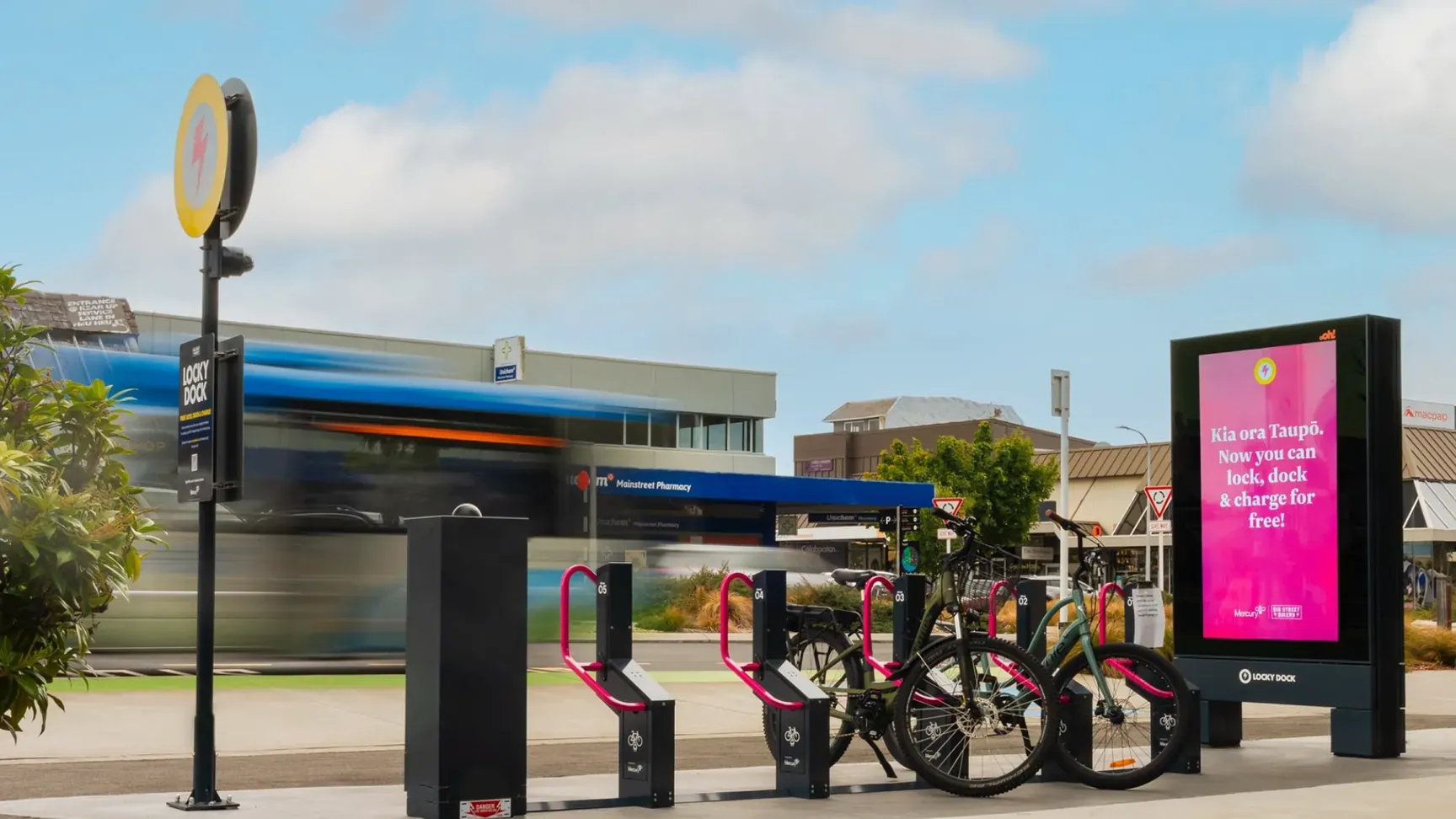
Digital advertising screens let Locky Dock offer free bike parking and e-bike charging to councils and riders. This is how the triple win model works.
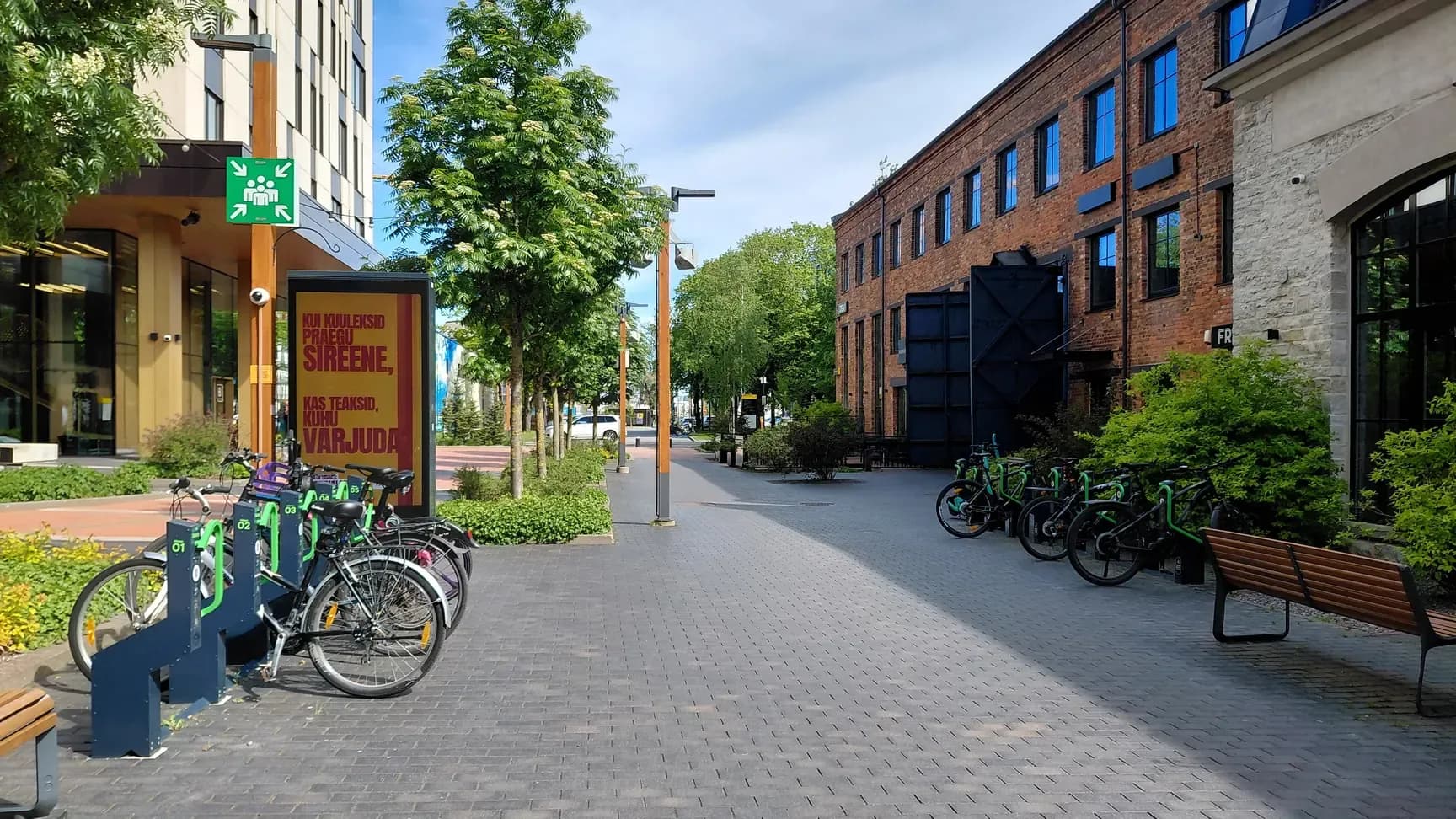
Ülemiste City in Tallinn built a campus-wide smart bike parking network. Riders rate it 4.89 out of 5, and no bike has been reported stolen from a station.