Cities are reclaiming streets as e-scooter operators are stepping up
Days when scooters were laying in the streets causing accidents and frustration might soon be over. Operators are starting to respond to demands for cleaner streets, finding solutions to inefficient battery switching, and overall sustainability in the micromobility industry is under the scope. Sustainability in micromobility will benefit from new laws as they push large e-scooter operators to take action.
Just recently, Bolt — having raised just under USD 700M — became the first operator to provide proper infrastructure for its scooters. Bicycle and scooter parking and charging provider Bikeep CEO Kristjan Lind sees this as a new era for micromobility, unlocking major possibilities to create 15-minute smart cities in bigger metropolitan areas.
"Micromobility promises a greener, healthier, more sustainable future. It has, however, been a struggle to develop the most sustainable production cycle for years since the majority of scooter rental numbers come from operators laying a shadow over the whole industry. Certainly, with this move, we have a strong precedent that will be followed by others. The so-called 3rd wave of e-scooter operations is arriving and this is solving the street clutter and re-charging," Lind says.
He envisions future cities being built already in places like Utrecht, where new real estate developments are designed without any personal car ownership. All trips are made with shared systems — by foot, bike, scooter, or public transport.
The future cities will be arranged according to the principle that everything needed will be within a 15-minute range. "However, with different operators, it is essential that the infrastructure will be connected and able to interact with its pieces. We need a vendor-neutral effective system, where all brands should not have separate docks and apps for people to navigate between, but simply find the nearest and most convenient place to start or end their trip," Lind adds.
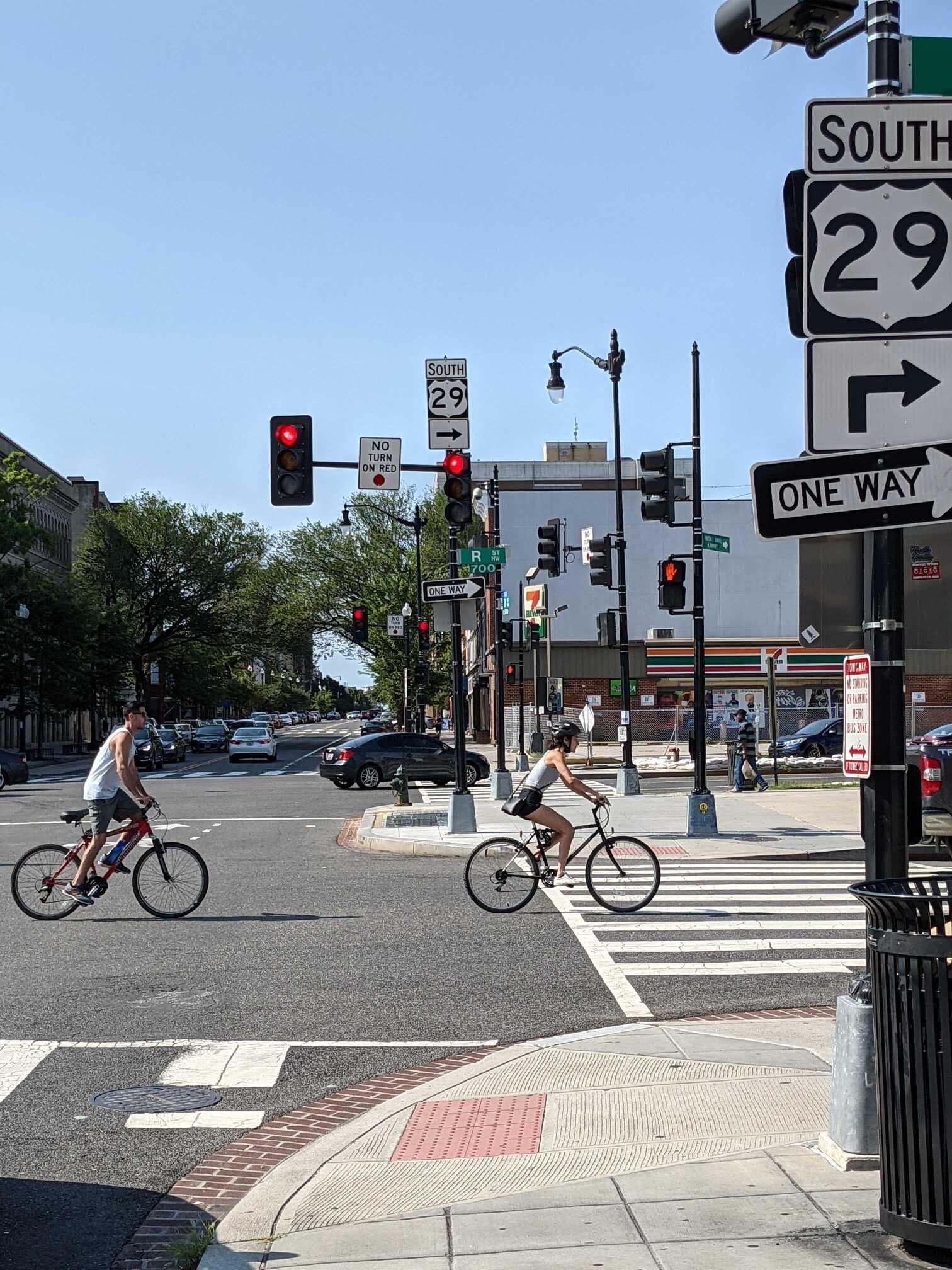
Washington DC Regulations on Scooter Parking Spike Attention Towards Docking Solutions
Last month's regulations in the Washington DC region sent out a clear signal of changes coming. Operators are being forced to find solutions to an increasing problem — the general industry trend of making infrastructure modern, smart, and equally accessible for everyone. The regulation states that scooters need to be attached to a post.
"The general trend is moving towards efficiency and sustainability in micromobility. We have the infrastructure, users, and the mindset. Now structure — following Bolt's example — is needed to make it sustainable in every city in order to fulfill the expectations of people commuting," Lind points out.
Washington DC is not the only city that has tried to reclaim the streets from misplaced micromobility vehicles. San Francisco has been requiring the locking of both scooter operators and personal scooters for quite some time now.
While it is great that cities are turning attention to organizing the streets, behavior patterns need to change. "The operators, as well as all micromobility activists, have an obligation to educate, support, and lead by example. Only then will we be able to see the carbon footprint decreasing fast enough to make an impact globally," Lind says.
A Connected Ecosystem for Smart Cities
Lind and his team have developed an ecosystem for all infrastructure pieces to connect with each other. Through smart IoT, the stations are able to surface the information needed for better urban planning, traffic management, and more.
The app works as a map for all micromobility vehicles, stations (both charging and parking), and repair points. Having developed the system for over a decade, Lind sees the main value of future smart cities in shared, connected smart solutions. "For that," he says, "we need to centralize the system instead of going renegade vendor by vendor."
Bikeep has over 1 million users globally. The company recently raised over USD 3M to maximize its presence in the US, expanding and uniting all solutions through its smart infrastructure and IoT platform. Bikeep provides smart parking and charging solutions in over 21 countries.
Related Articles

January 2026 Newsletter
Bikeep Newsletter Reaches 1,000+ Subscribers We’re excited to share a major milestone for the Bikeep community – our newsletter has now reached over 1,000 subscribers and...
November 2025 Newsletter
CEO Kristjan Lind reflects on 10 years leading Bikeep, plus our Smart City Expo Barcelona recap and the new A-A Internal Bike Rental Station for workplaces and campuses.
October 2025 Newsletter
New Bikeep Station at Live! Casino & Hotel Philadelphia. We’re proud to announce the installation of a new Bikeep smart parking and e-charging station at Live! Casino &...